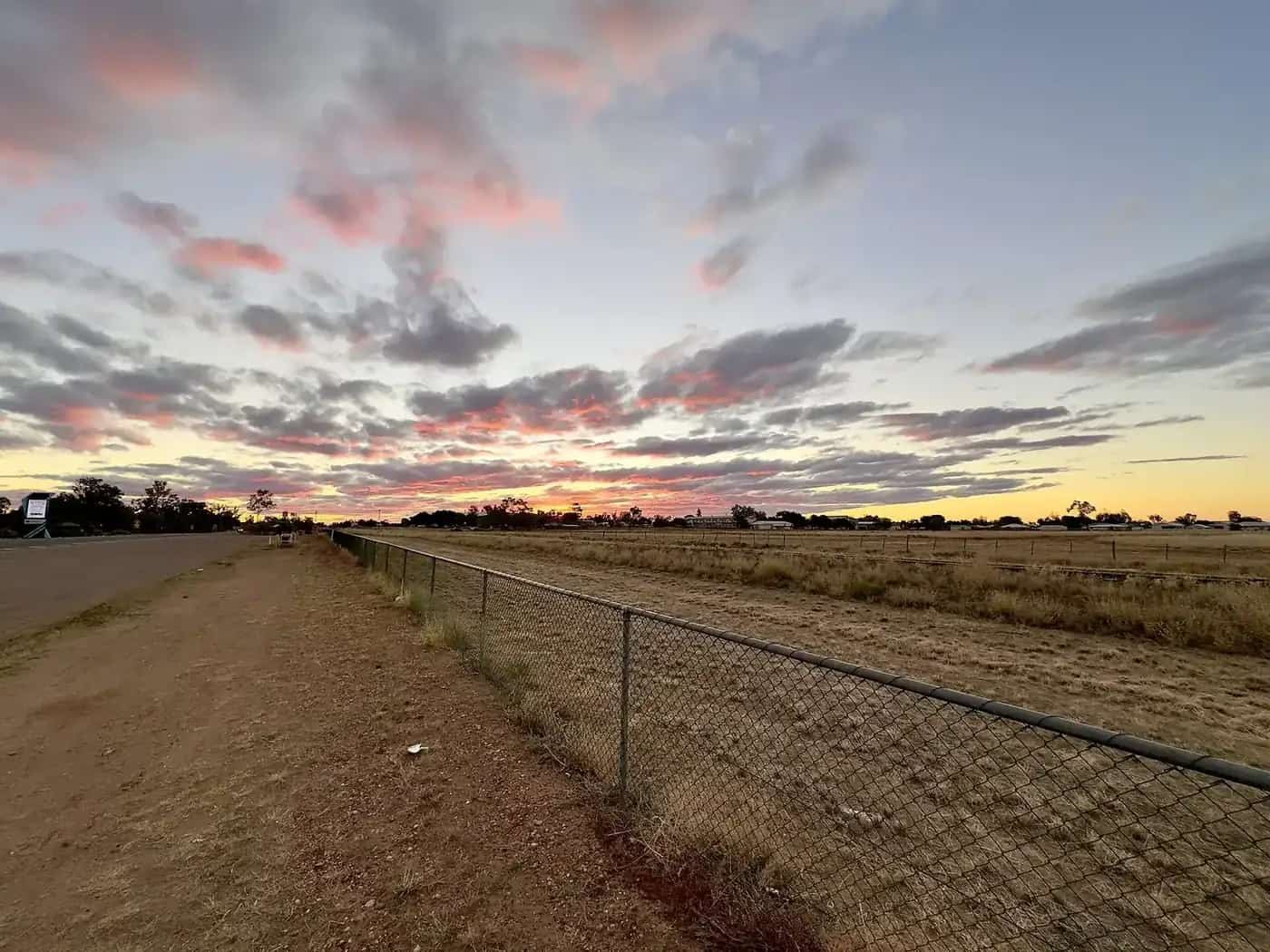
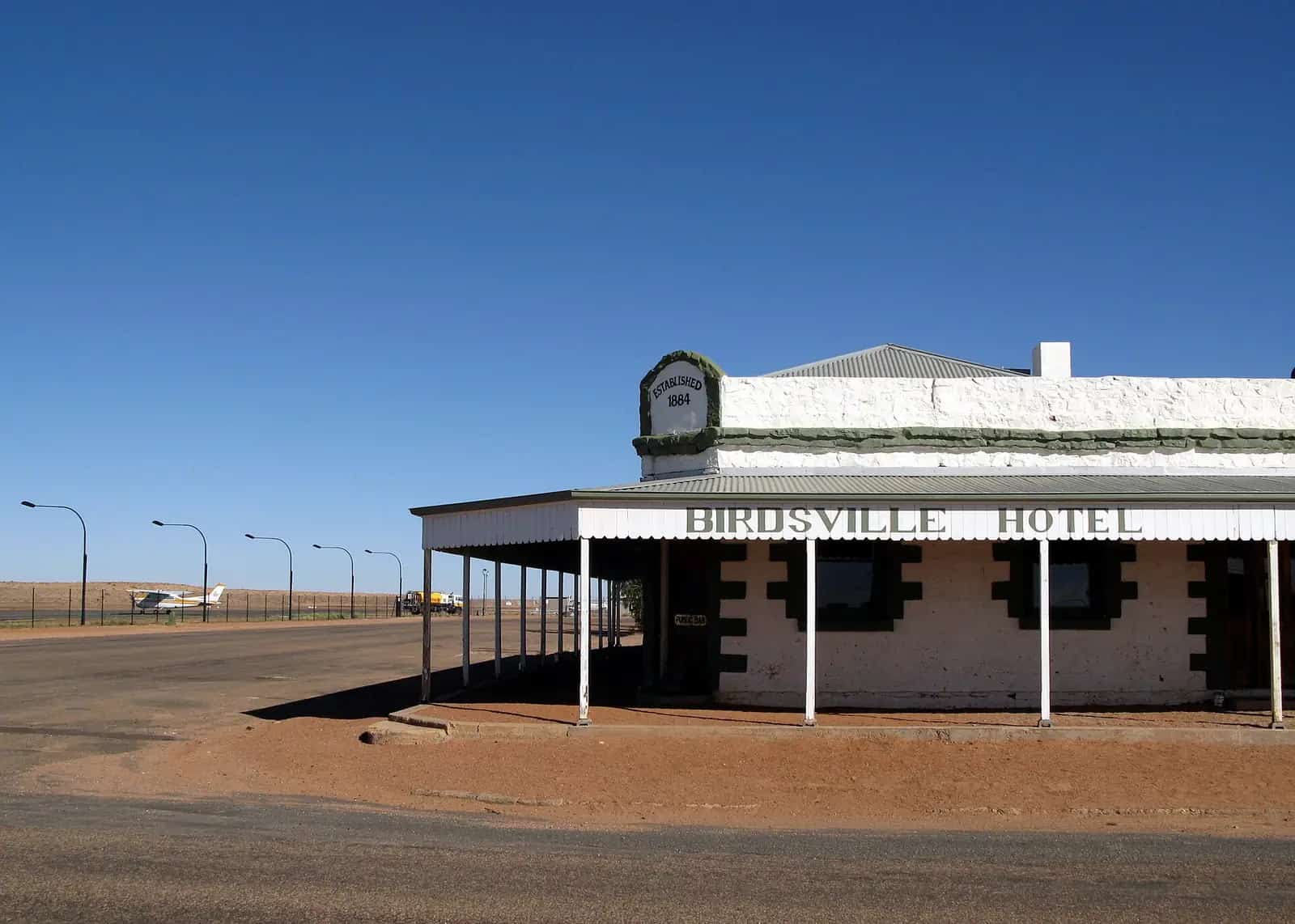
Mitchell lies on the Maranoa River, on Bidjara and Gunggari Country, about 85 km west of Roma. It is a popular overnight stop between Roma and Charleville and a highlight of the Great Artesian Spa Tour.
Things to do
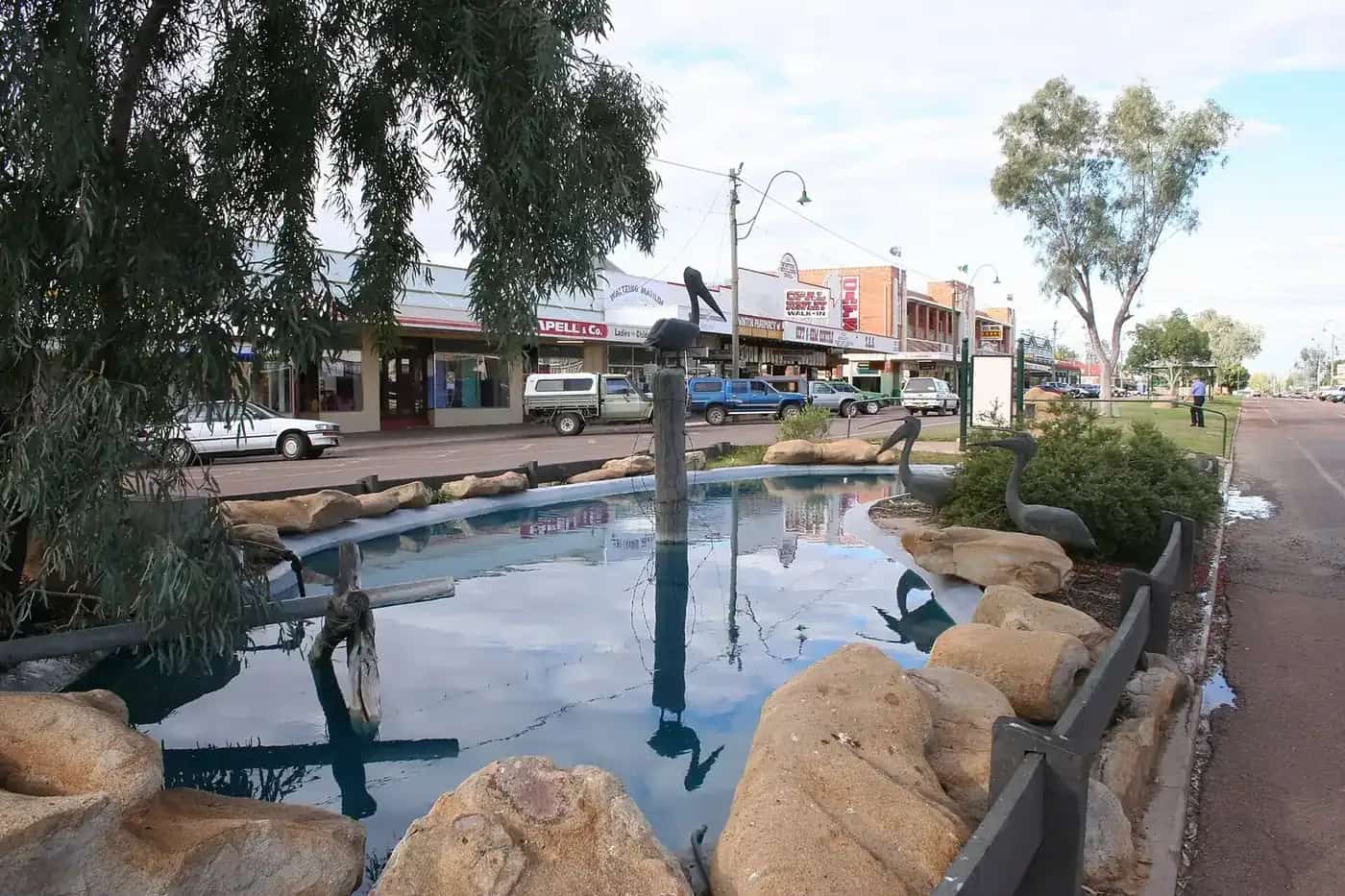
Great Artesian Spa. Pools filled with mineral water from the Great Artesian Basin, beside the main street — a soothing stop after a long drive.
Maranoa River walks. Walking tracks follow the river, with birdlife and campsites at nearby Neil Turner Weir.
Kenniff Courthouse. The heritage courthouse tells the story of the Kenniff brothers, among Australia's last bushrangers, who were tried after murders in the district in 1902.
Camel races and ute muster. Mitchell has hosted camel races and a ute muster in some years — see outback camel races.
History and Country
The Bidjara and Gunggari peoples have lived along the Maranoa River for thousands of years, and the river remains central to the town. Explorer Sir Thomas Mitchell, then Surveyor-General of New South Wales, passed through the district in 1846 on an expedition seeking a route to the Gulf of Carpentaria, and the town was later named after him. Pastoralists took up runs in the following decades, and the township developed as a service centre and river crossing. The Western railway reached Mitchell in the 1880s on its way to Charleville, linking local wool and cattle producers to the coast.
The Kenniff story
In 1902 a police constable and a station manager were killed in the Upper Warrego district, north of Mitchell. Brothers Patrick and James Kenniff were arrested and tried; Patrick was hanged in Brisbane in 1903, and James's sentence was commuted. The case is often described as one of the last episodes of bushranging in Australia. The Kenniff Courthouse in Mitchell interprets the story, alongside displays on the history of law and order in the district. Opening times vary, so check with the visitor information centre.
The Great Artesian Spa in detail
Mitchell's Great Artesian Spa draws on the vast Great Artesian Basin, which underlies about a fifth of Australia. Water that fell as rain on the Great Dividing Range travels slowly through porous sandstone deep underground before emerging, warmed, from bores across inland Queensland. The spa has a hot pool and a cooler pool, and is a popular stop on the Great Artesian Spa Tour. Keep soaks short in the hot pool, drink water, and follow posted health advice; opening hours and entry arrangements are set by the Maranoa Regional Council.
Neil Turner Weir and the river
Neil Turner Weir, a short drive from town, holds back a long stretch of the Maranoa River. It is a pleasant place for a picnic, a walk or a free camp, subject to council rules. The river is lined with river red gums and coolabahs, and birdlife is plentiful, especially in the early morning. Fishing is popular; check Queensland fishing rules for size and bag limits.
Mount Moffatt and the Carnarvon country
North of Mitchell, Mount Moffatt is a section of Carnarvon National Park known for sandstone formations such as Lot's Wife and the Chimneys, and for Aboriginal rock art sites, including Kenniff Cave, where archaeological work in the 1960s found evidence of very long human occupation. Access is via long unsealed roads that are best suited to 4WD vehicles and close after rain. Camping is by QPWS booking. Check park alerts before going.
A two-day itinerary
Day 1: Arrive in the afternoon, soak in the Great Artesian Spa, then wander the main street and riverside walking track before dinner at a local pub.
Day 2: Kenniff Courthouse and the heritage walk in the morning, a picnic at Neil Turner Weir, then continue west to Charleville or back east to Roma.
Seasons
Mitchell has hot summers and mild winters with cold nights; frosts are common in winter. The warm spa is especially welcome in the cooler months from April to September, which is also the main travel season.
Getting there
Mitchell is on the Warrego Highway, about 85 km west of Roma and about 570 km west of Brisbane. The Westlander rail service between Brisbane and Charleville stops here; check current timetables. The highway is sealed, but watch for road trains and wildlife.
Where to stay and eat
Mitchell has motels, a hotel, a caravan park and riverside camping, plus a bakery, cafés and a supermarket. Fuel is available.
Who it suits
Mitchell suits travellers on the Great Artesian Spa Tour, history buffs interested in the Kenniff story, and anyone wanting a relaxing soak on the way west. It is a good overnight stop between Roma and Charleville.
Where to next
- Roma — about 85 km east, with the Big Rig oil and gas museum.
- Morven — west, a small town with a historic museum.
- Charleville — about 180 km west.
- Mount Moffatt — north via unsealed roads.
Visitor centre, spa and museum
Mitchell Visitor Information Centre. The centre is inside the Great Artesian Spa and Hall Complex at 2 Cambridge Street. Staff can help with road conditions, events, accommodation and things to do. The centre has free Wi-Fi, a public access terminal, printing, souvenirs and a coffee shop.
At the time of writing it opens every day from 8 am to 6 pm, and from 7 am to 6 pm between 1 November and 31 March. It closes on Christmas Day, and opens 8 am to 1:30 pm on Anzac Day. Phone (07) 4624 6923. Mitchell is an accredited RV Friendly Town, with plenty of space to park caravans, motorhomes and coaches.
Booringa Heritage Museum. Volunteers run this museum at 4 Elizabeth Street to preserve the history of the old Booringa region. It opens daily from 9 am to 12 noon, from Easter Saturday to the end of October. Entry is free, and donations are welcome.
Free gym and yoga. The Great Artesian Spa also runs a free gym that is open every day, with no membership needed. It has a rowing machine, treadmill, exercise bike, bench press and multi-gym. First-time users must fill in an indemnity form, and anyone under 16 must be with a parent or guardian.
On Saturdays from 9 am to 10 am there is a yoga class in the Mitchell Shire Hall, inside the spa complex. It costs $14 for adults, and the spa costs an extra $2.50 after class. Bring a mat or towel and comfortable clothes.
Plan a morning at the museum and an afternoon soak at the spa. Then walk by the Maranoa River before dinner. Confirm hours before you visit, because volunteer-run and seasonal opening times can change.
Practical information
Mitchell has fuel, a supermarket, a hospital, motels and a caravan park. Continue west to Charleville or east to Roma.
Frequently asked questions
Does Mitchell have hot springs?
Yes. The Great Artesian Spa in Mitchell has pools fed by water from the Great Artesian Basin. Check opening hours and fees with the Maranoa Regional Council.
How far is Mitchell from Roma?
About 85 km west of Roma on the Warrego Highway.
Where to stay in Mitchell, QLD?
Mitchell has a caravan park, motels and a hotel. As an RV Friendly Town it also has parking for caravans and motorhomes. Ask at the visitor centre in the Great Artesian Spa complex, on (07) 4624 6923, for current options.
Sources and further reading
Facts on this page were checked against these primary and official sources. Conditions change — confirm before you travel or buy.
- Maranoa Regional Council — Mitchell — Maranoa Regional Council
- Southern Queensland Country tourism — Southern Queensland Country Tourism
- Information Centre — Mitchell Visitor Information Centre
- Opening hours — Booringa Heritage Museum
- Wellness Center — Great Artesian Spa, Mitchell