About the East MacDonnells
The MacDonnell Ranges run east and west of Alice Springs. West of town is Tjoritja / West MacDonnell National Park. To the east, the Ross Highway leads to a series of smaller parks and reserves managed by the NT Government. You can visit some on a day trip. Others, such as N'Dhala Gorge and Ruby Gap, need a 4WD and more time.
This is Arrernte Country. Several sites are sacred, and the Traditional Owners ask visitors to follow specific protocols, which are set out below for each park.
NT Parks Visitor Pass. Visitors to the Northern Territory need one for these parks. Where camping is allowed, you must book and pay online before you go, because you can't pay on site.
Yeperenye / Emily and Jessie Gaps
The NT Government suggests Emily and Jessie Gaps as your first stop in the East MacDonnells. They're about 10 km east of Alice Springs on the Ross Highway.
The ranges here are part of the caterpillar dreaming story, which tells how Alice Springs was formed. You can see rock art of this dreaming at Emily Gap.
Protocols. The Traditional Owners ask that you:
- Don't climb the rocks in and around the Gaps.
- Don't photograph the rock art.
Facilities. There are short walks, a picnic area, toilets and information signs. Fire pits are at Jessie Gap only. Emily Gap has no toilets, so use the ones at Jessie Gap.
Walking. The park status page also lists the Yeperenye Trail.
Swimming. At the time of writing, the park status page warned that swimming at Emily Gap is at your own risk, because visibility is poor.
Corroboree Rock
Corroboree Rock Conservation Reserve is 42 km east of Alice Springs, signposted off the Ross Highway. The NT Government says this impressive dolomite formation was formed more than 800 million years ago by salt lakes. It's a sacred men's site and a registered sacred site that still plays a significant role in Arrernte culture.
Protocols. Stay on the marked track.
Facilities. There are walking tracks, a picnic area and information signs. Camping isn't permitted. It's an easy stop on the way to Trephina Gorge and Arltunga.
Trephina Gorge Nature Park
Trephina Gorge is 85 km east of Alice Springs, off the Ross Highway. The last 5 km is unsealed. The NT Government says it's known for its sheer quartzite cliffs and river red gum-lined watercourses. The park also has the largest ghost gum (Corymbia aparrerinja) in Australia.
Walks. There are several short walks around Trephina Gorge, with wide views and a sandy creek bed, and around John Hayes Rockhole, with its steep, narrow rock walls. Experienced walkers can take the Trephina Ridgetop Trail to John Hayes Rockhole for sweeping views of the ranges. If you sit quietly near the waterholes, wallabies and birds may join you.
Access. John Hayes Rockhole is for high-clearance 4WD vehicles only.
Swimming. It's listed at John Hayes Rockhole. Take note:
- The waterhole can dry up after long dry periods.
- The water can be very cold even in summer, and long exposure can lead to hypothermia.
Camping. There are three campgrounds: Gorge, Bluff and Panorama. At the time of writing, Bluff Campground had no toilets, so campers use the toilet at Panorama. A campground host is on site in the peak season, May to September. Book and pay online before you go.
Facilities. There are fire pits, toilets, a picnic area, caravan and campervan sites, 4WD roads and a ranger station for emergencies only. Ranger-guided walks and talks run in season.
Rules.
- No pets, generators or drones.
- Fires only in the fire pits.
- No firewood collecting.
- No bins, so take your rubbish with you.
N'Dhala Gorge Nature Park
The NT Government calls N'Dhala Gorge a cultural treasure. It has about 6,000 individual petroglyphs (rock carvings) at 438 engraved sites along the main gorge, and 240 engraved sites in the side gorge. Engraving is thought to have happened in two periods. The first was around 10,000 years ago, and the second began about 3,000 years ago.
The Traditional Owners, the local Arrernte people, ask that you respect the park and its artefacts.
Walk. A 1.5 km return walk through the gorge takes about an hour. Along it you can see rare plants such as the Hayes wattle (Acacia undoolyana).
Access. It's 4WD only. The turn-off is 90 km east of Alice Springs on the Ross Highway, followed by 11 km of 4WD track.
Camping. There are bush campsites with fire pits, toilets and picnic tables. Bring your own water and supplies, and book online.
Ruby Gap Nature Park
Ruby Gap was the site of Central Australia's first mining rush. In the late 1880s, David Lindsay thought he'd found rubies in the bed of the Hale River. Hundreds of people rushed to the site. Two years later the gems were found to be high-grade garnets, worth far less than rubies.
Today Ruby Gap is a remote wilderness. There are no marked tracks, but the NT Government says exploring up the riverbed to Glen Annie Gorge and Fox's Grave is very rewarding. The terrain is rugged, and walks suit experienced walkers only.
Access. Follow the Binns Track and the signs to Arltunga Historical Reserve, 150 km east of Alice Springs. The road in is slow, with very sandy and rocky sections, and is for high-clearance 4WD vehicles only.
What to carry. Bring a satellite phone, an EPIRB or personal locator beacon, extra water and spare tyres.
Flooding. The Hale River floods after heavy rain. If it starts to rain heavily, leave immediately, and never try to cross a flooded creek.
Planning. Allow at least a full day, or two days if you plan to walk or visit Arltunga. Camping is available between the park entrance and Ruby Gap. You need a permit before arriving to fly a drone.
Current status. At the time of writing, the NT Government listed Ruby Gap as closed, because access was impassable after flooding. Check the park status page before you go.
When to visit
The NT Government recommends the cooler months, April to September, for all these parks. Between October and April, temperatures across the Territory can exceed 40°C. Check for heatwave warnings, carry plenty of water, and avoid strenuous walks in the heat of the day.
Roads may close after heavy rain. To check the status of the Trephina Gorge, N'Dhala Gorge and Ruby Gap parks, call (08) 8951 8250, or see the NT Government's park status page.
Combine with
- Arltunga Historical Reserve, the old goldfield past Trephina.
- Alice Springs and the West MacDonnell Ranges.
- Rainbow Valley and Chambers Pillar, south of Alice.
Frequently asked questions
Do you need a 4WD to get to Trephina Gorge?
No, not for the main gorge. The NT Government says Trephina Gorge is 85 km east of Alice Springs off the Ross Highway, and the last 5 km is unsealed. John Hayes Rockhole, inside the park, is for high-clearance 4WD vehicles only. Roads can be impassable after heavy rain.
Can you swim at Trephina Gorge?
Swimming is listed at John Hayes Rockhole in Trephina Gorge Nature Park, but the waterholes dry up after long dry periods. NT Parks warns the water can be very cold even in summer, and long exposure can lead to hypothermia. Swim only where recommended.
Which city is located in the MacDonnell Ranges?
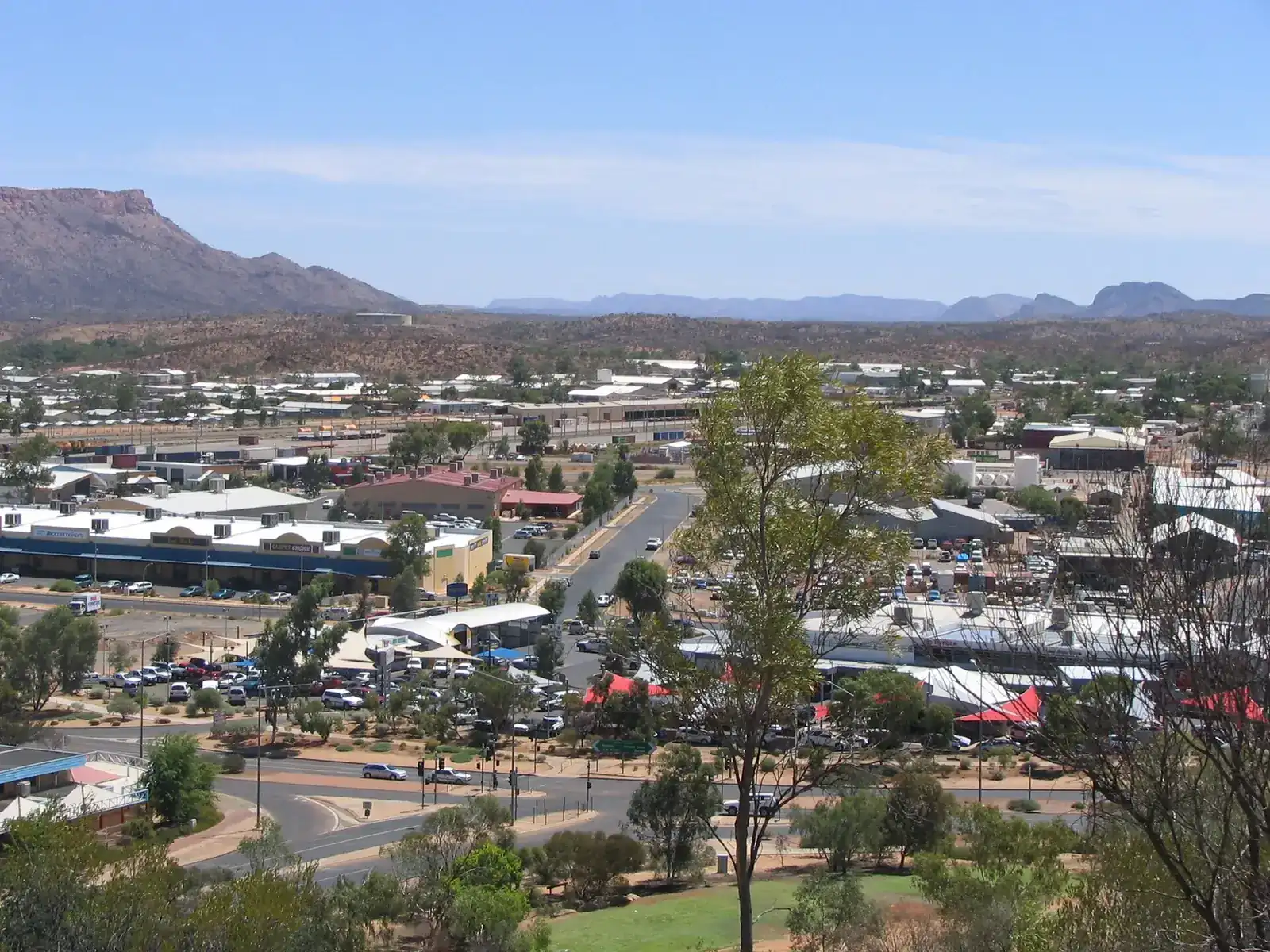
Alice Springs sits in a gap in the MacDonnell Ranges. The ranges run west of town as Tjoritja / West MacDonnell National Park, and east along the Ross Highway as the East MacDonnell Ranges.
Do you need a pass to visit the East MacDonnell Ranges parks?
Yes. The NT Government says visitors to the Northern Territory need an NT Parks Visitor Pass for parks including Emily and Jessie Gaps, Corroboree Rock, Trephina Gorge, N'Dhala Gorge and Ruby Gap. Camping must also be booked and paid online before you go.
How far is Trephina Gorge from Alice Springs?
About 85 km east of Alice Springs, off the Ross Highway, according to the NT Government. Emily and Jessie Gaps are much closer, about 10 km east of town, and Corroboree Rock is 42 km east.
Sources and further reading
Facts on this page were checked against these primary and official sources. Conditions change — confirm before you travel or buy.
- Trephina Gorge Nature Park — Northern Territory Government
- Yeperenye / Emily and Jessie Gaps Nature Park — Northern Territory Government
- Corroboree Rock Conservation Area — Northern Territory Government
- N'Dhala Gorge Nature Park — Northern Territory Government
- Ruby Gap Nature Park — Northern Territory Government


