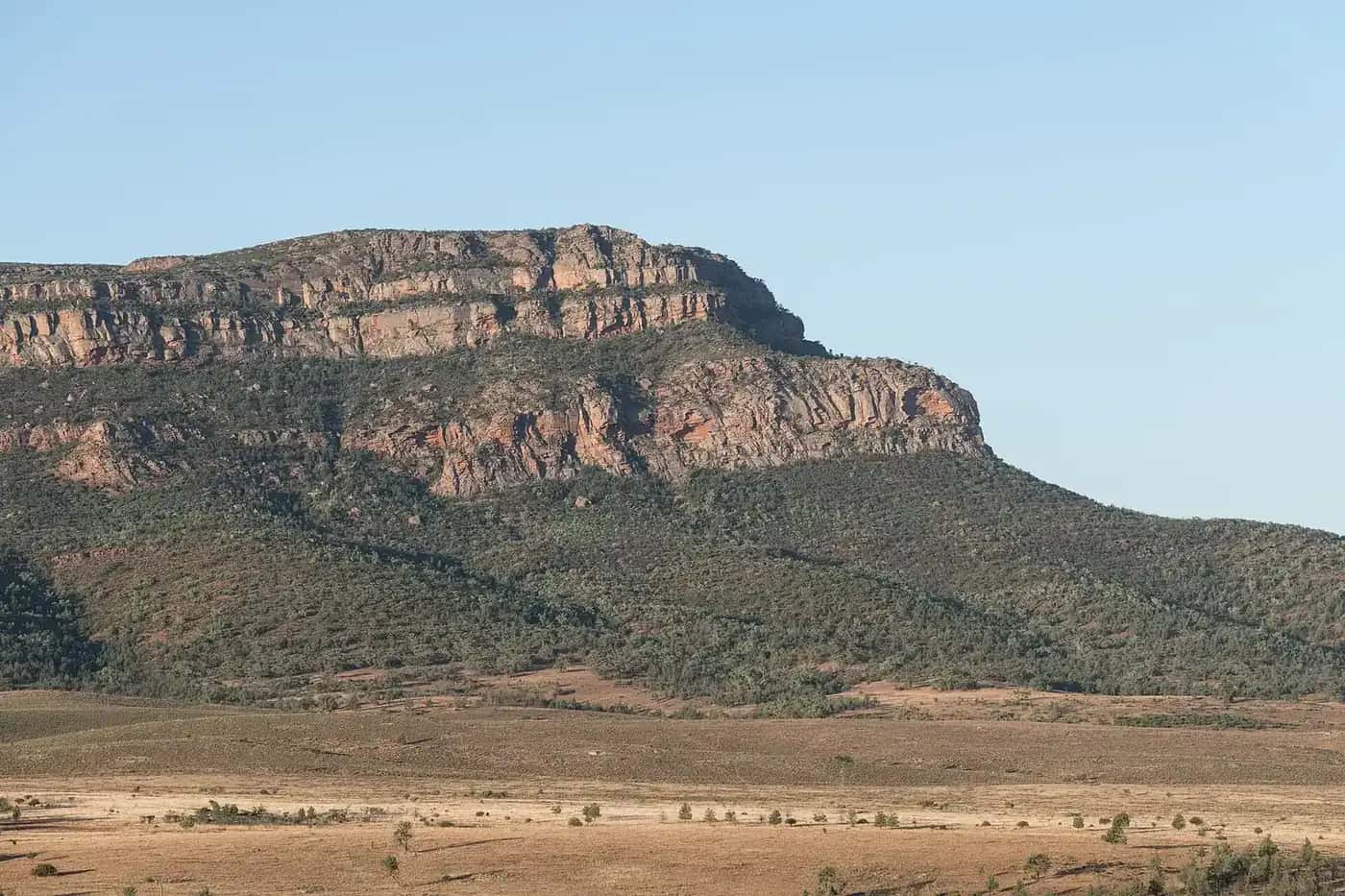
Lake Gairdner National Park lies north of the Gawler Ranges in outback South Australia. National Parks and Wildlife Service South Australia says the park protects a large saline lake system surrounded by red sand hills. It includes Lake Gairdner, Australia's third-largest salt lake, as well as Lake Everard and Lake Harris. The white salt surface is framed by the red foothills of the Gawler Ranges.
Traditional Owners
National Parks SA recognises the Gawler Ranges People as the Traditional Owners. They gained native title in 2011. The Gawler Ranges People are a distinct group of foundation families made up of some, but not all, of the Barngarla, Kokatha and Wirangu peoples.
The Traditional Owners ask that you respect their culture. Don't move any rocks around the lake, and don't walk onto the lake surface. The park is co-managed by the state government and the Traditional Owners through the Lake Gairdner National Park Co-management Board. A park management plan was approved in 2019.
Things to do
National Parks SA's rangers suggest:
- sitting around the campfire and enjoying the remote tranquillity
- sleeping under the stars
- counting the animals you see. As well as kangaroos and emus, look for wombats, goannas and lizards.
There are no formal bushwalking trails. A moderate, well-formed walking trail leads from the campground and day visit area up a hill overlooking the lake.
Driving
National Parks SA says a 4WD is the best way to explore the park, but in good weather you can visit much of it in a high-clearance 2WD. Watch for emus and kangaroos on the tracks, especially at sunrise and sunset. Stay on designated tracks. Driving on the lakes' surface is prohibited without an appropriate permit.
Camping
Camping is free and doesn't need to be booked. Self-sufficient bush camping is available at Waltumba campground, set among western myall trees at the lake's edge, with views over the lake to the Gawler Ranges. It is accessible to high-clearance vehicles and has a toilet. National Parks SA's own page describes the campground as being on the eastern side of the lake in one place and the western side in another, so check the park map before you go.
Firewood collection is prohibited in the park, because dead wood shelters animals and feeds the soil. Bring your own if fires are allowed, and take all your rubbish with you.
Getting there
National Parks SA gives these directions:
- Location. The southern edge of the lake is about 150 km north-west of Port Augusta. The northern end is a few kilometres south of Kingoonya, the Trans-Australian Railway and the Stuart Highway.
- Main route. Via Mount Ive station, on a 34 km station track. You must contact Mount Ive before entry, and a key to the gate is required, for a fee.
- Waltumba Tank campground. Reached via the Stringer Highway towards Glendambo.
The park is surrounded by private properties and private roads, so stay on public, signposted tracks.
All roads and tracks in the area are unsealed gravel or sand, and conditions can change quickly with the weather. Check the Northern and Western South Australian Outback Roads report (1300 361 033) before you set out.
Safety
- There are very limited facilities. Carry enough water and food.
- Tell a responsible person how long you intend to be away.
- Dogs are not permitted, except accredited assistance dogs.
- In an emergency, call 000. Park enquiries go to the Gawler Ranges National Park office on (08) 8688 3111.
See our remote area travel safety guide before heading out, and combine the lake with Gawler Ranges National Park.
Frequently asked questions
Can you drive on Lake Gairdner?
Not without a permit. National Parks SA says driving on the lakes' surface is prohibited without an appropriate permit. The Traditional Owners also ask visitors not to walk onto the lake surface or move rocks around the lake.
Does Lake Gairdner have water?
National Parks SA describes Lake Gairdner as a large saline lake with a glistening white salt surface, up to a metre thick in places. Treat it as a salt lake rather than a place to swim or boat, and respect the request not to walk on it.
How do you get to Lake Gairdner?
National Parks SA says the main route is via Mount Ive station on a 34 km station track. You must contact Mount Ive before entry, and a gate key is required (a fee applies). Waltumba Tank campground is reached via the Stringer Highway towards Glendambo.
Is camping free at Lake Gairdner?
Yes. National Parks SA says camping is free and doesn't need booking. Self-sufficient bush camping is available at Waltumba campground, which has a toilet, and is accessible to high-clearance vehicles.
Sources and further reading
Facts on this page were checked against these primary and official sources. Conditions change — confirm before you travel or buy.
- Lake Gairdner National Park — National Parks and Wildlife Service South Australia


