Bourke sits on the Darling River (Baaka) in north-west NSW, on the traditional lands of the Ngemba and Barkindji peoples. In the late 1800s it was one of the busiest inland ports in Australia, with paddle steamers loading wool bound for the sea. Today it is a working town for a wool, cattle, cotton and citrus district, and one of the best introductions to the outback you can drive to on sealed roads.
Things to do in Bourke
Back O' Bourke Exhibition Centre. An award-winning interpretive centre on the riverbank that tells the story of the region — Aboriginal heritage, explorers, paddle steamers, drovers, shearers and the Afghan cameleers — through immersive exhibits. Allow at least two hours.
Paddleboat cruise on the Darling. The PV Jandra, a replica paddle wheeler, recaptures the romance of the old river steamers on cruises along the quiet waters of the Darling during the cooler months. Check the visitor centre for the current schedule; cruises depend on river levels.
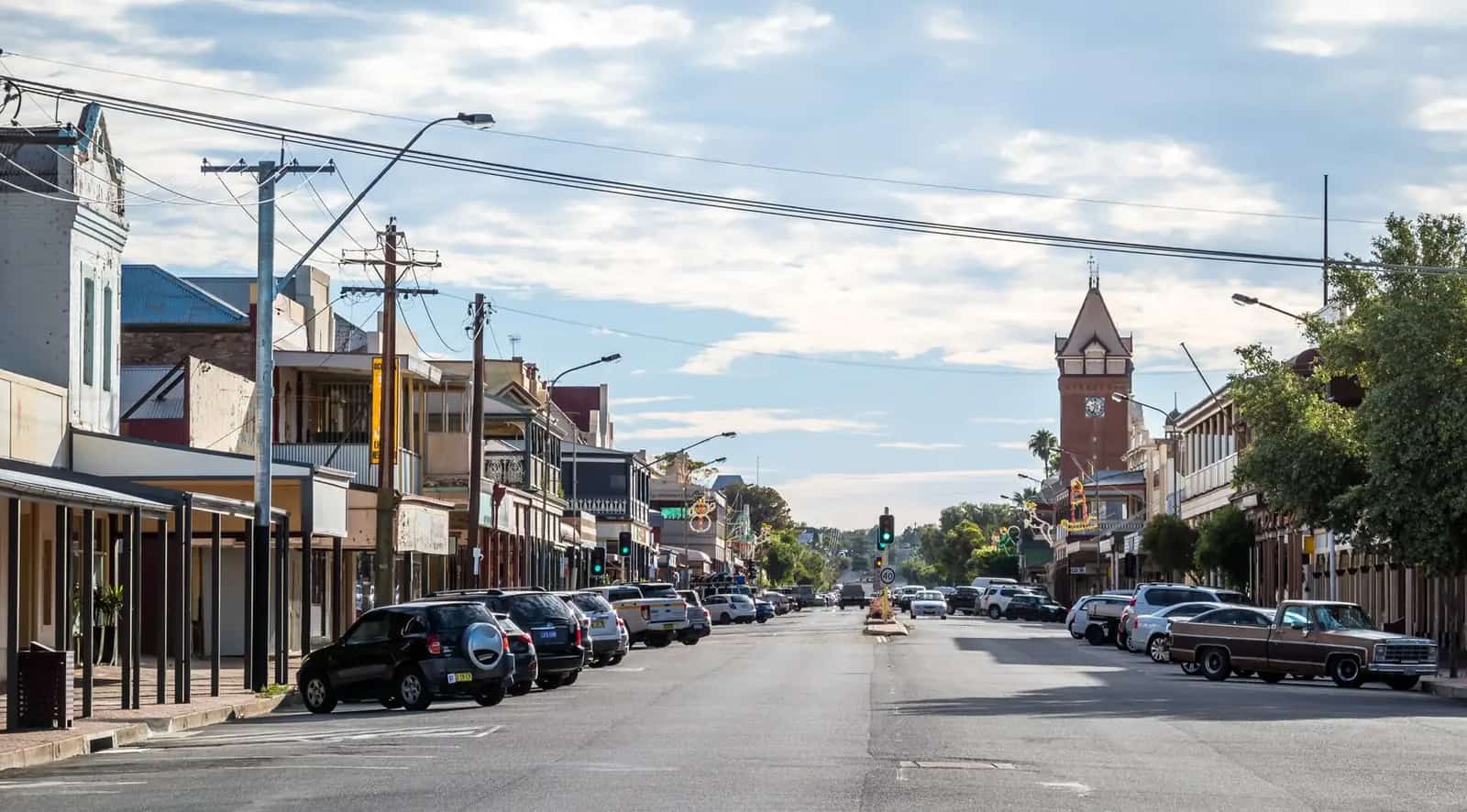
Historic wharf and streetscape. A reconstruction of the old Bourke wharf shows how high the river ran during the steamer era. Around town, several buildings date back to the 1870s and 1880s, including the courthouse with its distinctive maritime crown — a reminder that Bourke was once an official port.
Henry Lawson's Bourke. The writer Henry Lawson lived and worked in and around Bourke in the early 1890s, and the town features in his stories. He famously wrote that "if you know Bourke, you know Australia". A Lawson trail and plaques mark sites he knew.
Fred Hollows' grave. The pioneering eye surgeon Professor Fred Hollows, who worked to restore sight to Aboriginal people and people around the world, chose to be buried in Bourke cemetery. His grave is a quiet place of reflection.
Mud Map self-drive tours. The visitor centre provides self-drive "mud map" tours to local sights including weirs, lookouts and the historic cemetery.
Day trips
Gundabooka National Park, south of town, rises out of the plains and protects Ngiyampaa and Barkindji rock art at the Mulgowan (Yappa) Aboriginal Art Site, plus walking tracks with views over the Darling floodplain. Access roads are unsealed and close after rain.
Brewarrina, about 100 km east, holds the Baiame's Ngunnhu fish traps — a nationally heritage-listed system of stone fish traps on the Barwon River, among the oldest human-made structures in the world.
Mount Oxley, a mesa on private land east of town, offers sunset views across the plains on guided tours.
Getting there and getting around
Bourke is on the Mitchell Highway, about 370 km north-west of Dubbo. The drive from Sydney is roughly nine hours. The town has an airport with regional flights. Distances around Bourke are big but most attractions are within a short drive of the centre.
The river port years
In the second half of the nineteenth century, before railways reached the inland, the Murray–Darling river system was a highway. Paddle steamers carried supplies upriver and returned with bales of wool bound for Adelaide and the sea. Bourke, at the upper limit of regular navigation on the Darling in good seasons, became one of the busiest inland ports in Australia. Wharves, stores and hotels sprang up, and bullock and camel teams carried goods on to stations across the north-west and into Queensland.
The river trade depended on water levels, and droughts could strand steamers for months. The arrival of the railway from Sydney in 1885 began the long decline of the river trade, though steamers worked the Darling into the early twentieth century. Bourke's heritage-listed courthouse, with the crown on its roof, recalls the town's status as a port of entry.
Aboriginal heritage
The Bourke district is the Country of the Ngemba, Barkindji (Paakantyi) and neighbouring peoples, and the Darling (Baaka) River has been central to life here for tens of thousands of years. Gundabooka National Park's rock art, the stone fish traps at Brewarrina and the many scarred trees along the river are tangible links to that history. The Back O' Bourke Exhibition Centre and local Aboriginal-led tours are good ways to learn more.
Cameleers, Kidman and Lawson
Afghan cameleers worked out of Bourke from the 1880s, carrying supplies to remote stations; a small mosque and cemetery are reminders of their presence. Sidney Kidman, the "cattle king", built a chain of stations that ran through this country, letting him move cattle along water from the Gulf to the markets. And Henry Lawson's time in Bourke in 1892–93 gave Australian literature some of its best-known outback stories and poems.
A three-day itinerary
Day 1 — Town and river. Morning at the Back O' Bourke Exhibition Centre. Lunch in town, then the historic wharf replica, the courthouse and a self-guided heritage walk. Late afternoon cruise on the PV Jandra (seasonal), followed by sunset over the Darling.
Day 2 — Gundabooka. Drive south to Gundabooka National Park (check road conditions first). Visit the Mulgowan (Yappa) Aboriginal Art Site and walk one of the tracks to views across the plains. Return for dinner in town.
Day 3 — Brewarrina or the cemetery and lookouts. Either drive east to Brewarrina to see the Baiame's Ngunnhu fish traps and the Brewarrina Aboriginal Cultural Museum, or stay local with the historic cemetery (including Fred Hollows' grave), the weir and a "mud map" tour from the visitor centre.
Seasons and weather
Bourke's climate is hot and semi-arid. Summer maximums commonly exceed 35°C and can go much higher, while winter days are mild and nights can be cold, according to Bureau of Meteorology records. April to October is the most comfortable time to visit, and the season for river cruises and many tours. Heavy rain in Queensland can send floodwater down the Darling months later, occasionally cutting roads.
Where to stay
Bourke has motels, a hotel, cabins and caravan parks, including riverside parks such as Kidman's Camp. Station stays operate in the district. Book ahead for the winter school holidays.
Food and supplies
Supermarkets, a bakery, cafés and pubs cover the basics. Bourke is the last large town before the long stretches north into Queensland and west towards Wanaaring and Tibooburra, so stock up on fuel, food and water here.
Travel safety
The Mitchell Highway is sealed, but kangaroos, goats, emus and stock are common. Avoid dawn and dusk driving. Roads to Gundabooka, Louth and Wanaaring are unsealed and close after rain — check Live Traffic NSW and the Bourke Shire road report.
More about Bourke's attractions
Jandra Paddleboat. Visit Bourke says the original Jandra was a steam paddle boat built in Mannum, South Australia, in 1894. The modern vessel was commissioned in 2000, the first paddle boat to operate on the Darling River in over 60 years. Cruises leave from Kidmans Camp. Buy tickets the day before at the Back O' Bourke centre, or on board if you arrive 15 minutes early. Cruises are seasonal, so check the schedule.
Back O' Bourke Exhibition Centre. Bourke Shire Council describes interactive stories of the Inland Sea, CEW Bean, wool, riverboats, Henry Lawson and the women of the west. A two-day ticket is available, along with joint tickets that include a Jandra cruise.
Fred Hollows' grave. The Fred Hollows Foundation says the eye surgeon was buried at Bourke Historic Cemetery on 16 February 1993. The polished granite memorial, by sculptor Andreas Buisman, replaced the original headstone in 2006. Boulders from nearby Mt Oxley are laid out around it in the shape of an eye.
Toorale National Park drive. Visit Bourke suggests a loop via Toorale, Louth and Tilpa. Toorale was part of the McCaughey wool empire, and Henry Lawson worked there in 1892.
Practical information
Bourke has a hospital, supermarkets, fuel, caravan parks, motels and a visitor information centre. Mobile coverage is good in town but drops away quickly on surrounding roads. The best time to visit is April to October; summer days are very hot. Check Live Traffic NSW before heading onto unsealed roads.
Where to next
Head south-west to Cobar and on to Broken Hill, north-east to Lightning Ridge, or north along the Mitchell Highway into Queensland towards Charleville — the route of our Sydney to Darwin itinerary.
Explore nearby
Bourke is a key stop on the Darling River Run.
Nearby park guide: Currawinya National Park.
Nearby park guide: Gundabooka & Toorale.
Related park guide: Culgoa.
Frequently asked questions
Is Bourke worth visiting?
Yes. Bourke combines Darling River history, a world-class interpretive centre, river cruises, nearby Aboriginal rock art at Gundabooka National Park and the literary heritage of Henry Lawson. It is reachable on sealed roads from Sydney.
How far is Bourke from Sydney?
Bourke is roughly 760 to 800 km north-west of Sydney by road, depending on route — about nine hours' driving via Dubbo and Nyngan on the Mitchell Highway.
What does "back o' Bourke" mean?
It is an Australian expression for the remote outback — anywhere beyond Bourke, or a very long way from anywhere.
What are some must-see attractions in Bourke?
The Back O' Bourke Exhibition Centre, a Jandra paddleboat cruise on the Darling River, Fred Hollows' grave in the historic cemetery, the wharf, North Bourke Bridge, and day trips to Gundabooka and Toorale national parks.
How long to stay in Bourke?
Allow two or three nights to see the exhibition centre, cruise the Darling, explore the historic cemetery and wharf, and take a day trip to Gundabooka or Toorale.
Sources and further reading
Facts on this page were checked against these primary and official sources. Conditions change — confirm before you travel or buy.
- Visit Bourke — Bourke Shire Council
- Gundabooka National Park — NSW National Parks and Wildlife Service
- Bourke — Destination NSW
- Bourke — Bourke Shire Council
- Exhibition Centre — Bourke Shire Council
- Jandra Paddleboat — Visit Bourke
- Why is Fred Hollows buried in Bourke? — The Fred Hollows Foundation