Uluru-Kata Tjuta National Park protects two of Australia's most famous landforms and the culture of the Anangu, the Traditional Owners. The park was handed back to Anangu in 1985 and is leased to the Director of National Parks, with a board of management that has an Anangu majority. It is listed as a World Heritage Area for both its natural and cultural values.
Anangu culture and Tjukurpa
For Anangu, Uluru and Kata Tjuta are shaped by Tjukurpa — the foundation of Anangu life, law and knowledge. Many places around Uluru are sacred, and Anangu ask visitors not to photograph certain sites; signs mark these areas. The Cultural Centre near Uluru is the best place to start, with displays, art and information created by Anangu.
Highlights
- Uluru base walk — about 10 km around the rock, with sacred sites, waterholes and rock art.
- Mala and Kuniya walks — shorter walks to Kantju Gorge and Mutitjulu Waterhole.
- Kata Tjuta — the domes of Kata Tjuta, about 50 km from Uluru; the Valley of the Winds walk and Walpa Gorge walk. Valley of the Winds may close in extreme heat.
- Sunrise and sunset viewing areas at both Uluru and Kata Tjuta.
- Guided walks led by rangers or Anangu-owned operators.
Seasons
The cooler months from May to September are most comfortable. Summer is extremely hot; some walks close from 11 am on hot days. Carry water on every walk.
Getting there and staying
Yulara (Ayers Rock Resort), just outside the park, has accommodation for all budgets and a campground. Flights operate to Ayers Rock Airport. By road, it is about 450 km from Alice Springs via the Stuart and Lasseter highways.
Respect
Do not climb, take rocks or sand, or photograph sacred sites. Drones are not permitted without a permit.
Uluru
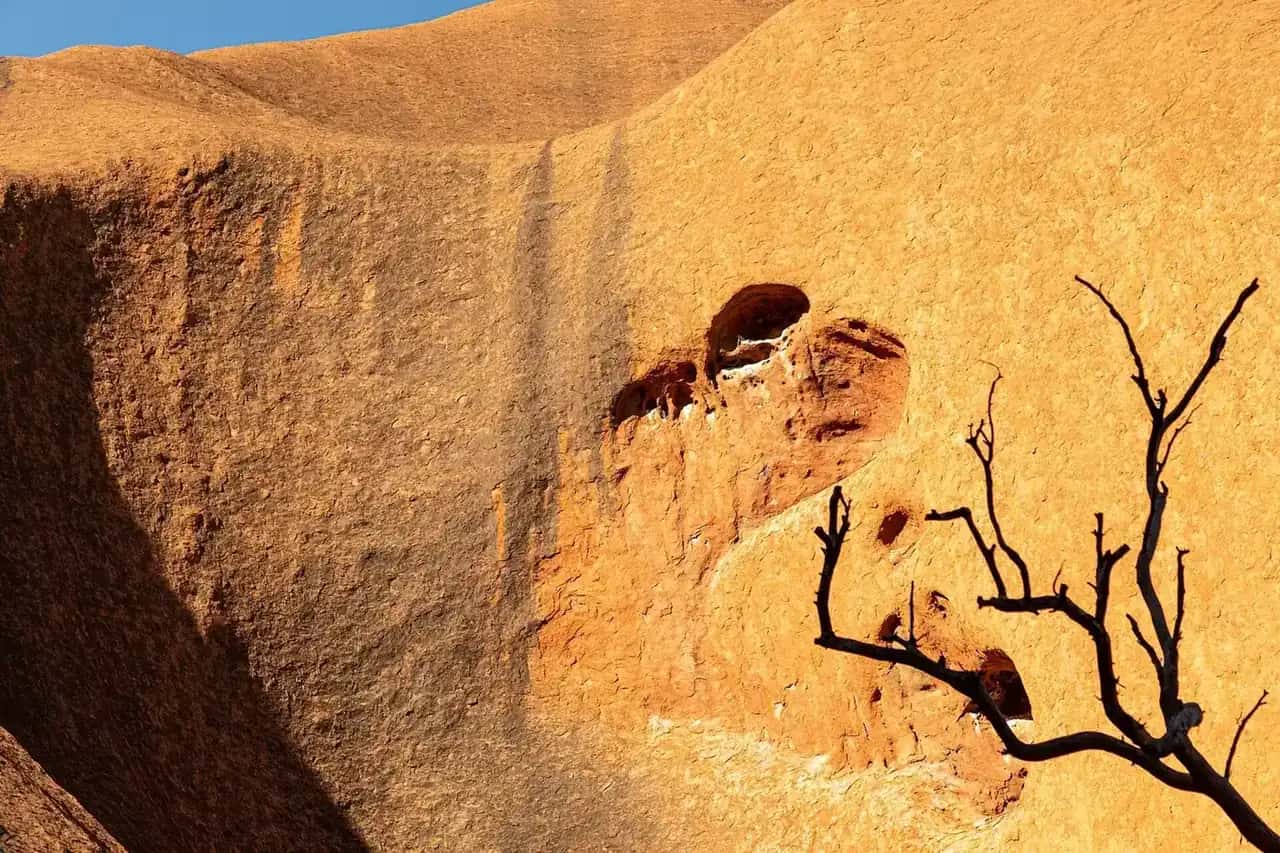
Uluru rises about 348 m above the surrounding plain, and much more of it lies below the ground. It is made of arkose, a coarse sandstone rich in feldspar, which turns red as iron minerals oxidise on its surface. The colours change throughout the day, from deep red at sunrise and sunset to orange and brown at midday, and silver-grey when it rains. Up close, its surface is full of caves, waterholes, gullies and rock art.
Kata Tjuta
Kata Tjuta, meaning "many heads", is a group of 36 domes about 50 km west of Uluru. The tallest dome rises higher than Uluru. The Valley of the Winds walk winds between domes to lookouts at Karu and Karingana, and the Walpa Gorge walk follows a narrow gorge between two of the largest domes. Kata Tjuta is also sacred to Anangu, and visitors must stay on marked tracks.
The Cultural Centre
Near the base of Uluru, the Cultural Centre explains Tjukurpa and Anangu life through displays, videos and art. It houses Maruku Arts and Walkatjara Art, where you can buy art directly from Anangu artists. Start your visit here.
Ranger and Anangu-guided tours
Free ranger-guided walks run at the base of Uluru, such as the Mala Walk, at set times. Anangu-owned and operated tours share culture, stories and bush skills. Booking is essential for commercial tours. See Aboriginal-led experiences.
Wildlife
Despite the harsh climate, the park supports many species, including red kangaroos, dingoes, perenties, thorny devils and many birds. Look for animals in the cooler parts of the day.
Photography
Photography is welcome in most areas, but some sacred sites around Uluru must not be photographed. Signs mark these areas. Commercial photography and drones need a permit.
Suggested three days
Day one. Arrive, buy your park pass and watch sunset at the Uluru sunset viewing area.
Day two. Sunrise at Talinguru Nyakunytjaku, walk the Uluru base walk, and visit the Cultural Centre.
Day three. Sunrise at Kata Tjuta and the Valley of the Winds walk, then fly out or drive on.
Seasons and heat
Winter days are mild and nights can be below freezing. Summer days often exceed 40°C, and some walks close at 11 am on hot days. Carry at least one litre of water per hour of walking in the heat, and wear a hat.
Getting around
There is no public transport within the park. Visitors drive themselves, join tours or use shuttle services from Yulara. Roads within the park are sealed. Allow about 20 minutes to drive from Yulara to Uluru and about 50 minutes to Kata Tjuta. Park gates open before sunrise and close after sunset; check current times.
Evening experiences near Uluru
Beyond the park itself, evening experiences around Yulara have become a popular part of a visit. Field of Light, an art installation by Bruce Munro made up of thousands of solar-powered lights, has been displayed near the resort town. Wintjiri Wiru, a drone, light and sound show developed with Anangu, tells part of a Tjukurpa story in the sky. Both are run by commercial operators; check availability and booking requirements.
Accessibility
Some sections of the Uluru base walk and the Mala walk are flat and suitable for wheelchairs and strollers, and the Cultural Centre is accessible. Kata Tjuta's walks are more rugged. Contact Parks Australia for detailed accessibility information.
Drones and filming
Recreational drone use is not permitted in the park without approval, and commercial filming and photography require permits from Parks Australia. These rules protect cultural values as well as visitor experience.
Related guides
Planning your days? See our Uluru itinerary and the Red Centre region guide.
See also scenic flights over Uluru and stargazing in the Red Centre.
Next stop: Kings Canyon in Watarrka National Park, and the full Northern Territory road trip.
Frequently asked questions
How long should you spend at Uluru?
Most visitors spend two to three nights at Yulara, allowing time for sunrise and sunset at both Uluru and Kata Tjuta, the base walk and the Cultural Centre.
How much is the Uluru park pass?
Park passes are sold online by Parks Australia and at the park entry station. Check the official Parks Australia website for current prices and pass options.
Can you still climb Uluru?
No. The climb was permanently closed on 26 October 2019, out of respect for Anangu law and culture and for visitor safety.
Can you climb Uluru?
No. The climb was permanently closed in October 2019, in line with the wishes of the Anangu Traditional Owners.
Do you need a pass for Uluru?
Yes. Every visitor needs a valid park pass, which can be bought online or at the park entry station.
How far is Uluru from Alice Springs?
About 450 km by road, roughly a five-hour drive. Flights also operate to Ayers Rock (Connellan) Airport near Yulara.
Sources and further reading
Facts on this page were checked against these primary and official sources. Conditions change — confirm before you travel or buy.
- Uluru-Kata Tjuta National Park — Parks Australia
- UNESCO World Heritage — Uluru-Kata Tjuta — UNESCO