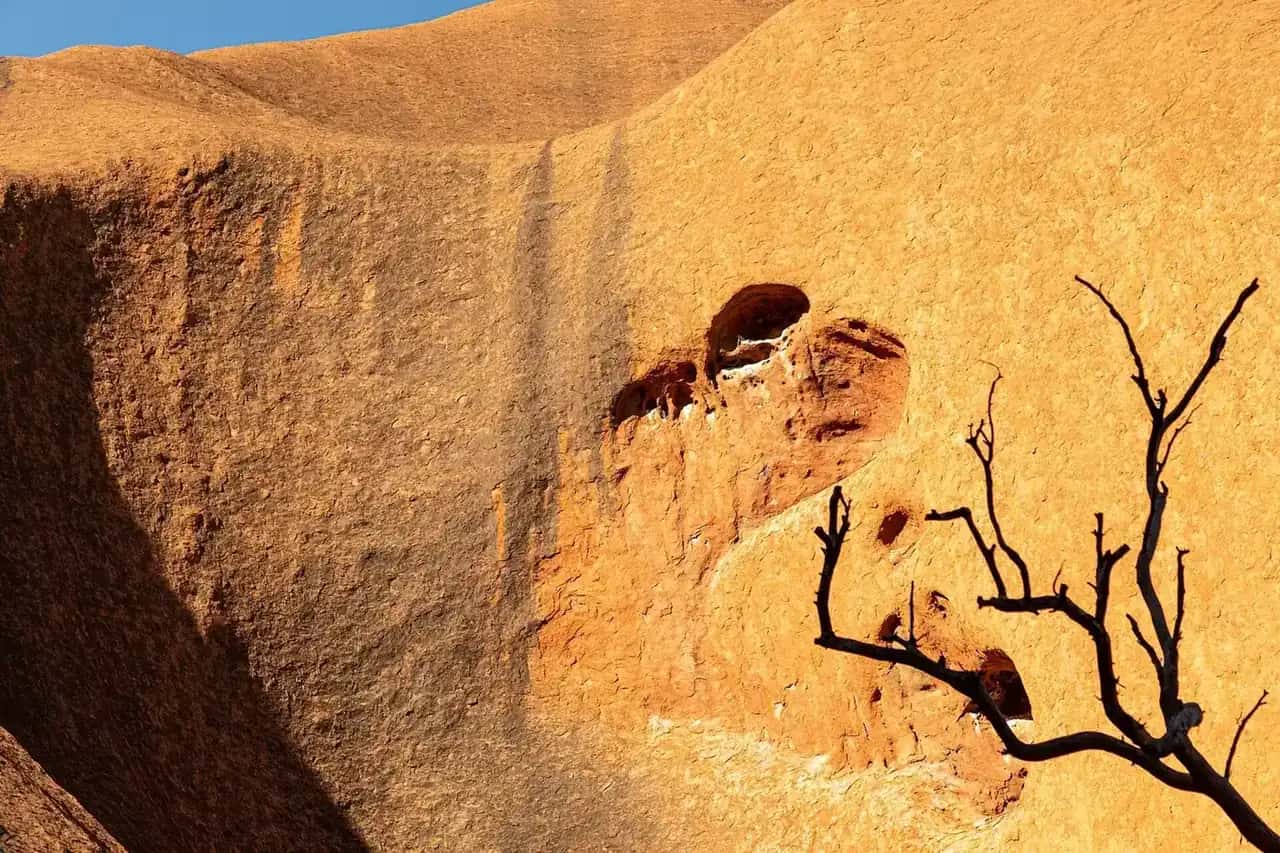
Good outback photos come from timing, patience and preparation more than expensive gear. A phone can produce superb images at sunrise. A full camera kit can come home with nothing but dust if it isn't looked after. This guide covers the practical side, along with the cultural and legal rules every photographer needs to know.
Light: work the edges of the day
Outback midday sun is intense and comes from almost directly overhead in summer. It flattens landscapes and washes out the red. The best light comes:
- Before and just after sunrise, when cool, soft light makes gorges and rock glow.
- In the last hour before sunset, the classic time for Uluru, Kata Tjuta, Karlu Karlu and the Flinders Ranges.
- At blue hour, the 20 to 40 minutes after sunset or before sunrise, when the sky turns deep blue and town or campfire lights balance with it.
Use the middle of the day to travel, rest, scout locations, or shoot shady gorges, where light bouncing off the walls is softer. See travelling in summer heat.
Composition for big landscapes
Huge, empty landscapes can look like nothing in a photo. Give them scale:
- Foreground interest: spinifex, a boulder, ripples in the sand, a track or a vehicle.
- Leading lines: a straight road vanishing to the horizon, a fence, a dune crest or a dry creek bed.
- People for scale: a walker on a gorge rim or a figure beside a boab.
- Sky: if the sky's dramatic, give it two-thirds of the frame. If it's plain blue, give it less.
Protecting gear from dust and heat
- Dust: change lenses inside the vehicle or a bag, with your back to the wind. Carry a blower, lens cloths and sealable bags. On corrugated roads, pack gear in padded cases, because vibration loosens screws and damages lenses.
- Heat: never leave cameras, phones or batteries in a parked car or on a dashboard in the sun. Phones can shut down when overheated.
- Condensation: moving from an air-conditioned car into hot, humid Top End air fogs lenses. Let gear warm up in a closed bag first.
- Power: charge everything from the vehicle while driving. Carry spare batteries and cards, because shops are hundreds of kilometres apart.
- Backups: copy your images each night to a second card, a drive or a laptop.
Night skies
The outback's dark skies are world-class. See stargazing and dark skies for places.
For Milky Way shots, a common starting point is a tripod, a wide-angle lens at its widest aperture, ISO 3,200 to 6,400, and an exposure of about 15 to 25 seconds. Focus manually on a bright star using live view, and shoot near the new moon. The galactic core is best placed in the middle of the year. Note that some parks close at night. At Uluru-Kata Tjuta, visitors must leave by closing time, so night-sky shots are taken from outside the park.
Wildlife
Wildlife is most active around dawn and dusk. A telephoto lens (or a phone's zoom) and patience help. Waterholes and wetlands, such as Yellow Water in Kakadu or the lakes of the Channel Country after floods, are rewarding. Never approach or feed animals, and keep well back from water's edges in crocodile country. See crocodile safety and birdwatching.
Cultural rules
Much of the outback is Aboriginal Country, and some places, objects and ceremonies must not be photographed.
- At Uluru-Kata Tjuta, Parks Australia says some features are culturally sensitive sites for Anangu, and photographing them is prohibited. Signs and park maps mark them. Parks Australia asks photographers to take only wide shots of Uluru's north-east face from a distance. Commercial or public-use images, including by influencers and content creators, need a media permit.
- At rock art sites, stay on paths and boardwalks, never touch the art, and follow any signs about photography.
- Always ask before photographing people, and respect a "no".
See visiting Country respectfully and rock art sites.
Drones
The Civil Aviation Safety Authority's rules apply everywhere in Australia:
- Keep your drone within visual line of sight, and fly in daylight only.
- Fly no higher than 120 m above the ground.
- Stay at least 30 m from people not involved in the flight, and never fly over people.
- Stay away from emergencies, including bushfires, and from wildlife.
In national parks, the rules are stricter. In the NT, Watarrka requires a drone permit obtained before you arrive, and drones aren't permitted at Karlu Karlu or Uluru-Kata Tjuta. NSW National Parks requires approval for recreational drone use, and some parks exclude it. Check the park page before you fly.
Scenic flights
For the Bungle Bungles, Lake Eyre or Kakadu's waterfalls, a scenic flight gives views no drone could legally capture. Ask the operator for a window seat, and whether doors-off flights are available for photography. See scenic flights and air tours.
Classic outback shots
- Uluru and Kata Tjuta at sunrise and sunset (Uluru itinerary)
- Kings Canyon's walls in morning light (Watarrka)
- Karlu Karlu boulders at dusk (Karlu Karlu)
- Wilpena Pound and the Flinders' ridges (Flinders Ranges itinerary)
- Pilbara gorges at Karijini
- Outback pubs and corrugated-iron towns (outback pubs)
Related guides
Frequently asked questions
What are good tips for taking photos in the outback?
Shoot early and late, when low light brings out red colours and texture, and rest in the middle of the day. Use foreground interest, such as a boulder, a track or a tree, to give scale to big landscapes. Keep sensors clean by changing lenses out of the wind. Carry spare batteries and memory cards, because power and shops can be far apart. And always follow signs about culturally sensitive sites.
Can you photograph Uluru?
Yes, but with rules. Parks Australia explains that some features of Uluru and Kata Tjuta are culturally sensitive sites for Anangu, so photographing them is prohibited. Signs and maps mark these sites. Commercial or public-use images, including by influencers, need a media permit. Drones are prohibited in the park.
Can you fly a drone in outback national parks?
Usually not without permission. Many parks prohibit drones or require a permit. For example, Watarrka needs a permit obtained before you arrive, and drones aren't permitted at Karlu Karlu or Uluru-Kata Tjuta. Everywhere, CASA's rules apply: keep your drone in sight, no higher than 120 m, at least 30 m from people, and never over people.
How do you photograph the Milky Way in the outback?
Pick a night near the new moon and get away from town lights. Use a tripod, a wide lens at its widest aperture, a high ISO and an exposure of roughly 15 to 25 seconds. Focus manually on a bright star. The Milky Way's core is highest in the southern sky in the middle of the year, which conveniently matches the outback's cool dry season.
Sources and further reading
Facts on this page were checked against these primary and official sources. Conditions change — confirm before you travel or buy.
- Photography — Parks Australia
- Drone rules — Civil Aviation Safety Authority
- Drones in parks — NSW National Parks and Wildlife Service
- Watarrka National Park — Northern Territory Government
- Karlu Karlu / Devils Marbles Conservation Reserve — Northern Territory Government


