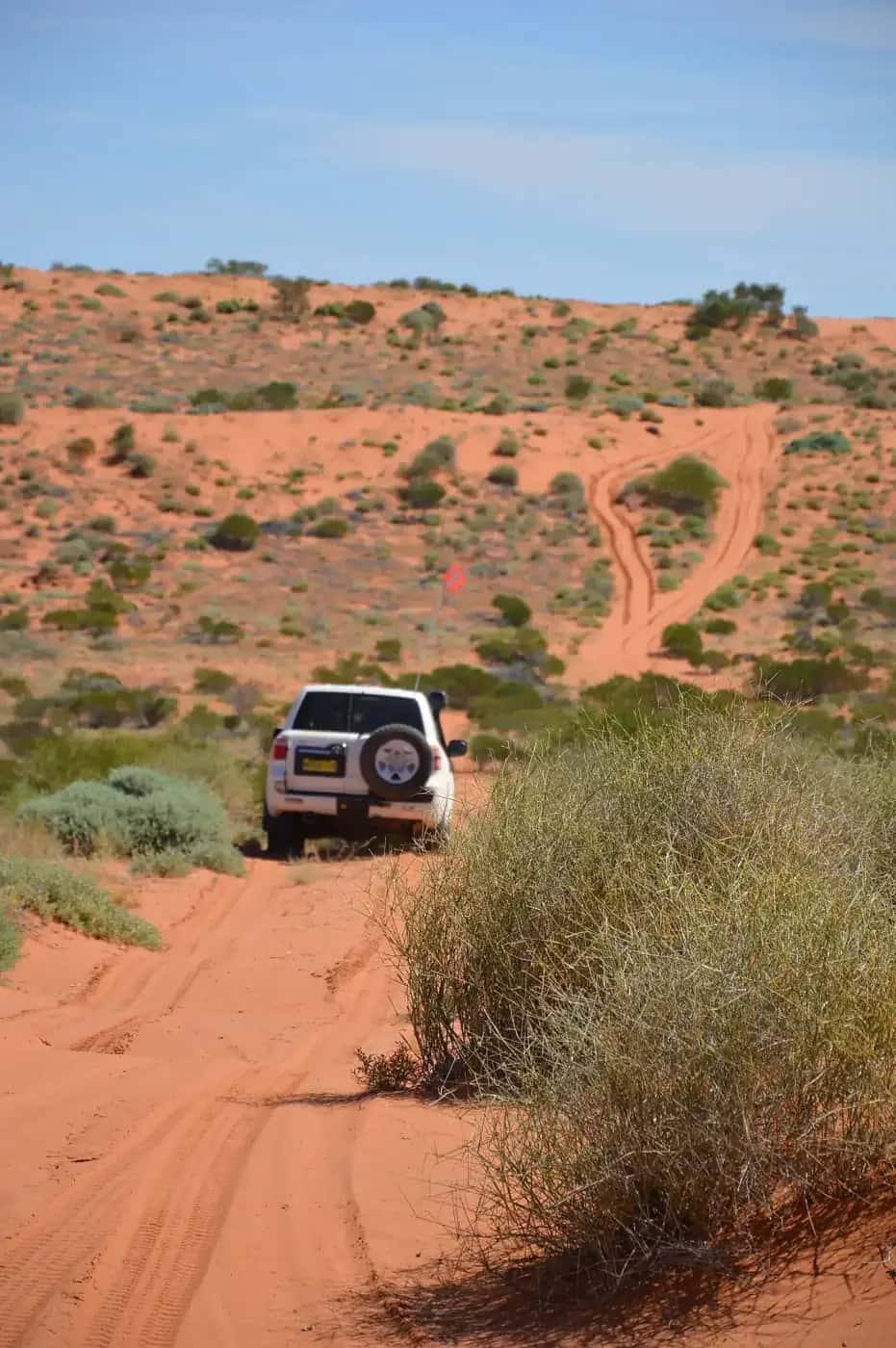
Unsealed roads are part of outback life. They range from wide, graded gravel highways used by road trains to sandy desert tracks such as the Simpson Desert crossing. The skills needed for the first are basic; the second demands experience, a properly equipped vehicle and travelling in company.
Know your vehicle
All-wheel-drive SUVs, part-time 4WDs and full-time 4WDs behave differently. Read the handbook to learn how your system works, what ground clearance you have and whether you have low range. Many popular tracks — the Oodnadatta, Birdsville and Strzelecki tracks in dry conditions, for example — are commonly driven in high-clearance 4WDs; extreme routes need serious preparation.
Tyres and pressures
Tyres are the most important upgrade for outback driving. Light-truck (LT) construction tyres with all-terrain tread resist punctures far better than passenger tyres. Lowering pressures increases the tyre's footprint, improving grip and ride on corrugations and sand and reducing punctures from sharp stones. Reduce speed accordingly, carry a compressor and re-inflate before returning to sealed roads. Carry two spares and a plug kit for remote tracks.
Driving on gravel
- Slow down. Braking distances are much longer than on bitumen, and loose gravel on corners can push you wide.
- Keep your headlights on and leave a big gap to vehicles ahead to stay out of dust and flying stones.
- Stay off the soft edges and the windrow of loose gravel on the shoulders.
- Slow right down for oncoming traffic and move left; dust can hide a second vehicle.
Corrugations
Corrugations are the rippled ridges that form on busy dirt roads. They shake vehicles and loosen fittings. Moderately lower tyre pressures, find a comfortable speed and check your load and fittings at each stop. Do not speed up to "float" over them on unfamiliar roads — it reduces steering control.
Bulldust
Bulldust is fine, powdery dust that collects in holes and dips and can hide ruts or rocks. Treat it with caution, slow down and avoid sudden steering inputs.
Sand
For soft sand, engage 4WD, lower tyre pressures, keep momentum without excessive speed and avoid sudden braking or turning. If you start to bog, stop before you dig in, reverse out along your tracks and try again with lower pressures. Carry recovery boards and a shovel.
Mud and rain
Wet black soil and clay are slippery and can be impassable. If a road is closed after rain, do not drive on it — penalties apply, you will damage the road for everyone and you may be stranded for days. If you are caught by rain on an open road, consider waiting for it to dry.
Creek crossings and floodwater
Never drive into floodwater. It is a leading cause of flood deaths in Australia. For small dry-season crossings, stop, check the depth, current and exit point on foot only if it is safe (never in crocodile country), and cross slowly in low range. In northern Australia, assume any water may hold crocodiles.
Recovery basics
Travel with at least one other vehicle on remote tracks if you can. Carry a recovery kit: snatch strap and rated shackles or soft shackles, recovery boards, shovel, gloves and a tyre deflator. Never attach a recovery strap to a tow ball. Take a 4WD training course before your first big trip — state motoring clubs and many private trainers offer them.
When to turn back
If the track is worse than expected, the weather is turning, you are low on fuel or water, or someone is tired, turn back. The outback will still be there next year.
Load and weight
Overloading is one of the most common causes of breakdowns and crashes on outback tracks. Every vehicle has a gross vehicle mass (GVM) and a roof load limit set by the manufacturer, and towing adds limits on tow-ball download and gross combination mass. Weigh your vehicle fully loaded at a public weighbridge before a big trip. Keep heavy items low and secured inside the vehicle, use cargo barriers and tie-downs, and avoid overloading roof racks, which raise the centre of gravity and stress the roof on corrugations.
Preparing your vehicle
Before a remote trip, have your vehicle serviced by a mechanic who knows outback conditions. Ask them to check:
- suspension, shock absorbers and bushes;
- brakes, wheel bearings and steering components;
- cooling system, hoses and belts;
- battery condition and any dual-battery system;
- air filter (and carry a spare — dust clogs filters quickly);
- spare wheel(s), jack and wheel brace that suit your wheels.
Carry basic spares: fan belts, radiator hoses, fuses, tyre plugs, cable ties, duct tape, engine oil and coolant. Learn how to change a tyre on uneven ground and use a high-lift or bottle jack safely.
Tyre pressures in practice
The right pressure depends on your vehicle, tyres, load and terrain, so follow your tyre manufacturer's guidance. As a general principle, run lower pressures on corrugations and gravel than on bitumen, and lower again for soft sand, then reinflate when you return to a hard surface. Lower pressures mean lower speeds — tyres overheat and fail if you drive fast on low pressures. Carry an accurate gauge and a reliable compressor.
Driving with road trains on unsealed roads
Road trains on dirt roads throw up huge clouds of dust and stones. When one approaches, slow down, move as far left as safely possible and, if necessary, stop until the dust clears. Never try to overtake a road train in dust. Use UHF radio to communicate: channel 40 is widely used by truck drivers on highways, and road train drivers will often advise when it is safe to pass. Channels 5 and 35 are reserved for emergencies.
Desert tracks and permits
Some tracks pass through national parks, Aboriginal land or desert reserves that require permits. The Simpson Desert parks in South Australia require a Desert Parks Pass or relevant park permit, and they close over the hottest months. The Canning Stock Route crosses native title land and requires access permits. Our outback tracks guide covers individual routes, and fuel, permits and road conditions explains where to get permits.
Learn the skills
Accredited four-wheel-drive training courses are offered in every state, and many 4WD clubs run training days for members. A course teaches vehicle systems, tyre management, sand and mud driving, and safe recovery techniques. Practise in a controlled setting before heading somewhere remote.
Protecting the country
Stay on formed tracks, don't create new ones around bad sections, and drive slowly through sensitive areas such as claypans and dunes. Leave gates as you find them on station land. Take all rubbish out, including food scraps, and carry a portable toilet where facilities aren't provided. See visiting Country respectfully.
Further reading
- Outback tracks
- Remote-area travel safety: communications, trip plans and emergencies
- Munga-Thirri–Simpson Desert National Park
- Gibb River Road
- Fuel, permits and road conditions
Choosing a vehicle? See best vehicle for the outback and caravanning in the outback.
For recovery gear and snatch strap safety, see 4WD recovery.
Frequently asked questions
How do I engage 4WD for beginners?
Read your vehicle's handbook first. Most modern 4WDs use 2H for sealed roads, 4H for gravel, sand and slippery surfaces at normal speeds, and 4L for slow, steep or difficult terrain. Some vehicles need to be stopped or in neutral to shift into 4L. Do not use part-time 4WD on dry bitumen.
Is 4H or 4L better for beach and sand driving?
Use 4H for most sand driving at moderate speed with lowered tyre pressures. Switch to 4L for very soft sand, steep dunes or slow manoeuvring where you need more control and torque.
What tyre pressure should I use on gravel and sand?
There is no single number; it depends on your vehicle, load and tyres. Many drivers lower pressures moderately for gravel and corrugations and further for soft sand, then re-inflate before returning to bitumen. Follow the tyre and vehicle manufacturer's guidance and reduce speed at lower pressures.
Can I drive a hire car on unsealed roads?
Many rental agreements prohibit unsealed roads in standard cars, and insurance may not cover you. Some companies allow named gravel roads or offer 4WDs approved for remote tracks. Check the agreement before you go.
Sources and further reading
Facts on this page were checked against these primary and official sources. Conditions change — confirm before you travel or buy.
- Outback road warnings and closures — Department for Infrastructure and Transport SA
- QLDTraffic road conditions — Queensland Government
- 4WD driving tips — RACQ
- Never drive into floodwater — Queensland Government

