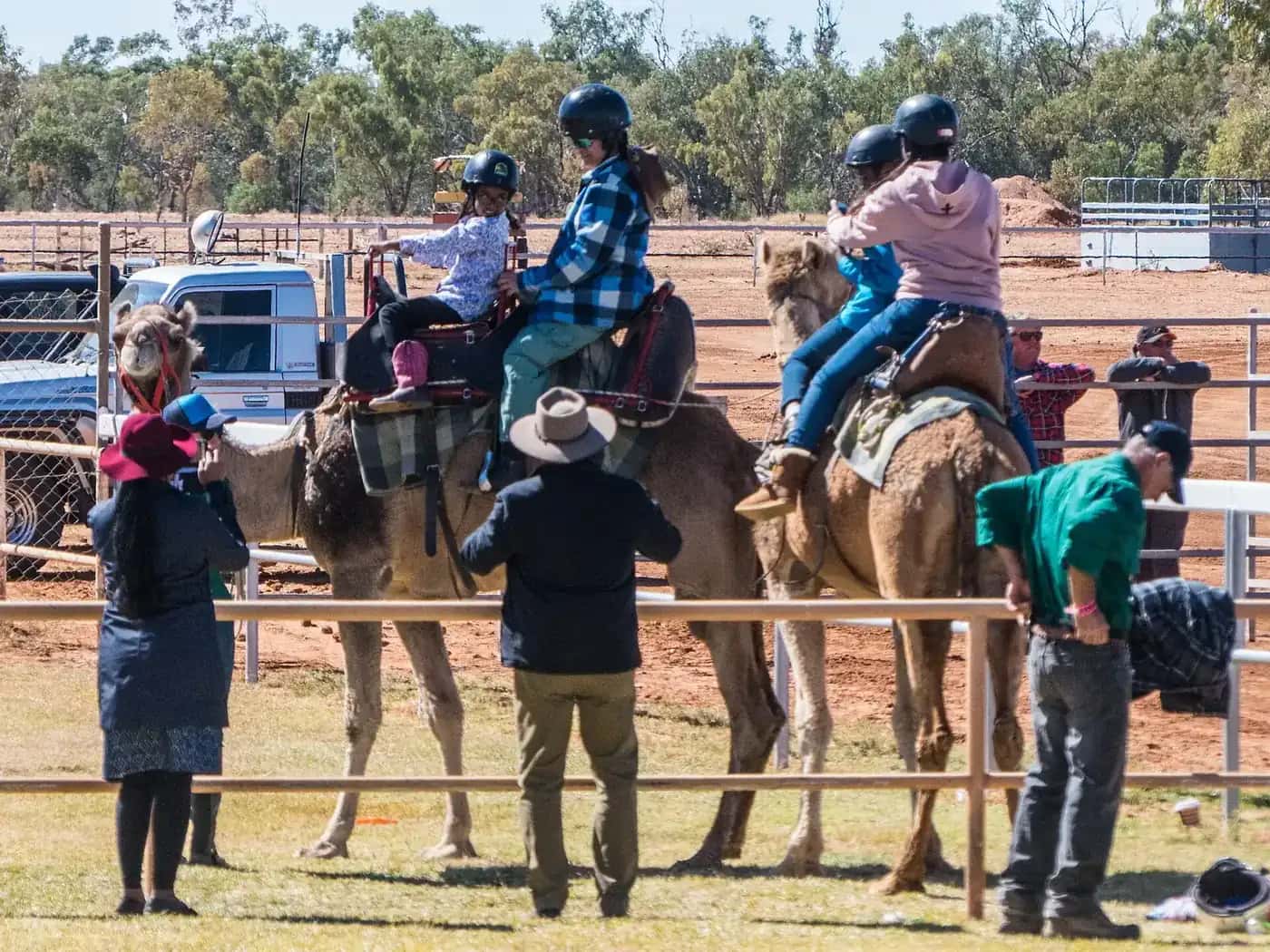
Outback wildlife is adapted to heat, drought and boom-and-bust seasons. After rain, the country can explode with birds, flowers and insects; in drought, animals gather around water.
Guides
Tips for seeing wildlife
- Dawn and dusk are best — but avoid driving then.
- Waterholes and bores attract animals in dry times.
- Bring binoculars and a field guide.
- Keep your distance, especially from dingoes, camels and crocodiles.
Boom and bust
The defining feature of outback ecology is unpredictability. Rainfall across much of inland Australia is low and highly variable, and many animals have evolved to survive long dry spells and then breed rapidly when rain finally comes. After big floods in the Channel Country, waterbirds can arrive in their tens of thousands at lakes and swamps that have been dry for years, frogs emerge from burrows where they have waited underground, and native rodents and the predators that eat them can boom. When the country dries out again, populations contract to refuges such as permanent waterholes, springs and gorges.
For travellers, this means no two visits are the same. A wet year can bring wildflowers, birds and insects; a dry year concentrates animals around water and makes them easier to find. The Bureau of Meteorology's rainfall maps are a useful guide to where the country has recently "come alive".
Mammals
Kangaroos and wallabies are the most visible outback mammals. Red kangaroos favour open plains, while euros (wallaroos) and rock-wallabies live in rocky ranges and gorges. Yellow-footed rock-wallabies can be seen in the Flinders Ranges and at parks such as Mutawintji; black-footed rock-wallabies inhabit parts of central Australia, including the West MacDonnell Ranges. Look for them on rock faces in the early morning and late afternoon.
Dingoes are found across most of the outback. They are wild animals and should never be fed or approached. Secure food and rubbish at campsites, and supervise children closely.
Small mammals — dunnarts, hopping mice, bilbies and others — are mostly nocturnal and rarely seen. Several species have declined because of introduced predators and habitat change. Conservation programs such as the bilby breeding work associated with Charleville and fenced reserves run by state agencies and conservation organisations are the best chance of seeing some of these animals.
Introduced animals are also common: feral camels, goats, donkeys, horses, pigs, rabbits, foxes and cats. They cause major environmental damage and are a road hazard.
Reptiles
The outback is reptile country. Bearded dragons, thorny devils, goannas (including the perentie, Australia's largest lizard), skinks and geckos are widespread. Thorny devils are often seen crossing sandy tracks in central Australia in the cooler months. Snakes are common but rarely seen; read our guide to snakes and first aid. In the tropical north, saltwater crocodiles are a serious hazard; see crocodile safety.
Birds
Birds are the easiest wildlife to see, from flocks of galahs and budgerigars to wedge-tailed eagles feeding on roadkill. Our birdwatching guide covers the best places and seasons.
Where to see wildlife
National parks are the best places to find wildlife, especially those with permanent water:
- Sturt National Park — red kangaroos on the gibber plains and birds at the dams.
- Ikara-Flinders Ranges — yellow-footed rock-wallabies and euros.
- West MacDonnell — black-footed rock-wallabies and waterholes.
- Boodjamulla — freshwater crocodiles, turtles and birds along Lawn Hill Creek.
- Karijini — gorges and reptiles in the Pilbara.
Watching wildlife responsibly
- Never feed wildlife; it harms their health and changes their behaviour.
- Keep a respectful distance and use binoculars or a zoom lens.
- Don't shine torches into animals' eyes for long periods during spotlighting.
- Stay on tracks and don't disturb nests, burrows or dens.
- Check park rules on pets; dogs are prohibited in most national parks.
- Report sick, injured or orphaned wildlife to local wildlife carers or the state parks agency.
Safety
Wildlife is a significant road hazard, especially at dawn, dusk and night. Read Kangaroos, emus and driving safety before setting out, and carry a first-aid kit with compression bandages for snakebite.
Spotlighting and night walks
Many outback mammals and reptiles are nocturnal, so a slow walk around camp with a torch can reveal geckos, spiders with glowing eyes, frogs after rain, and occasionally small marsupials. Use a red filter where possible to reduce disturbance, keep the beam moving rather than holding it on an animal, and stay on tracks. Spotlighting from vehicles is restricted or prohibited in many national parks, so check the park's rules first. Some parks and conservation reserves run guided night walks or nocturnal tours in the cooler months; ask at the visitor centre.
Wildlife and the seasons
In the southern outback, the cooler months from about April to October are most comfortable for walking, and reptiles are less active in winter. Spring brings wildflowers and nesting birds after good rain. In the tropical north, the dry season concentrates wildlife around permanent water, while the build-up and wet season bring frogs, insects and breeding birds but also heat and road closures. See our best time to visit guide for regional detail.
Guides in this section

Wildlife
Kangaroos, emus and driving safety
How to avoid hitting kangaroos, emus and stock on outback roads, what to do after a collision, and how to report injured wildlife.
Read · 4 min
Wildlife
Crocodile safety
Crocodile safety in northern Australia: where saltwater crocodiles live, how to stay safe when camping, fishing and swimming, and official Crocwise advice.
Read · 4 min
Wildlife
Snakes and first aid
Outback snakes and snake bite first aid: how to avoid bites, the pressure immobilisation technique, and when to call 000, based on official health advice.
Read · 4 min

Wildlife
Birdwatching in the outback
Where and when to go birdwatching in outback Australia: Lake Eyre floods, Coongie Lakes, Currawinya, Parry Lagoons and Roebuck Bay.
Read · 4 min
Frequently asked questions
What animals can you see in the outback?
Commonly seen animals include red and grey kangaroos, euros, emus, wedge-tailed eagles, galahs and other parrots, goannas and lizards. Dingoes, camels and, in the north, crocodiles are also found.
Is it safe to feed wildlife?
No. Feeding wildlife harms their health and can make animals such as dingoes dangerous. It is prohibited in national parks.
Sources and further reading
Facts on this page were checked against these primary and official sources. Conditions change — confirm before you travel or buy.
- Living with crocodiles — Queensland Government
- Snake bites — healthdirect Australia