About the park
Diamantina National Park covers 507,000 hectares of Queensland's Channel Country. Queensland Parks and Wildlife Service (QPWS) says it was formerly a pastoral holding and became a national park in 1992.
The landscape changes from east to west:
- In the east: highly weathered sandstone ranges.
- In the middle: the floodplains of the Diamantina River and its tributaries.
- Further west: Mitchell grass plains, then dune fields reminiscent of deserts further west.
QPWS says Lake Constance and Hunters Gorge are important wetlands, supporting breeding populations of many resident and migratory birds.
Maiawali Country. This is the traditional homeland of the Maiawali people, whose connection to the landscape spans thousands of years. The park's welcome asks visitors to respect and care for their traditional land.
Getting there
QPWS gives these distances to the park:
| From | Distance | Direction to the park |
|---|---|---|
| Boulia | 183 km | south-east |
| Winton | 306 km | south |
| Bedourie | 275 km | east |
| Windorah | 350 km | north |
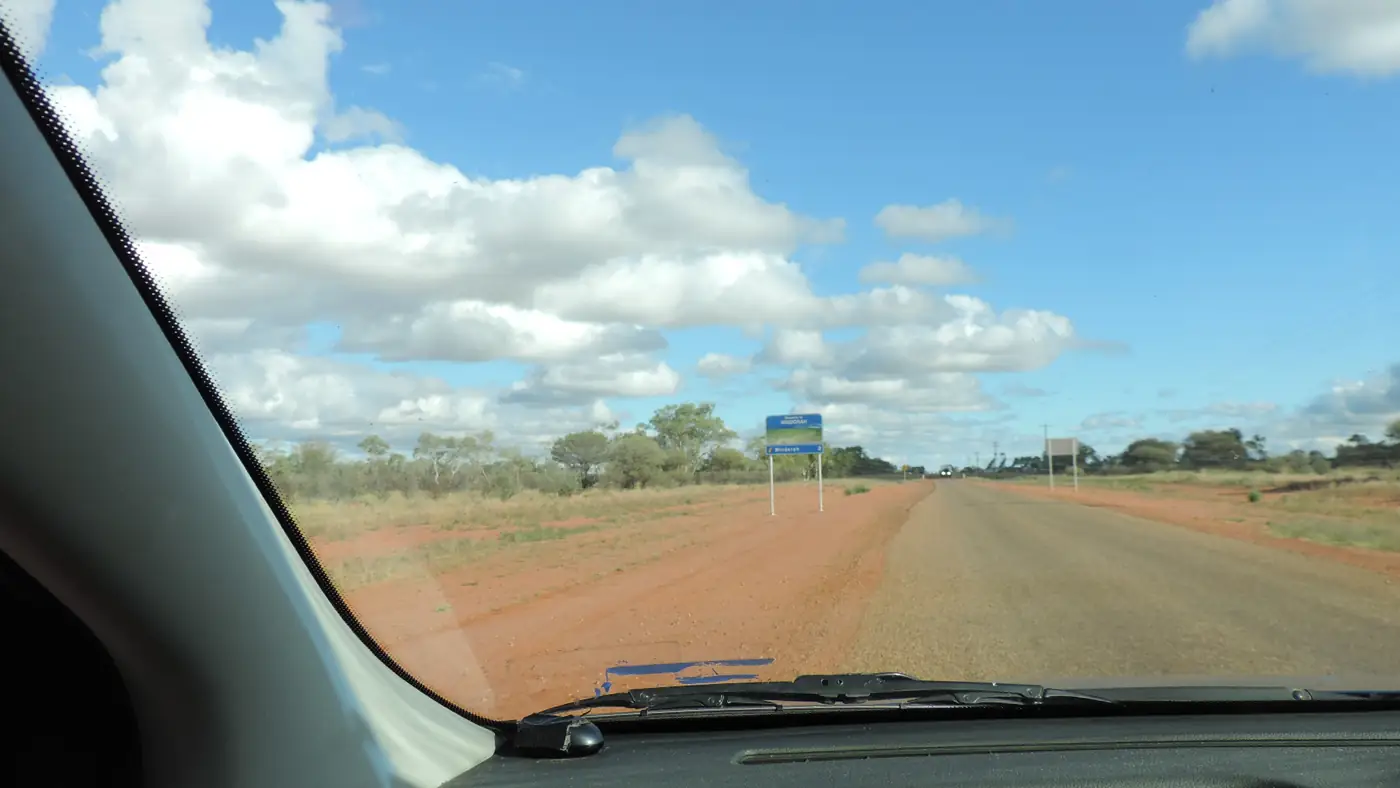
A high-clearance 4WD is recommended. Roads are gravel for 200 to 300 km, corrugations can be deep, and QPWS warns the drive is slow and dusty.
Fuel. Fill up before you leave town and carry extra for driving in the park. The nearest fuel and supplies are at Boulia (183 km), Winton (306 km) and Windorah (350 km).
Rain. Even small amounts can make outback roads impassable. QPWS says to carry at least two weeks' worth of extra supplies in case you're stranded.
Before you go, check:
- Queensland Traffic (or phone 13 19 40) for road conditions.
- The park alerts for Diamantina National Park.
- The Bureau of Meteorology for weather warnings.
For protection of natural resources, entry to the park east of the Diamantina River Road is prohibited.
Drives and walks
Warracoota circuit drive. A self-guided 90 km 4WD circuit through the park's cultural and natural history, past pastoral relics and diverse landscapes. Allow 4 to 5 hours.
Warracoota Ruins walking track. A 400 m return Grade 3 walk, taking about 45 minutes. It leads to several loose stone-walled structures that QPWS says are thought to have been built by early pioneers.
Janets Leap lookout drive. An 8 km return 4WD drive, taking about an hour. It gives a bird's-eye view over the braided channels of the Diamantina River, and makes a good break on the drive to Winton.
Canoeing. Bring a canoe or kayak to paddle the permanent waterholes and seasonal lakes. QPWS says Hunters Gorge is a great spot to paddle.
Fishing. Fishing is permitted in the park's waterways, under Queensland's fishing rules. Never use frogs or other live bait.
Camping
Hunters Gorge camping area is on the banks of Mundawerra Waterhole on the Diamantina River. QPWS says it rewards campers with spectacular sunsets and abundant birdlife. It suits tents, caravans and camper trailers.
Gum Hole (Nandibargoola) camping area is a quiet, secluded spot under shady coolabah trees beside Whistling Duck Creek. It's for tents only.
Facilities at both: non-flush toilets and fire rings. There are no showers, barbecues or picnic tables. Both need a high-clearance 4WD to reach.
Rules.
- Permits. Camping permits are required and fees apply. Display your camping tag or booking details at your site.
- Where to camp. Camp only in the existing camping areas, at least 10 m from the riverbank.
- Fires. Campfires go in the fire rings only, except during fire bans. Collecting firewood and using chainsaws are prohibited, so bring your own clean, milled firewood.
- Generators, drones and dogs. Generators aren't allowed, drones aren't permitted in the camping areas, and dogs aren't permitted.
Flooding. QPWS warns that even small amounts of rain can cause floods at any time of year. If heavy rain or minor flooding happens, move to higher ground.
Wildlife and plants
QPWS says Diamantina's wildlife is highly diverse for arid Queensland. It includes rare and threatened species such as bilbies, kowaris, plains-wanderers, peregrine falcons and two rare skinks. It's one of the few places in Queensland where bilbies live in the wild.
Birds. The large permanent waterholes are especially good for birdwatching at dawn and dusk. Look out for Hall's babblers, black falcons and oriental plovers.
Boom and bust. After exceptional rain or floods, native long-haired rats sometimes boom in number. Their predators, such as inland taipans, letter-winged kites and eastern grass owls, then increase too.
Plants.
- Along the river: coolabahs, river red gums, lignum, blue bushes and grasses line the channels.
- On the plains: gibber plains and cracking clay soils support Mitchell grass.
- Rare species: two rare Eremophila species, rock fuchsia bush and gypsum bush, grow here.
Heritage
Remnants of settler history include:
- The remains of the Mayne Hotel, which closed in 1951, near the eastern park boundary.
- Stone hut ruins near Warracoota Waterhole.
- Cemeteries. QPWS says the 20 registered graves in the park date from 1884 to 1944.
Displays in the visitor information room at the old Diamantina Homestead, now the ranger base, explain more about the park's heritage. Everything in the park is protected, including heritage sites and artefacts, so leave everything as you find it.
Safety and essentials
QPWS says the park is remote and rangers may not be on hand to help, so you must be totally self-sufficient.
Essentials:
- At least 7 litres of water per person per day, plus emergency food and water for at least two weeks.
- Two spare tyres, engine coolant, oil, recovery gear and extra fuel.
- A satellite phone or UHF radio. A personal locator beacon is advisable, because there's no mobile coverage.
- Clothing for hot days and nights that can drop below freezing.
If something goes wrong: stay with your vehicle if it breaks down. In an emergency, phone Triple Zero (000), or try the park base on UHF channel 2 (duplex).
Other rules:
- There are no bins, so take all rubbish with you.
- Empty chemical toilets only at approved facilities in Winton or Boulia.
- Domestic animals aren't permitted.
- There are no wheelchair-accessible facilities.
See our remote area travel safety guide and water and food planning guide.
When to visit
QPWS recommends April to September. Summer days can reach 50°C, and summer rain often causes flooding. The park is open all year, but wet weather or management work can close it temporarily.
Combine with
- Boulia, the closest town.
- Winton and our dinosaur trail guide.
- Windorah and Bedourie, elsewhere in the Channel Country.
Frequently asked questions
How do you get to Diamantina National Park?
Queensland Parks and Wildlife Service says the park is 183 km south-east of Boulia and 306 km south of Winton. It is also 350 km north of Windorah and 275 km east of Bedourie. Roads are unsealed for 200 to 300 km and can be deeply corrugated, so a high-clearance 4WD is recommended.
Can you camp in Diamantina National Park?
Yes, at Hunters Gorge and Gum Hole (Nandibargoola) camping areas. Both have non-flush toilets and fire rings, and both need a high-clearance 4WD to reach. Hunters Gorge suits tents, caravans and camper trailers, while Gum Hole is for tents only. Camping permits are required and fees apply.
When is the best time to visit Diamantina National Park?
QPWS recommends April to September. Summer temperatures can reach 50°C during the day, and summer rain often causes flooding. Floodwater can arrive up to two weeks after rain falls elsewhere in the catchment.
Is there mobile coverage in Diamantina National Park?
No. QPWS says mobile phone coverage isn't available in the park. Carry a satellite phone or UHF radio, and a personal locator beacon is advisable. You can also try the park base on UHF channel 2 (duplex).
Sources and further reading
Facts on this page were checked against these primary and official sources. Conditions change — confirm before you travel or buy.
- Diamantina National Park — Queensland Parks and Wildlife Service
- Diamantina National Park: about — Queensland Parks and Wildlife Service
- Diamantina National Park: visiting safely — Queensland Parks and Wildlife Service
- Diamantina National Park: things to do — Queensland Parks and Wildlife Service
- Diamantina National Park: camping — Queensland Parks and Wildlife Service
- Diamantina National Park: journeys — Queensland Parks and Wildlife Service


