Outback Now acknowledges the Traditional Owners of the lands and waters covered on this site, and pays respect to Elders past and present. Aboriginal and Torres Strait Islander readers should be aware that some pages may mention people who have died.
Our town and park guides name Traditional Owners where reliable sources allow, and we update them when we learn more. If we have made an error, please contact us.
Guides in this section
- Visiting Country respectfully — etiquette, sacred sites, photography and permits.
- Buying Aboriginal art ethically — art centres, the Indigenous Art Code and what to ask.
- Aboriginal rock art sites to visit — publicly accessible sites across the outback.
- Aboriginal-led tours and experiences — how to find and choose them.
Our approach
We do not publish secret or sacred information, and we rely on public sources such as land councils, parks agencies, museums and Aboriginal organisations. Where Aboriginal place names are in official use (such as Uluru, Kati Thanda or Nitmiluk), we use them alongside English names.
The oldest living cultures
Aboriginal people have lived across inland Australia for tens of thousands of years. Archaeological sites such as those at Mungo National Park in New South Wales provide some of the oldest evidence of human life on the continent, and Aboriginal people's own histories describe a connection to Country that has never been broken. The outback is not empty land: almost every range, waterhole, claypan and tree line sits within the Country of a particular group, with its own language, law, songlines and responsibilities.
Before colonisation there were hundreds of distinct language groups across Australia. Many are still spoken in the outback today, particularly in the Western Desert, Arnhem Land, the Kimberley and central Australia, while others are being revived through community language programs. Place names you will see on maps and road signs — Uluru, Kata Tjuta, Nitmiluk, Ikara, Kati Thanda, Purnululu, Karijini, Boodjamulla — are Aboriginal names restored to official use, often after land rights or joint management agreements.
Country, law and kinship
"Country" means much more than landscape. It includes the land, water, sky, plants, animals and ancestral beings, and the obligations people have to care for them. Dreaming stories (the English word is an imperfect translation of concepts such as Tjukurpa for Anangu at Uluru) explain how the landscape was formed and set out the law that governs behaviour, kinship and ceremony. Some of this knowledge is public and shared with visitors; much is restricted to initiated people, men or women, or particular families. When a ranger or guide tells you that a story can't be told, or a site can't be photographed, that is the reason.
Kinship systems determine relationships, responsibilities and how people address one another. You don't need to understand them in detail as a visitor, but it helps to know that decisions in communities are often made collectively and can take time, and that funerals and mourning ("sorry business") can lead to closures of places or businesses at short notice.
Joint management and land rights
Many of the outback's best-known parks are jointly managed by Traditional Owners and government agencies. Uluru-Kata Tjuta and Kakadu are leased back to Parks Australia by their Aboriginal owners; Nitmiluk is owned by the Jawoyn people and jointly managed with the Northern Territory parks service; Mutawintji was the first national park in New South Wales returned to its Aboriginal owners; and Ikara-Flinders Ranges is co-managed with the Adnyamathanha people. In the Northern Territory, a large share of the land is Aboriginal freehold under the Aboriginal Land Rights (Northern Territory) Act 1976, and native title has been recognised over large areas of Queensland, Western Australia and South Australia.
For travellers, this means that permits are sometimes needed to cross Aboriginal land, that park rules may reflect cultural as well as environmental concerns, and that the people who own the land increasingly run the tours, art centres and campgrounds you visit. Our guide to visiting Country respectfully covers permits and etiquette in more detail.
Art and culture you can experience
Community art centres are one of the most rewarding ways to meet Aboriginal people as a visitor. Central Australia, the Top End and the Kimberley have dozens, from the Western Desert painting movement that grew out of Papunya in the early 1970s to the Hermannsburg watercolour tradition associated with Albert Namatjira. Our guide to buying Aboriginal art ethically explains how to support artists directly.
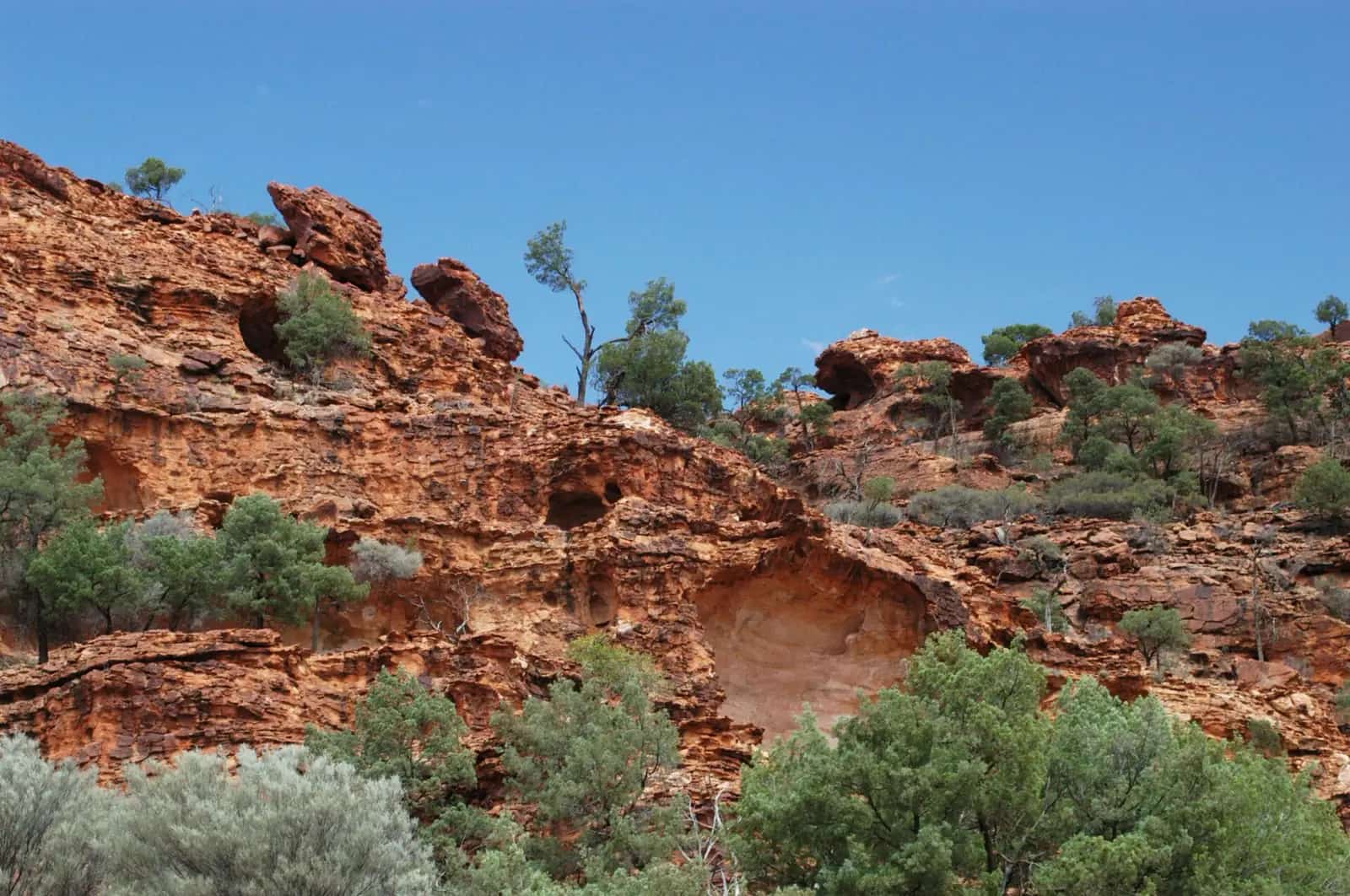
Rock art is another window into deep history. Engravings, stencils and paintings can be seen at public sites across the outback, many of them managed jointly with Traditional Owners — see Aboriginal rock art sites to visit. Guided walks, cultural centres and festivals are listed in Aboriginal-led tours and experiences.
Planning tips
- Start at the local visitor centre or cultural centre and ask what is open to visitors.
- Check whether your route crosses Aboriginal land and apply for permits well ahead of time through the relevant land council.
- Respect alcohol restrictions, which apply in many communities and some towns.
- Spend locally: fuel, groceries, art and tours bought in communities support jobs and services.
- Be patient and flexible — closures for ceremony or sorry business are part of life on Country.
Further reading
- Outback history
- Brewarrina — home of the ancient Baiame's Ngunnhu fish traps
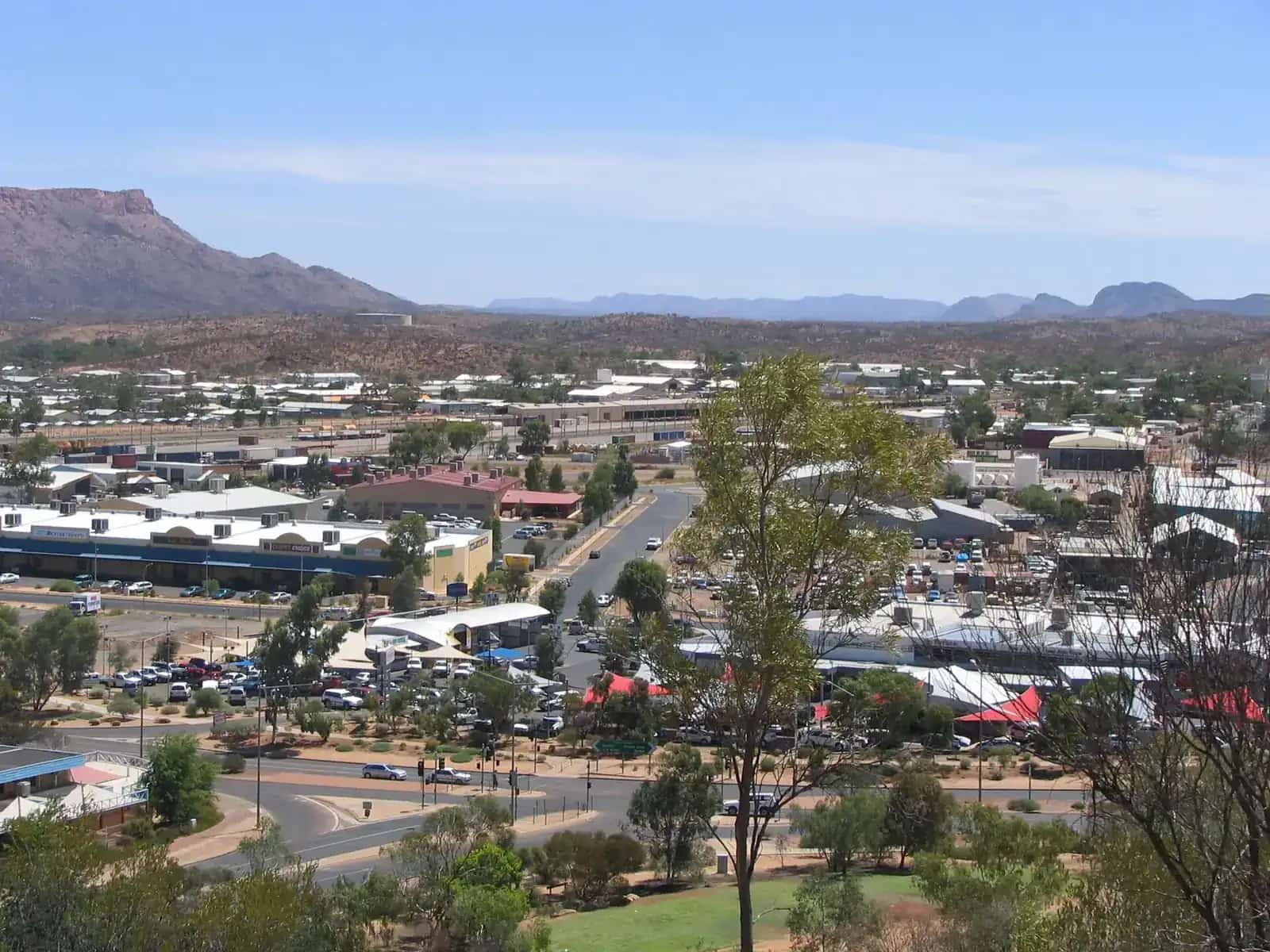
- Alice Springs
Guides in this section

Culture & Country
Visiting Country respectfully
How to visit Aboriginal Country respectfully in outback Australia: sacred sites, photography, permits for Aboriginal land and alcohol restrictions.
Read · 4 min
Culture & Country
Buying Aboriginal art ethically
How to buy Aboriginal art ethically: community art centres, the Indigenous Art Code, Desart and ANKA, certificates of authenticity and questions to ask.
Read · 4 min
Culture & Country
Aboriginal rock art sites to visit
Publicly accessible Aboriginal rock art sites in outback Australia, including Mutawintji, Mount Grenfell, Gundabooka, Carnarvon Gorge and Arkaroo Rock.
Read · 4 min
Culture & Country
Aboriginal-led tours and experiences
How to find and choose Aboriginal-led tours, guided walks, art centres and cultural experiences in outback Australia.
Read · 4 min
Frequently asked questions
What does "Country" mean?
For Aboriginal people, Country means more than land. It includes the land, waters, sky, plants, animals, stories, law and kinship that connect people to place.
Whose Country am I visiting?
The AIATSIS map of Indigenous Australia gives a general guide to language and social groups, but boundaries are approximate. Local land councils, Aboriginal corporations and visitor centres can tell you more about the Traditional Owners of a particular area.
Is it OK to photograph Aboriginal rock art?
At many public sites it is, but at some sites photography is restricted for cultural reasons. Follow signs and the guidance of Traditional Owners and rangers.
Sources and further reading
Facts on this page were checked against these primary and official sources. Conditions change — confirm before you travel or buy.
- Map of Indigenous Australia — AIATSIS
- Discover Aboriginal Experiences — Tourism Australia
- Central Land Council permits — Central Land Council
- Indigenous Art Code — Indigenous Art Code