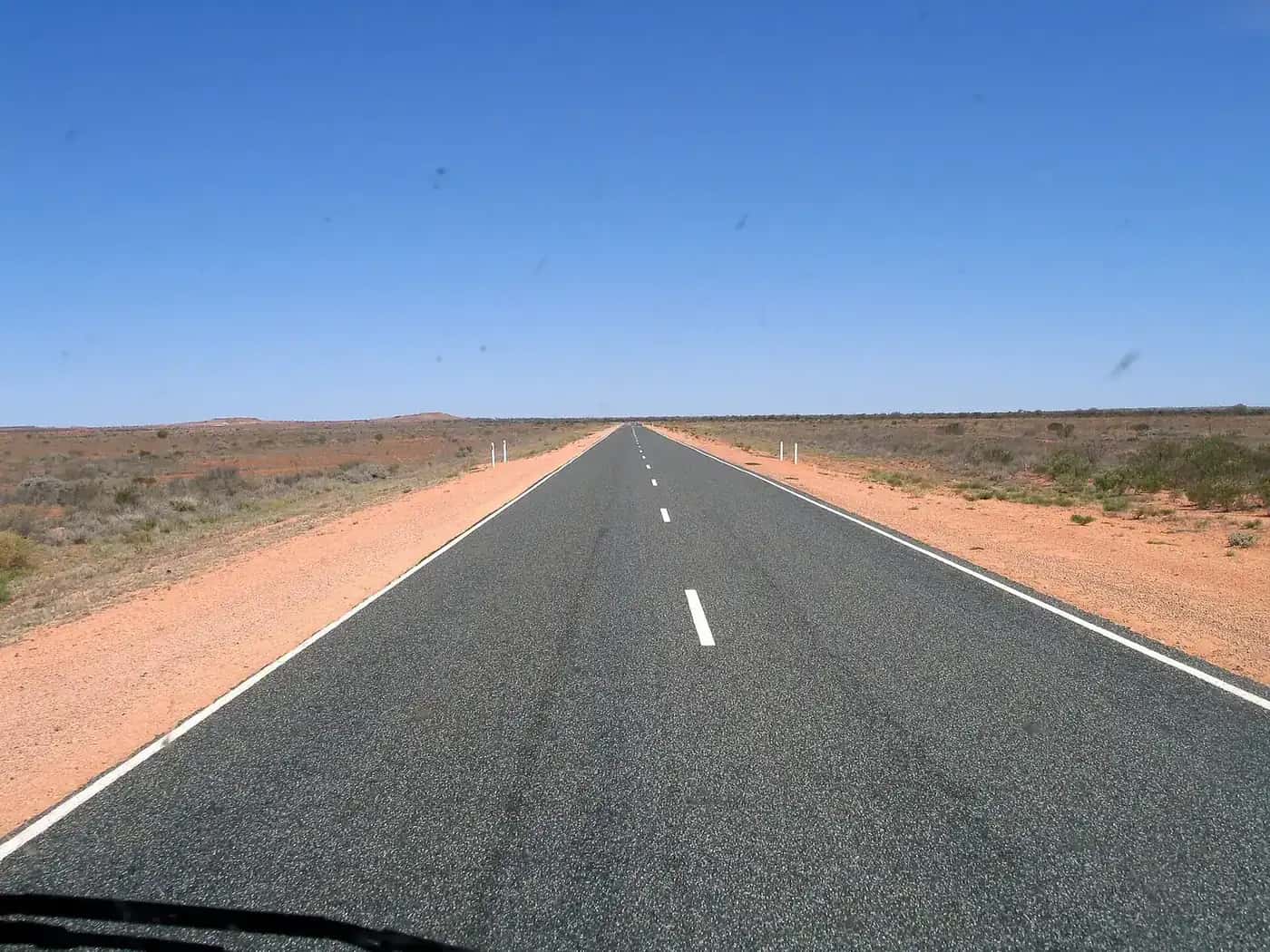
A road train is a prime mover pulling two or more trailers. They're the only practical way to move cattle, fuel, ore and supplies across the distances of outback Australia. On the Stuart, Barkly, Great Northern and Eyre highways, and on most outback dirt roads, you'll share the road with them.
How big they are
| Source | What it says |
|---|---|
| WA Road Safety Commission | Road trains range in length from 33 m up to 60 m |
| Main Roads WA | Prescriptive road trains up to 53.5 m; approved PBS road trains up to 60 m |
A loaded road train is extremely heavy. It takes a long distance to stop, and it can't swerve to avoid you.
Speed limits for road trains
Road-train speed limits are set under national heavy vehicle law and state rules. The National Heavy Vehicle Regulator publishes the limits that apply. Main Roads WA says PBS 60 m road trains in WA are restricted to 90 km/h, while the general road-train limit there is 100 km/h. In practice, a road train on a highway will often be travelling close to the posted limit. That's why overtaking one takes so long.
How to overtake a road train
The WA Road Safety Commission and Tourism NT give consistent advice:
- Stay well back. Keep several car lengths behind, so you can see past and the driver can see you in the mirrors.
- Wait for the right stretch. You need a long, straight road with a clear view ahead. Tourism NT says overtaking can take up to 2.5 km at 100 km/h.
- Indicate, and pass decisively. Move out, accelerate to the speed limit (never above it), and keep going.
- Return only when it's safe. Pull back to the left only when you can see both of the truck's headlights in your rear-view mirror.
- Don't cut in. A road train needs a large gap to stop.
If you're towing a caravan or trailer, or conditions aren't ideal, the WA Road Safety Commission says it's best not to overtake at all. Wait for an overtaking lane. Truckies on UHF channel 40 will often tell you when the road ahead is clear, but make your own judgement too.
When one comes the other way
On a narrow sealed road, move as far left as is safe and slow down. The wind blast can push a caravan or a high-sided vehicle.
On a single-lane or unsealed road, NT Government advice is to slow down and pull right off onto the shoulder. Stop if needed. Don't pull back on until the dust settles and you can see. Stones thrown up by the wheels break windscreens, so slow down to reduce the damage.
When one wants to pass you
Make it easy. Keep left, hold a steady speed and don't speed up. The WA Road Safety Commission notes it's illegal to speed up or otherwise prevent someone from overtaking. If you're slow, or towing, pull over at a safe spot with a firm shoulder and let it go by. A quick call on UHF channel 40 helps the driver plan.
Blind spots
The WA Road Safety Commission says that if you can't see a truck's side mirrors, the driver can't see you. Large blind spots sit right behind the trailers and along the left side. Don't sit alongside a road train any longer than you need to.
Dust and night driving
On dirt roads, a road train raises a long, thick dust cloud that can hide oncoming vehicles. Never overtake into dust. At night, road trains are lit up, but distances are hard to judge. Combined with wildlife, that's one more reason to avoid driving after dark. See outback road rules.
Road trains and caravans
Caravanners meet road trains constantly on routes such as Perth to Darwin and crossing the Nullarbor. Fit towing mirrors, carry a UHF radio, and be ready to pull over to let trucks pass. See caravanning in the outback.
A note of respect
Road-train drivers work long hours to keep outback towns, mines and stations supplied. A wave, a clear radio call and patience make the road safer for everyone.
Related guides
Frequently asked questions
How long is a road train?
The WA Road Safety Commission says road trains range from 33 m to up to 60 m long. Main Roads WA lists prescriptive road trains up to 53.5 m, with approved Performance-Based Standards (PBS) road trains up to 60 m.
How fast do road trains go?
Road-train speed limits are set nationally and by each state. The general road-train limit in WA is 100 km/h, and Main Roads WA says PBS 60 m road trains are limited to 90 km/h. Expect them to travel at close to the road's posted limit on highways.
How much room do you need to overtake a road train?
Tourism NT and NT Government advice is that overtaking a road train can take up to 2.5 km at 100 km/h, so you need a long, clear, straight stretch with full visibility. If you're towing, or conditions aren't ideal, the WA Road Safety Commission says it's best not to overtake at all. Wait for an overtaking lane.
What should you do when a road train approaches on a dirt road?
NT Government advice is to slow down and pull well off onto the shoulder on single-lane or unsealed roads. Stop if you need to, and wait until the dust settles before pulling back on. The truck can't easily stop or move over, and its dust and stones can blind you or break your windscreen.
Sources and further reading
Facts on this page were checked against these primary and official sources. Conditions change — confirm before you travel or buy.
- Overtaking — Road Safety Commission WA
- Visitors to regional WA — Road Safety Commission WA
- PBS 60 metre road trains fact sheet — Main Roads Western Australia
- Road train speed limits — National Heavy Vehicle Regulator
- Driving with road trains — Northern Territory Government
- Road safety — Tourism NT


