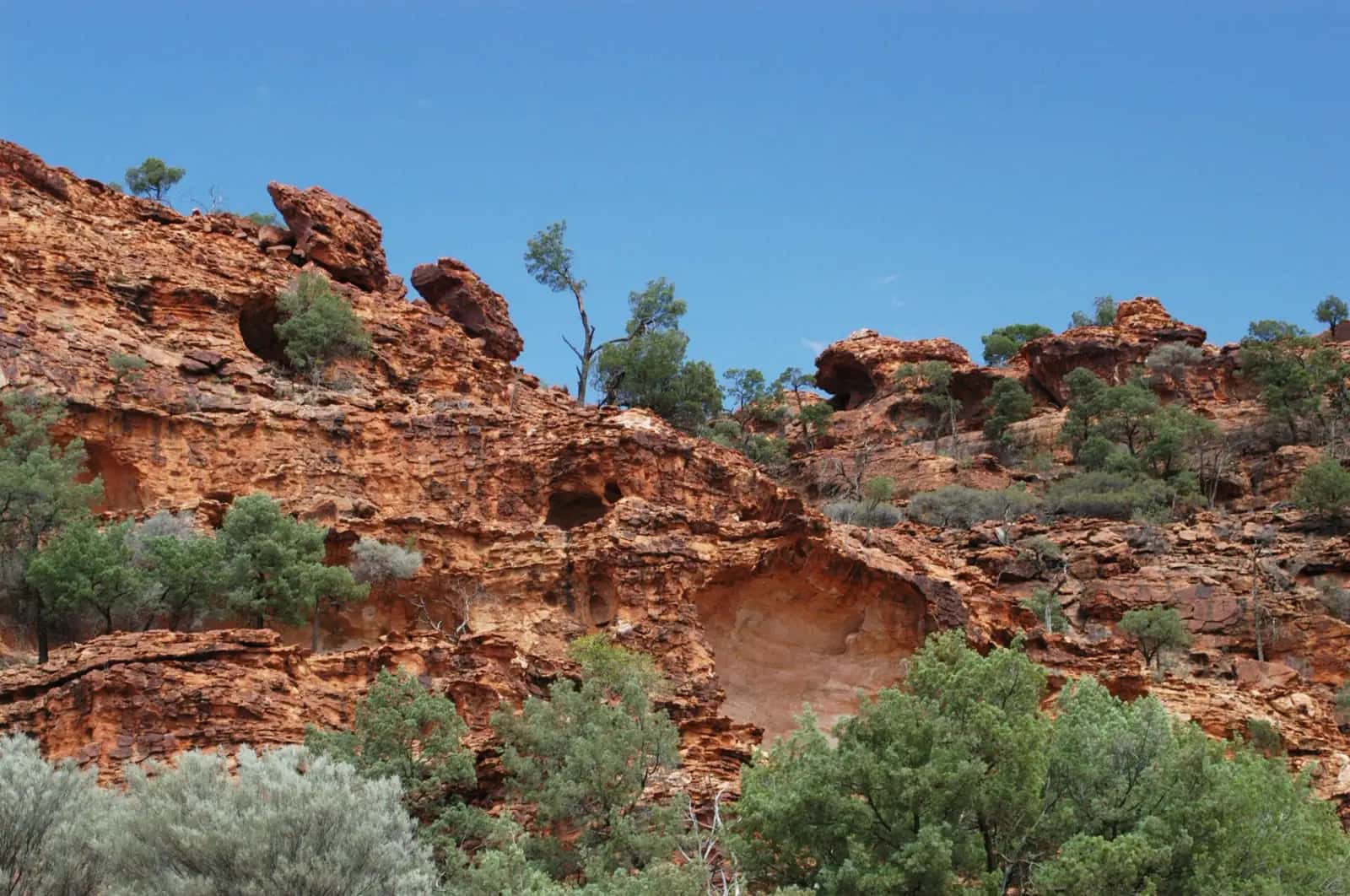
Willandra National Park is a slice of pastoral history on the western plains of New South Wales. NSW National Parks says Europeans were first drawn to the area by the river system and native grasses. They ran cattle and sheep at first, but by the second half of the 19th century, sheep for wool dominated. Willandra eventually became the largest pastoral station in the area. Big Willandra once stretched from Hillston to Mossgiel and covered eight times the area of today's national park, which is less than 20,000 ha. The old bush song "Flash Jack from Gundagai" boasts about having "shore at Big Willandra".
More than a century of grazing changed the landscape, but NPWS says plants and animals are gradually being restored. Today the park's wetlands, woodlands and grassy plains are home to 23 reptile species and more than 195 bird species, including emus and the endangered plains-wanderer.
Don't confuse this park with the Willandra Lakes Region World Heritage Area further west, which includes Mungo National Park.
Aboriginal heritage
NPWS says Aboriginal people are believed to have first come to this area more than 45,000 years ago. On the scalds near Halls Lake, erosion has exposed oven hearths, broken pieces of grinding dishes and stone flakes. Look, but don't touch. The park's only formal walking track, Nilla Yannagalang Billana, takes its name from the Wiradjuri for "walking along together".
Willandra Homestead and the shearing precinct
Willandra Homestead is the restored homestead of Big Willandra, at 91 Willandra Entrance Road. You can walk through the sitting rooms and office, which hold photographs and accounts of station life. The grounds have expansive gardens, a rose courtyard, a schoolhouse, a meat house and a laundry, which show how self-sufficient the station had to be. There are barbecues on the lawns, and you can watch waterbirds on Willandra Creek.
The shearing precinct is set well apart from the homestead. NPWS says the separation shows the social distance between the permanent staff and the seasonal shearers. The precinct includes the woolshed, the overseer's cottage, the shearers' quarters and ablution blocks, the dining room and kitchen, the cook's cottage and a meat house. Bring a hat, sunscreen and drinking water.
Things to do
- Merton motor trail. A 20 km loop that you can drive or cycle; NPWS suggests allowing about 3 hours. It passes the Halls Lake scalds and the untouched ruins of Merton Outstation. At Willandra Creek, you can park and walk 200 m upstream to the old sheep bridge, which livestock once crossed between paddocks. Take binoculars for birdwatching.
- Nilla Yannagalang Billana. A 3.7 km one-way walk (allow 1.5–2.5 hours, grade 3) along Willandra Creek through black box woodland and black bluebush shrubland. You can start from the homestead precinct or the Willandra Billabong weir. It passes the weir and Buttabong Bridge, the creek crossing to the railway siding at Wee Elwah, where people once travelled on to Sydney. Near the old tip site are the rusting remains of a steam-powered engine. When the creek has water, look for egrets, herons, spoonbills, cormorants and ducks.
- Wildlife watching. NPWS says kangaroos graze on the plains at dawn and dusk. Look for bearded dragons along the Merton trail, and you may see a harmless carpet snake near the historic buildings.
Camping and accommodation
- Willandra campground. Six sites for tents, caravans and camper trailers, with toilets and barbecues, in a bush setting near the creek. Bring firewood and drinking water. NPWS notes that caravans and camper trailers can also use the group campground just west of the homestead.
- Willandra group campground. A bookable group site.
- Willandra Men's Quarters. Built in 1965, with 6 bedrooms for up to 12 guests, a kitchen, showers, power and wi-fi. Bring your own linen, towels and food. NPWS says the dining-room fireplace is out of service, so don't light a fire inside.
Book campsites and the Men's Quarters through NSW National Parks.
Getting there
From Hillston, NPWS says to drive north along High Street, through the roundabout, and turn left onto Mossgiel Road. After 3.9 km, turn left onto Mossgiel Trunk Road and follow it for 53 km. At the Trida-Whealbah intersection, turn right and drive 20 km to the park entrance.
All roads are unsealed, require a 4WD and are for dry weather only. Roads to and through the park close in wet weather. If Mossgiel Road (MR80) or Whealbah Road is closed, there is no access to the park. Check road conditions with Carrathool Shire Council before you leave.
When to visit
NPWS recommends spring and autumn for mild weather. Spring brings the best birdwatching and wildflowers. In summer, outback temperatures can reach 50°C in some places. The park is always open but may close in poor weather or high fire danger.
Practical information
- Fees. $8 per vehicle per day, paid through self-registration; bring correct change.
- Drinking water. Available at the group campground, Willandra Cottage and the Men's Quarters, according to NPWS. Carry your own as a backup.
- Phones. Mobile reception is limited. Download the Emergency Plus app before you go.
- Pets. Not permitted.
- Contact. NPWS Griffith office, 02 6966 8100.
For more parks on the NSW plains, see Mungo and Kinchega, and the town guide to Hay.
Frequently asked questions
Where is Willandra National Park?
It is in the Murray-Riverina region of NSW, west of Hillston. NSW National Parks says to drive north out of Hillston, take Mossgiel Road and then Mossgiel Trunk Road, and turn right at the Trida-Whealbah intersection for the last 20 km to the park entrance.
Is Willandra National Park the same as the Willandra Lakes Region?
No. Willandra National Park is a former pastoral station on Willandra Creek near Hillston. The Willandra Lakes Region World Heritage Area is a different place, further west, and includes Mungo National Park.
Can you stay overnight at Willandra National Park?
Yes. NSW National Parks lists Willandra campground (6 sites), a group campground and the Willandra Men's Quarters, built in 1965, which has 6 bedrooms and sleeps up to 12.
Do you need a 4WD for Willandra National Park?
NSW National Parks says all roads require a 4WD vehicle, in dry weather only. Roads to and through the park close in wet weather, and if Mossgiel Road or Whealbah Road is closed there is no access.
How much does it cost to enter Willandra National Park?
NSW National Parks lists park entry at $8 per vehicle per day, paid through a self-registration system, so bring correct change. NSW annual park passes are also accepted.
Sources and further reading
Facts on this page were checked against these primary and official sources. Conditions change — confirm before you travel or buy.
- Willandra National Park — NSW National Parks and Wildlife Service
- Willandra National Park - Learn more — NSW National Parks and Wildlife Service
- Willandra National Park - Visitor info — NSW National Parks and Wildlife Service
- Merton motor trail — NSW National Parks and Wildlife Service
- Willandra Homestead — NSW National Parks and Wildlife Service
- Willandra shearing precinct — NSW National Parks and Wildlife Service
- Nilla Yannagalang Billana — NSW National Parks and Wildlife Service
- Willandra campground — NSW National Parks and Wildlife Service
- Willandra Men's Quarters — NSW National Parks and Wildlife Service


