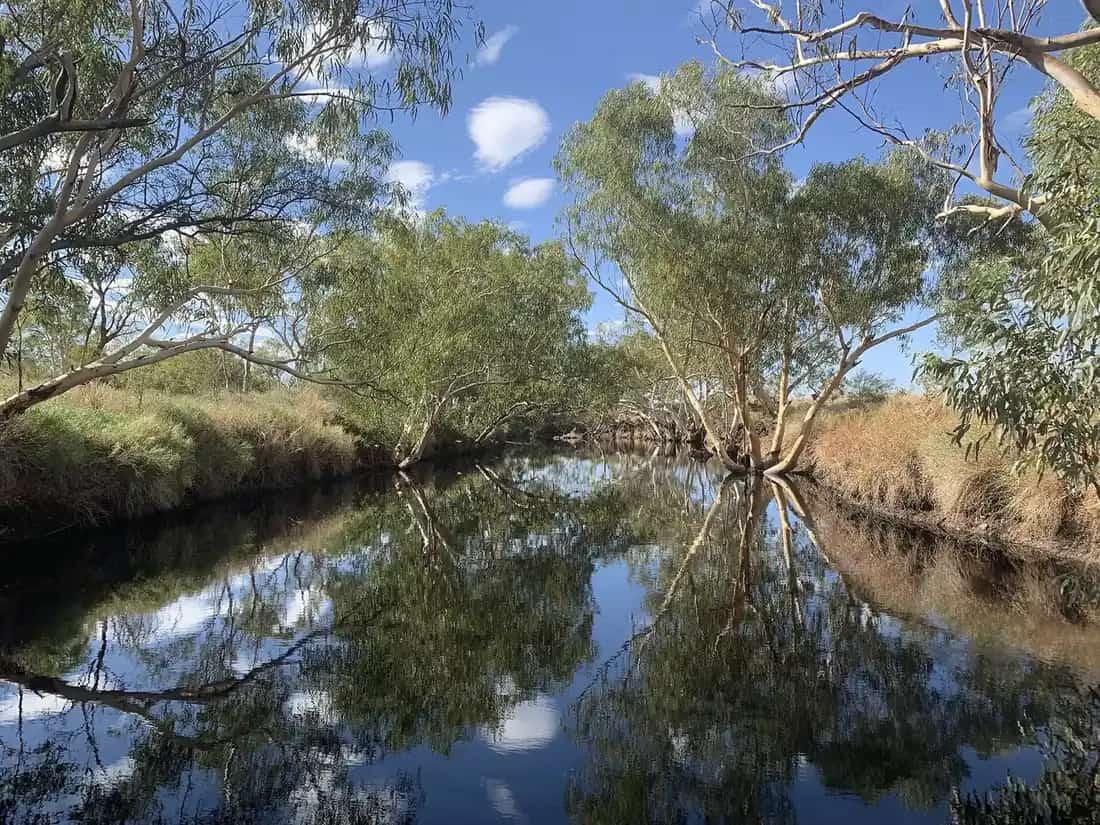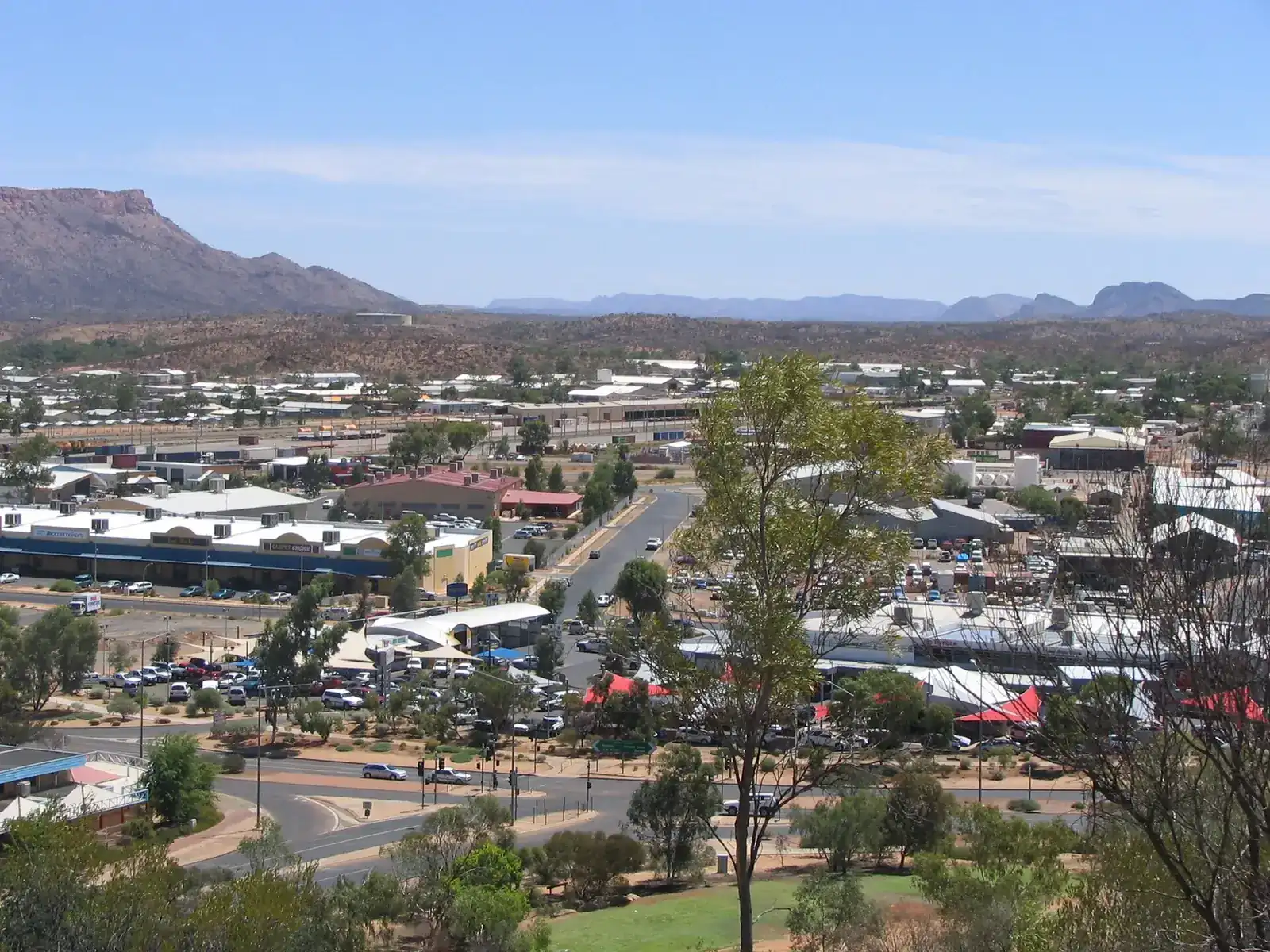
Alice Springs grew around a repeater station on the Overland Telegraph Line, built in the early 1870s near a waterhole in the usually dry Todd River. It sits in a gap in the MacDonnell Ranges on Arrernte Country and is the service hub for a vast region.
Things to do
Alice Springs Telegraph Station Historical Reserve. The restored stone station marks the town's beginnings, with walking trails along the Todd.
Alice Springs Desert Park. Habitats, nocturnal house and free-flying bird shows introduce central Australia's plants, animals and Aboriginal knowledge.
Royal Flying Doctor Service and School of the Air. Two visitor centres explain how remote Australians get health care and education.
Araluen Arts Centre. Galleries of central Australian art, including works by Albert Namatjira and the Hermannsburg School.
Aboriginal art centres and galleries. Buy from Aboriginal-owned art centres and galleries that follow the Indigenous Art Code.
Anzac Hill. The best sunset spot in town.
Day trips
Tjoritja / West MacDonnell National Park strings gorges and waterholes along Namatjira Drive: Simpsons Gap, Standley Chasm, Ellery Creek Big Hole, Ormiston Gorge and Glen Helen. The East MacDonnells offer Emily and Jessie Gaps and Trephina Gorge. Uluru-Kata Tjuta and Watarrka (Kings Canyon) need overnight stays — see our national parks guide.
History and Country
Alice Springs (Mparntwe) is on the Country of the Arrernte people, whose Dreaming stories shape the landscape of the town, the MacDonnell Ranges and the dry Todd River. The Overland Telegraph Line linking Adelaide and Darwin was completed in 1872, with a repeater station built near a waterhole named Alice Springs after Alice Todd, wife of the telegraph's superintendent. The town itself was surveyed as Stuart in 1888 and renamed Alice Springs in 1933. The railway arrived from Adelaide in 1929, and Alice Springs grew as the service centre for central Australia.
Arrernte culture
Arrernte people have lived in Mparntwe for tens of thousands of years. Many sites around town hold deep cultural significance, including the gaps in the ranges and features along the Todd. Respect signage asking visitors to stay out of sacred sites. Aboriginal-owned tours, art centres and the Alice Springs Desert Park are good ways to learn about Arrernte culture.
Art and Albert Namatjira
Albert Namatjira, an Arrernte man from Hermannsburg (Ntaria), became famous in the 1940s and 1950s for watercolour landscapes of the MacDonnell Ranges. His work and that of the Hermannsburg School are displayed at the Araluen Arts Centre. Alice Springs is also a hub for Western Desert and central Australian art, with many art centres supplying galleries in town.
Events
Alice Springs hosts the Henley-on-Todd Regatta, a famous "boat race" held in the dry riverbed, the Finke Desert Race over the King's Birthday long weekend, the Alice Springs Beanie Festival and the Parrtjima light festival. Dates change; check the official websites.
A four-day itinerary
Day 1: Telegraph Station, Anzac Hill sunset and an evening at the Desert Park's nocturnal house.
Day 2: West MacDonnells — Simpsons Gap, Standley Chasm, Ellery Creek Big Hole and Ormiston Gorge.
Day 3: RFDS and School of the Air visitor centres, Araluen Arts Centre and galleries.
Day 4: East MacDonnells — Emily and Jessie Gaps, Trephina Gorge and the historic Arltunga goldfield.
Seasons
April to September is ideal, with warm days and cold nights. Summers are very hot, and occasional heavy rain can flood the Todd.
Getting there
Alice Springs has flights from major cities, and The Ghan stops here between Adelaide and Darwin. By road, it is about 1,500 km north of Adelaide and 1,500 km south of Darwin on the Stuart Highway. Uluru is about 450 km south-west.
Safety
Carry water on walks, avoid the hottest part of the day, and follow official advice about safety in town after dark.
Uluru and Kata Tjuta from Alice
Uluru-Kata Tjuta National Park is about 450 km south-west of Alice Springs, roughly five hours' drive. Many visitors include it on a loop through Kings Canyon (Watarrka National Park), via the Mereenie Loop, which is unsealed and requires a permit available in Alice Springs. Uluru is sacred to the Anangu people; climbing has been banned since 2019.
Who it suits
Alice Springs suits nearly everyone — families, art lovers, hikers, history buffs and travellers on The Ghan or the Stuart Highway. It is the natural base for exploring central Australia.
The Larapinta Trail
The Larapinta Trail runs about 230 km along the West MacDonnell Ranges from the Alice Springs Telegraph Station to Mount Sonder. It can be walked in sections or end-to-end over two to three weeks, best in the cooler months. Walkers need to be well prepared, with water supplies planned in advance.
Top things to do in more detail
Alice Springs Desert Park. Easy trails run through three desert habitats: Desert Rivers, Woodland and Sand Country. There are free-flying birds of prey in the Nature Theatre, Aboriginal guides, and a Nocturnal House where you can see bilbies, mala and thorny devils. The park says it's open from 7:30 am to 6 pm daily (last entry 4:30 pm), with the Nocturnal House open from 9 am to 5:30 pm. It suggests allowing at least 3 to 4 hours.
Alice Springs Telegraph Station. About 4 km north of the town centre, this is where the town began. The historic precinct is open from 8 am to 4 pm daily, and guided tours run at 9:30 am and 11:30 am between March and November. There's an entry fee for the precinct, paid at the café. The surrounding reserve is free and open from 8 am to 9 pm, with picnic lawns, walks and mountain-bike trails.
School of the Air. The Alice Springs School of the Air Visitor Centre, 3.5 km north of the CBD, shows how children on remote stations are taught. If you visit during school hours, you may watch a live lesson. It suggests allowing 45 minutes. It's open Monday to Friday from 9 am to 3 pm and on Sunday from 12 pm to 3 pm, and closed on Saturday.
The Royal Flying Doctor Service base, the galleries of Aboriginal art and Anzac Hill lookout round out a full day in town.
How to spend a day in Alice Springs
- Morning: the Desert Park, with the birds of prey show and the Nocturnal House.
- Midday: lunch in town, then the School of the Air (on a weekday) or an Aboriginal art gallery.
- Afternoon: the Telegraph Station and a walk along the river.
- Sunset: Anzac Hill, for views over the town and the MacDonnell Ranges.
How many days in Alice Springs?
Two to three days covers the town and a day trip into the West MacDonnell Ranges. Allow four to five days to add the East MacDonnells or a section of the Larapinta Trail. Uluru is a separate trip, about 450 km away by road. Most visitors allow at least two nights there, or fly.
Alice Springs with kids
The Desert Park, School of the Air, the Telegraph Station's lawns and waterhole walks suit children. See the outback with kids.
Where to stay
Alice Springs has the widest range of accommodation in central Australia: hotels and resorts, motels, apartments, backpacker hostels and several caravan and camping parks. Book ahead for winter and for major events.
Is Alice Springs safe?
Like any town, Alice Springs has crime, and it's had periods of well-publicised problems. Take ordinary precautions: lock your vehicle, don't leave valuables in view, stick to well-lit areas at night, and follow any local advice or restrictions. Most visitors have a trouble-free stay.
Practical information
Alice Springs has a hospital, airport, supermarkets and plenty of accommodation. The Ghan stops here. Nights in winter are cold. Read the Adelaide to Darwin guide for the drive.
Explore nearby
- Tanami Road
- Mereenie Loop
- Finke Desert Race
- Yulara
- Tjoritja / West MacDonnell National Park
- Plenty Highway
- The Royal Flying Doctor Service
See the Red Centre region guide and one-week outback itineraries.
Travelling with children? See the outback with kids. Arriving by rail? See the outback by train.
Also see School of the Air and Finke Gorge (Palm Valley).
Day trips south and east of town: Chambers Pillar, Rainbow Valley, Henbury Meteorites and the Arltunga goldfield.
Nearby park guide: East MacDonnell Ranges.
Frequently asked questions
Is Alice Springs worth visiting?
Yes. It is the best base for the MacDonnell Ranges, has excellent cultural and nature attractions, and connects to Uluru by road or air.
What is Alice Springs best known for?
As the main town of central Australia, its Arrernte culture and Aboriginal art, the Royal Flying Doctor Service and School of the Air, the historic Telegraph Station and the surrounding MacDonnell Ranges.
How far is Uluru from Alice Springs?
About 450 km by road, roughly five hours each way. Most visitors stay at least one night at Yulara rather than doing a day trip.
How should I spend a day in Alice Springs?
Start at the Alice Springs Telegraph Station, visit the Alice Springs Desert Park mid-morning, see the RFDS or School of the Air in the afternoon, and finish at Anzac Hill for sunset over the ranges.
How many days in Alice Springs is enough?
Two to three days covers the town's highlights and a day in the West MacDonnell Ranges. Four or five days lets you add the East MacDonnells or part of the Larapinta Trail. Uluru needs a separate overnight trip.
What are the top things to do in Alice Springs?
The Alice Springs Desert Park, the Telegraph Station, the School of the Air, the Royal Flying Doctor Service base, Aboriginal art galleries, Anzac Hill, and day trips to the West MacDonnell Ranges, such as Simpsons Gap, Standley Chasm and Ormiston Gorge.
Sources and further reading
Facts on this page were checked against these primary and official sources. Conditions change — confirm before you travel or buy.
- Discover Central Australia — Tourism Central Australia
- Alice Springs Desert Park — NT Government
- Tjoritja / West MacDonnell National Park — NT Government
- Plan your visit — Alice Springs Desert Park
- Plan your visit — Alice Springs Telegraph Station
- The Experience — Alice Springs School of the Air