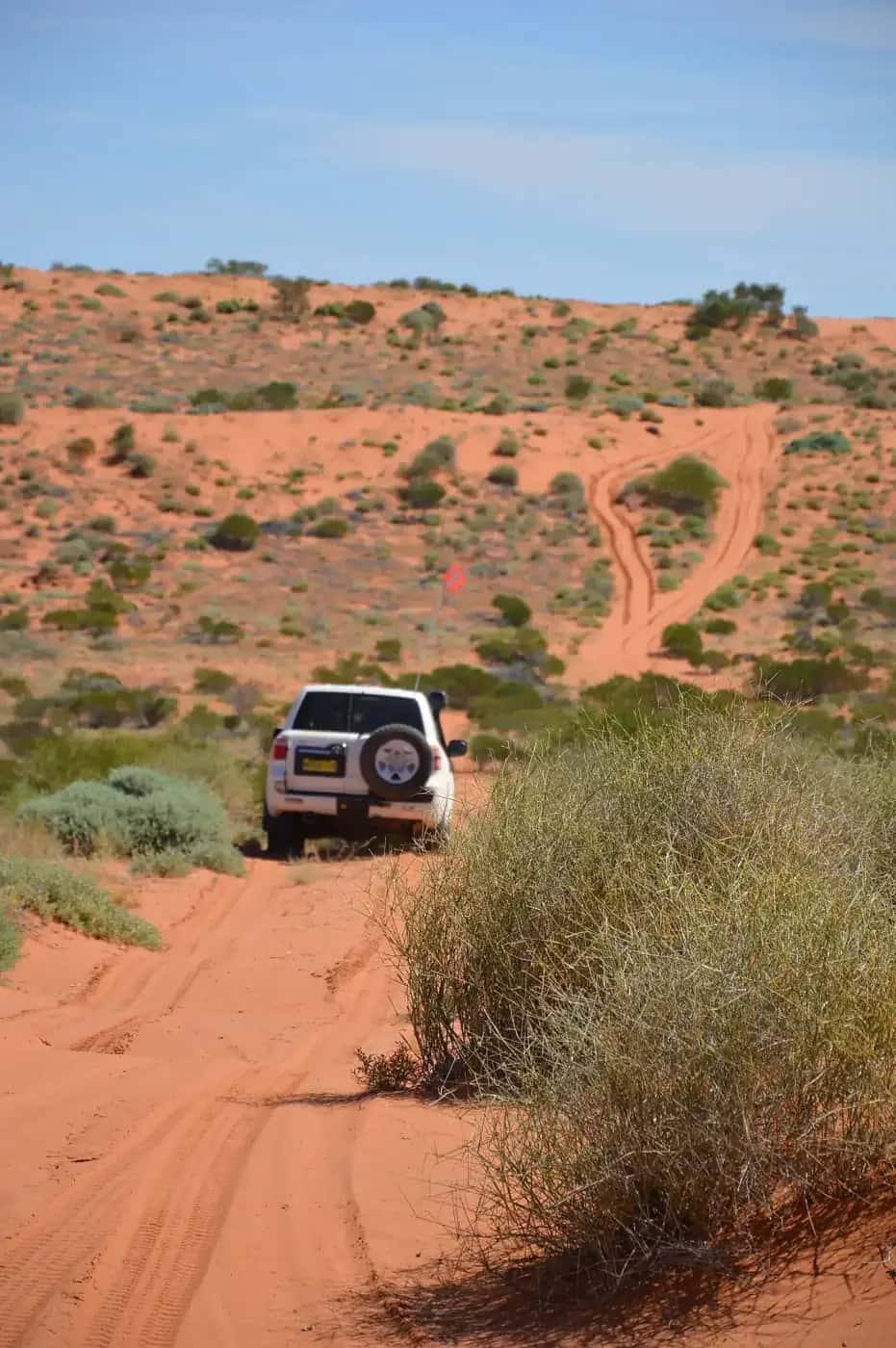
A recovery is the process of getting a stuck vehicle moving again. The safest recoveries are the gentlest ones. Start with the lowest-energy option, such as digging, lowering tyre pressure or using traction boards, and only use a snatch strap or winch when you need to. This guide is general information, not a substitute for training. The ACCC recommends completing a nationally recognised 4WD training course, or getting advice from a 4WD club.
Before you get stuck
The easiest recovery is the one you never need:
- Lower your tyre pressures for sand and soft surfaces, following your tyre and vehicle manufacturer's guidance, and reinflate before returning to sealed roads. See 4WD driving.
- Walk it first. Check creek crossings, washouts and soft patches on foot. In crocodile country, look but don't wade. See crocodile safety.
- Know when to turn back. If a track is closed or flooded, don't drive it. Driving on closed roads can bring heavy fines and damage the road.
- Travel with another vehicle on remote tracks such as the Simpson Desert or the Canning Stock Route.
Essential recovery gear
| Item | Why |
|---|---|
| Tyre gauge and deflator | Accurate pressure changes are the first line of recovery |
| 12-volt compressor | To reinflate after sand or soft surfaces |
| Long-handled shovel | Clearing sand or mud from wheels and diffs |
| Traction boards | Self-recovery in sand and mud without a second vehicle |
| Compliant snatch strap | Kinetic recovery with a second vehicle |
| Rated soft or bow shackles | Connecting straps to rated recovery points |
| Recovery damper or heavy bag | Reducing rebound if something breaks |
| Gloves | Protecting hands from straps, shackles and hot parts |
| Tyre repair kit and spares | Punctures are the most common outback breakdown |
| UHF radio | Communicating with the other driver during a recovery |
Winches, hand winches, tree trunk protectors and snatch blocks add options for experienced users. Learn to use them before you rely on them.
Snatch strap safety (ACCC)
The ACCC regulates recovery straps under a mandatory safety standard and gives this advice:
- Buy compliant straps. The strap must carry a permanent warning mark and instructions for safe use.
- Size the strap correctly. Its minimum breaking strength should be between 2 and 3 times the vehicle's GVM, chosen to suit the lighter vehicle in the recovery.
- Inspect it before every use. Don't use a strap that's damaged or worn. A strap's strength and stretch reduce when it's wet.
- Use only rated recovery points. The force can break or snap off normal attachment points such as tie-down eyes, tow balls, towbars, tow hooks, bull bars and suspension components.
- Drape a damper, heavy bag or blanket over the strap to reduce rebound.
- Clear the area. Passengers should leave the vehicles and stay at least 1.5 times the length of the unstretched strap away. Bystanders must never stand in the path of either vehicle.
- Don't use a snatch strap for lifting or conventional towing.
Self-recovery step by step
- Stop. Spinning wheels dig deeper. Get out and assess the situation.
- Lower your tyre pressures if you're in sand or on a soft surface.
- Dig sand or mud away from the tyres, and from under the chassis and diffs if you're high-centred.
- Place traction boards firmly against the front of the tyres in your direction of travel.
- Drive out gently in low range, with smooth throttle and the steering straight.
- Retrieve the gear, reinflate your tyres, and check for damage before moving on.
Kinetic (snatch) recovery basics
If a second vehicle is needed:
- Connect the strap to rated recovery points on both vehicles using rated shackles, and fit a damper.
- Agree on signals by UHF radio before you start.
- The recovery vehicle starts slowly, letting the strap stretch before it takes load. Excessive speed multiplies the forces and risks damage or injury.
- Make several gentle attempts rather than one violent one, and dig more between attempts.
Common mistakes
- Using tow balls or tie-down points instead of rated recovery points.
- Joining two straps with a metal shackle, which can become a projectile.
- Bystanders standing too close, or in line with the strap.
- Not lowering tyre pressures before trying to drive out.
- Over-revving and digging the vehicle deeper.
- Attempting recoveries in floodwater or fast-flowing creeks.
If you can't get out
Stay with your vehicle. Tourism NT's road safety advice is that a vehicle is easier to find than a person, and that help may not arrive for many hours, especially at night. Use your satellite phone, messenger or PLB to call for help. Ration water, and stay in the shade. See remote area travel safety and water and food planning.
Sand, mud and gibber
Sand: lower your tyre pressures first, as this is the single most effective step. Keep momentum on dunes, but don't charge them. If you stop going uphill, reverse back down in a straight line rather than trying to turn on the slope.
Mud and black soil: wet clay can stop even a well-equipped 4WD. If the road is wet or closed, wait it out rather than trying to push through. Mud recoveries are heavy work, and a winch is often safer than a snatch.
Gibber and rock: punctures and sidewall damage are the main risks. Slow down, and carry plugs and spare tyres.
Creek crossings: check depth, current and the exit before crossing. Fit a water bellows or blind if you have one, and keep a steady bow wave. Never cross fast-flowing water or floodwater.
Training and clubs
The ACCC recommends a nationally recognised 4WD training course, or contacting a 4WD club for advice on using recovery straps. Courses cover vehicle preparation, tyre pressures, driving techniques and safe recoveries, and many are run near capital cities before you head out. Clubs often run trips where you can learn alongside experienced members.
Insurance and remote recovery
Commercial recovery from a remote track can cost thousands of dollars, and some insurers and roadside assistance policies exclude off-road locations. Check your cover before your trip. See best vehicle for the outback.
Related guides
Frequently asked questions
What is the essential recovery gear for a 4WD?
A typical outback kit includes a tyre deflator and pressure gauge, a 12-volt compressor, a long-handled shovel, traction boards, a compliant snatch strap, rated soft or bow shackles, a recovery damper, gloves, and a tyre repair kit with spares. Many travellers also carry a winch or hand winch with a tree trunk protector, plus a UHF radio.
What is a common mistake during an off-road recovery?
Attaching a snatch strap to a tow ball, tie-down point or other non-rated point. The ACCC warns that the force of a recovery can break or snap off normal attachment points, including tow balls, towbars, tow hooks, bull bars and suspension parts, turning them into deadly projectiles. Other common mistakes are not letting tyres down first, having bystanders too close, and using too much speed.
What size snatch strap do I need?
The ACCC recommends that a recovery strap's minimum breaking strength be between 2 and 3 times the vehicle's gross vehicle mass (GVM), chosen to suit the lighter of the two vehicles in the recovery. Only use straps that comply with the mandatory Australian standard.
How far should people stand from a snatch recovery?
The ACCC says passengers should leave the vehicles and stay at least 1.5 times the length of the unstretched strap away from both vehicles. Nobody should stand in the path of either vehicle.
Sources and further reading
Facts on this page were checked against these primary and official sources. Conditions change — confirm before you travel or buy.
- Motor vehicle recovery straps guide — ACCC Product Safety Australia
- Recovery straps for motor vehicles mandatory standard — ACCC Product Safety Australia
- Road safety — Tourism NT


