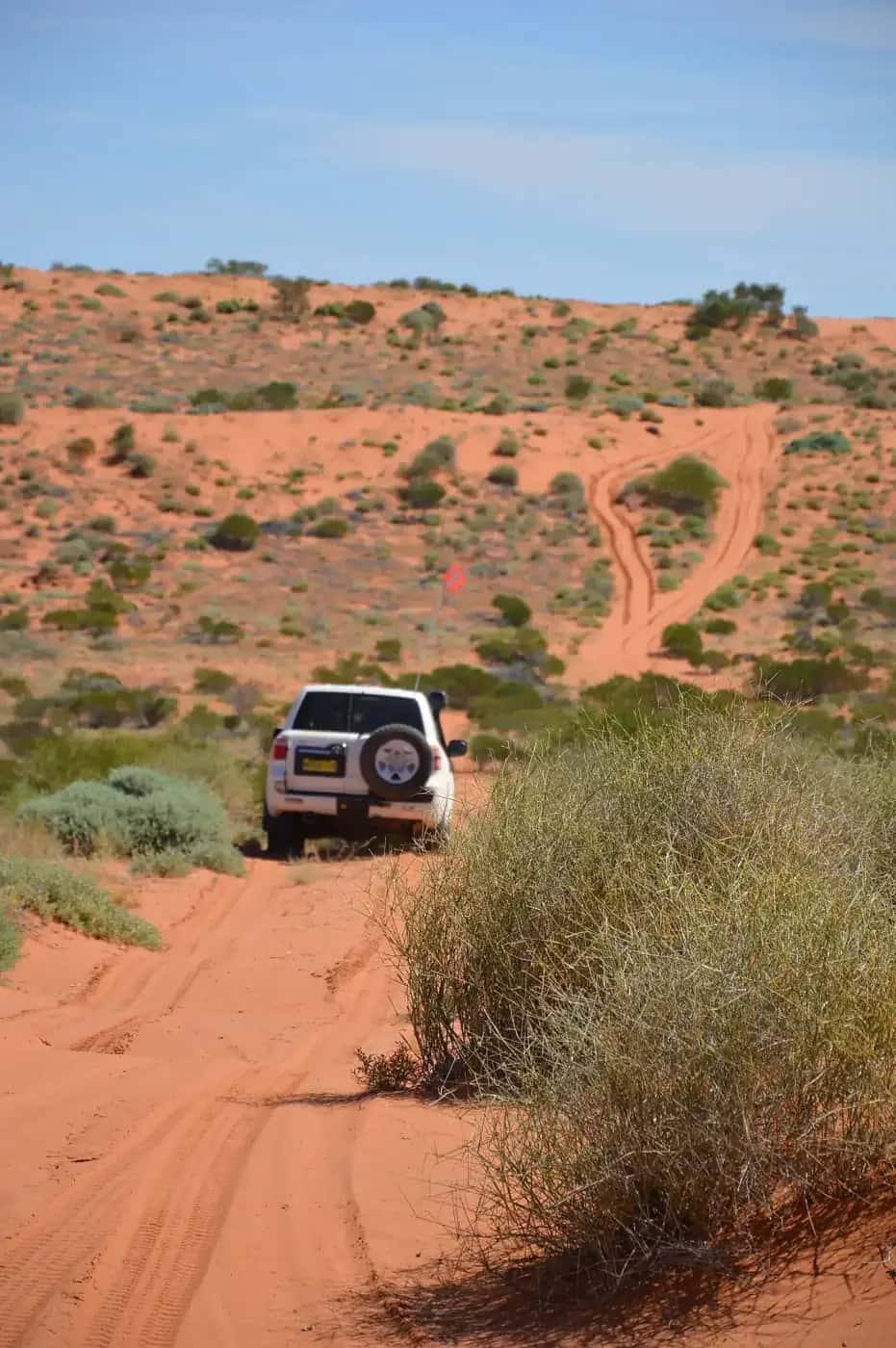
Choosing a vehicle comes down to the surface you'll drive on, the weather, and how far you'll be from help. Official road-condition systems in the outback describe restrictions in terms of vehicle type. If you know what they mean, you can match your vehicle to your route.
Reading official road warnings
Northern Territory and South Australian road reports use standard wording. The NT's road conditions terminology defines a "4WD" as a two-axle light vehicle built for on- and off-road use with all four wheels able to be engaged, and a "high clearance 4WD" as one that also has clearance for rough, uneven surfaces, generally more than a common passenger vehicle. Road Report NT uses these terms in restrictions such as "High Clearance 4WD only recommended". SA's Outback Road Warnings map uses restrictions like "4WD only, under 3 tonnes, no towing" on some sections, and allows towing with caution on others. If a warning says 4WD only, a 2WD or AWD car isn't permitted, and insurance may not cover you if you ignore it. See fuel, permits and road conditions for links to every state's road report.
Matching vehicle to route
| Route type | Examples | Suitable vehicle |
|---|---|---|
| Sealed highways | Stuart Highway, Matilda Way, Great Northern Highway | Any reliable car; a 2WD is fine |
| Well-maintained gravel, dry | Some park access roads and shire roads | 2WD with care, or an AWD; check local advice |
| Major outback tracks | Oodnadatta, Birdsville and Strzelecki tracks, Gibb River Road | High-clearance 4WD recommended |
| Remote desert and sand | Simpson Desert, Canning Stock Route | Well-equipped high-clearance 4WD, travelling in convoy |
Conditions change: a track that suits a 2WD one week can be "4WD only" or closed after rain. Our track guides for the Birdsville, Oodnadatta, Strzelecki, Gibb River Road and Canning Stock Route cover each route.
4WD features that matter
- Ground clearance: helps on rocky tracks, washouts, river crossings and high-centred sand tracks.
- Low-range gearing: gives control on steep climbs, descents, deep sand and recoveries.
- Tyres: light-truck all-terrain tyres resist punctures and stone damage much better than passenger tyres. Carry at least one full-size spare, and two on remote tracks.
- Fuel range: long-range tanks or approved jerry cans for routes with long gaps between fuel stops.
- Air compressor and pressure gauge: reducing tyre pressure on dirt and sand improves traction and comfort. Reinflate before returning to sealed roads.
- Recovery gear: a snatch strap, rated recovery points, a shovel, traction boards and a tyre repair kit, plus the knowledge to use them.
See our 4WD driving guide.
AWD SUVs and soft-roaders
All-wheel-drive SUVs and wagons are very popular, and they handle sealed roads and good gravel well. The limits usually come from low clearance, a lack of low range, road tyres and a temporary space-saver spare. A space-saver spare is a real problem on remote roads, where a second puncture can leave you stranded. If you're taking an AWD onto unsealed roads, fit a full-size spare, drive slowly on corrugations and turn back if the road deteriorates.
Hire vehicles
Check the rental agreement for:
- Whether unsealed roads are allowed, and which ones
- Named route exclusions, such as the Gibb River Road, the Simpson Desert or the Canning
- Night-driving and animal-strike exclusions
- One-way fees and remote-area recovery costs
Specialist 4WD and campervan hire companies in Alice Springs, Darwin, Broome and other hubs may permit approved tracks.
Servicing and spares
Get the vehicle serviced before a remote trip, and tell the mechanic where you're going. Carry fan belts, hoses, fuses, engine oil, coolant, tyre plugs and a basic tool kit. Breakdowns far from towns can mean long waits and very expensive recoveries. Check whether your roadside assistance covers remote and off-road locations.
Safety essentials
The NT Government's remote travel advice is to tell someone your route and expected arrival time, carry extra water, food and fuel, and stay with your vehicle if you break down. Carry a satellite communicator or PLB where mobile coverage ends. See outback safety and remote area travel safety.
Sealed-road trips need less than you think
Many of the outback's best-known sights are reachable on sealed roads: Uluru and Kings Canyon via the Lasseter and Luritja roads, the Matilda Way towns in Queensland, Broken Hill, Coober Pedy and the Stuart Highway, and Kununurra and Broome via the Great Northern Highway. For these trips, a well-serviced 2WD with good tyres, a full-size spare and air conditioning does the job. Spend the money you'd put into a 4WD on comfort and time instead. See one-week outback itineraries.
When a 4WD is worth it
A high-clearance 4WD opens up the tracks and many national park roads. It also gives you a margin when weather turns a gravel road into a rutted, muddy one. If your plans include the Kimberley, the Channel Country tracks or the deserts, it's the right choice. Experience matters as much as the vehicle, though. If you've never driven on sand or corrugations, start with easier tracks, travel with others, and consider a 4WD training course.
Checklist before you leave
- Check the official road report for every unsealed section on your route.
- Confirm your hire or insurance conditions cover those roads.
- Fit good tyres, and carry a full-size spare (two for remote tracks) and a tyre repair kit.
- Work out the longest gap between fuel stops, and carry enough fuel to cover it with a margin.
- Carry water, food, a first-aid kit and a satellite communication device.
- Leave your itinerary with someone and agree on a check-in time.
Campervans and motorhomes
Campervans and motorhomes are a popular way to tour the sealed outback highways, and they combine transport and accommodation. Most two-wheel-drive campervans are restricted to sealed roads by their hire agreements, and their low clearance makes unsealed tracks risky. 4WD campers and rooftop-tent 4WD hires are available from hubs such as Alice Springs, Darwin and Broome for travellers who want to reach the tracks. Check fuel range, water capacity and the hire company's road restrictions before you choose.
Electric vehicles
Electric vehicles can now complete some sealed outback routes, using the growing number of chargers in regional towns and roadhouses. Long gaps between chargers, heat, headwinds and towing all reduce range, though, and remote tracks remain impractical. If you're planning an EV trip, map your chargers carefully and have a backup plan in case one is out of service.
Related guides
Frequently asked questions
What is the best car for driving in the Australian outback?
For remote unsealed roads, a high-clearance 4WD with low-range gearing, all-terrain tyres and a full-size spare is the standard choice. For sealed highways, any reliable, well-serviced car is fine. The NT Government's advice is that gravel roads may suit a 2WD, natural-surface roads generally need a 4WD, and some outback roads need a high-clearance 4WD.
Is an AWD SUV good enough for the outback?
Many AWD SUVs handle sealed roads and well-maintained gravel roads in dry conditions. Most lack low-range gearing and have limited ground clearance and road-biased tyres, which makes them a poor choice for sand, deep corrugations, rocky tracks and river crossings. Check your owner's manual and your hire or insurance conditions.
Can you take a hire car on outback dirt roads?
Often not. Many standard hire agreements exclude unsealed roads, or particular routes such as the Gibb River Road, and some exclude driving at night in remote areas. Specialist 4WD and campervan hire companies may allow approved roads. Read the agreement before you book.
Is it difficult for an American to drive in Australia?
Australians drive on the left, and distances in the outback are much longer than many visitors expect. Common hazards include road trains, wildlife at dawn and dusk, single-lane bridges, unfenced livestock and unsealed roads. Take rest breaks, avoid night driving and check road conditions each day.
Sources and further reading
Facts on this page were checked against these primary and official sources. Conditions change — confirm before you travel or buy.
- Roads and roadsides — Road Safety NT
- Road conditions terminology — Northern Territory Government
- Outback road warnings — Department for Infrastructure and Transport, South Australia
- Remote travel safety — Northern Territory Government


