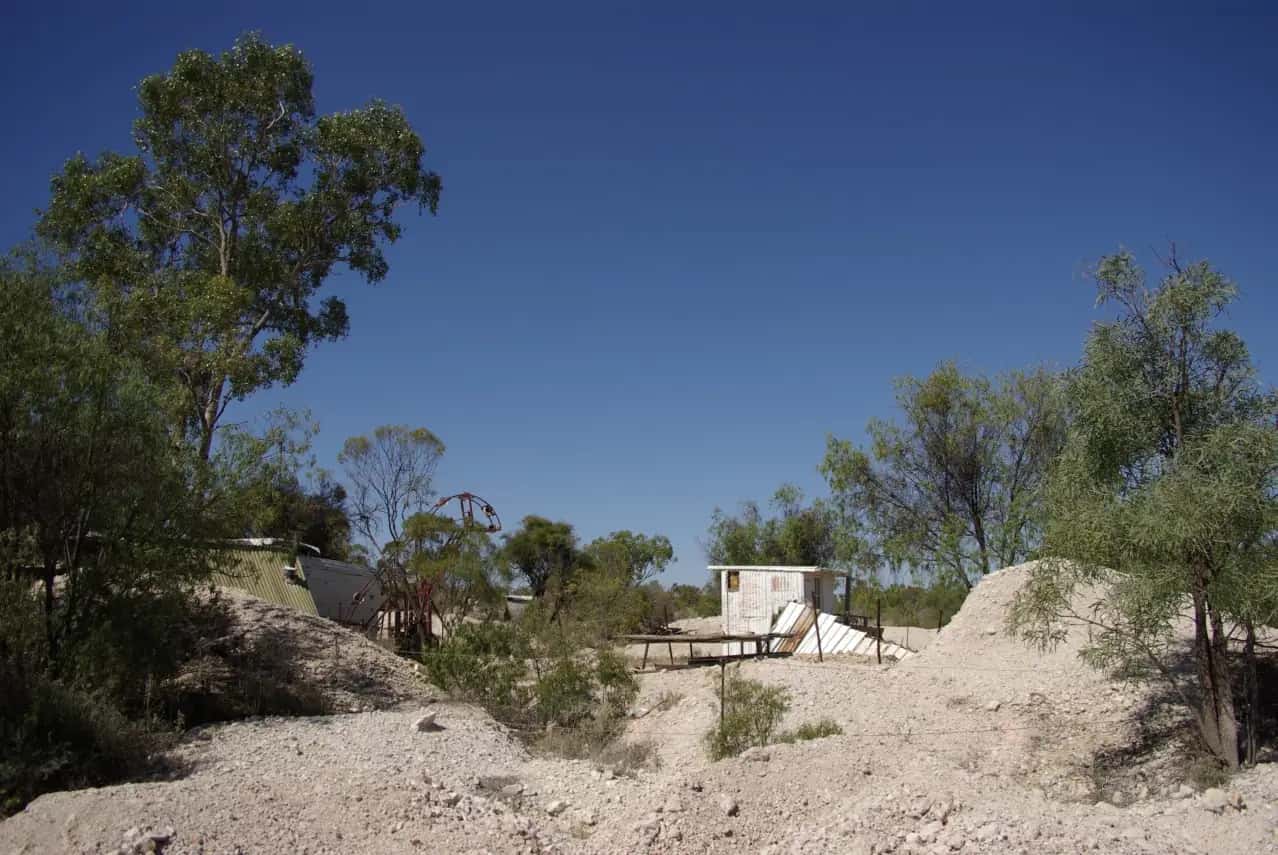
Opal is Australia's national gemstone, and black opal is its rarest, most sought-after form. Lightning Ridge, on Yuwaalaraay Country in north-western NSW, sits on the fields that made black opal famous. It's still a working mining town, with claims, mullock heaps and miners' camps stretching across the landscape. This guide covers how visitors can experience the opal story: fossicking, tours, buying and staying safe.
What makes black opal special
Opal is a form of hydrated silica. Its play of colour comes from tiny silica spheres arranged in a regular pattern that diffracts light. In black opal, a dark body tone sits behind that colour, which makes reds, greens and blues appear especially vivid. Value depends on:
- Body tone: darker generally means more valuable.
- Brightness: how vivid the colours appear.
- Pattern: how the colours are arranged.
- Colour: red across the stone is especially prized.
- Flaws: cracks, inclusions and potch (common opal without play of colour) reduce value.
There's no simple price list, and two similar-looking stones can differ hugely in value.
Fossicking for free at the visitor centre
The easiest way to try your luck is the public fossicking area right outside the Lightning Ridge Visitor Information Centre on Morilla Street. The Lightning Ridge Tourism Association says miners regularly dump fresh opal-bearing rubble there for visitors to sift through with a rake or sieve, and no licence is required. It's a fun, low-key introduction, and you're steps from maps and advice.
Tips:
- Bring a small rake, sieve and container. A spray bottle helps show colour on rough stones.
- Go early or late in the day in summer to avoid the heat.
- Wear a hat, sunscreen and closed shoes.
Finds are a matter of luck. Most pieces are small, but the search is the fun.
Fossicking elsewhere: know the rules
Away from the public area, rules are strict:
- Much of the opal field is covered by opal prospecting licences or mineral claims. NSW Resources says you need the holder's consent before fossicking, even on private land.
- On private land, you also need the landholder's consent.
- On native title land, you need the consent of the registered native title body, and only hand-held tools are allowed.
- Never take mullock (mine rubble) from a claim without permission.
Check the NSW Resources fossicking guide before you go. See fossicking and gem fields.
Mine tours and opal experiences
Several operators run underground mine tours, showing how opal is found and mined, and many include opal displays and shopping. Other experiences include the Chambers of the Black Hand, a hand-carved underground gallery, and galleries and showrooms around town. Check current operators and opening hours with the visitor centre, as they can change seasonally.
The Car Door Tours
The Car Door Tours are free, self-guided drives. Colour-coded car doors mark each route past miners' camps, opal fields, quirky handmade buildings and local landmarks. Pick up a map from the visitor centre. Routes include Blue, Red, Green and Yellow. They're a great way to understand the fields and the people who work them. Stay on the marked roads.
The Australian Opal Centre
The Australian Opal Centre (AOC) showroom on Morilla St, opened in December 2008, closed permanently on 13 June 2026 after more than 17 years. Its collection, including opalised fossils, is being kept safe until it can be exhibited again.
A new two-storey underground Australian Opal Centre building is taking shape at Lightning Ridge. The AOC says it's over 80% complete, but construction is paused while it seeks a final tranche of funding. Check the AOC website for updates.
Opalised fossils
Lightning Ridge is one of the few places in the world where fossils are preserved in opal. Bones of dinosaurs, early mammals and other animals have been found in the mines. The AOC's research and public programs have helped share these finds. Its annual fossil dig is run through the AOC, so contact it directly for details.
Buying opal
If you plan to buy:
- Know the types. A solid opal is cut entirely from natural opal. A doublet is a thin slice of opal glued to a backing. A triplet adds a clear cap on top. Solids generally cost more.
- Ask for a written description stating whether the stone is solid, doublet or triplet, and whether it's natural black opal.
- Compare several sellers before you buy. Take your time.
- Buy from established dealers, and ask about returns.
- Look in natural light, and view the stone from different angles.
Safety on the opal fields
- Unfenced shafts and open cuts are everywhere. Stay on roads and marked paths, and keep children and dogs close.
- Never enter a claim or touch equipment without permission.
- Don't walk around the fields at night.
- Carry water and avoid the middle of the day in summer.
See outback safety and outback summer heat.
When to visit
The cooler months, roughly April to October, are the most comfortable time for fossicking and touring. Summer can be very hot, so plan outdoor activity for early morning or late afternoon. See best time to visit.
Make a trip of it
Soak in the hot artesian bore baths in town, then head west to the Grawin, Glengarry and Sheepyard opal fields. You can also continue on the Great Artesian Spa Tour or the outback NSW road trip.
Related guides
- Lightning Ridge
- Coober Pedy, Australia's other famous opal town
- Fossicking and gem fields
- Best outback experiences
Frequently asked questions
Can you find opal at Lightning Ridge?
Yes. Visitors can try their luck at the free public fossicking area outside the Lightning Ridge Visitor Information Centre on Morilla Street, where miners regularly dump fresh opal-bearing rubble. No licence is needed there. Finds are a matter of luck.
Do you need a licence to fossick at Lightning Ridge?
Not at the public fossicking area outside the visitor centre. Elsewhere, much of the opal field is covered by opal prospecting licences or mineral claims, and you need the holder's consent before fossicking, even on private land. Check the NSW Resources guidance before you go.
Why is Lightning Ridge black opal so valuable?
Black opal has a dark body tone that makes its play of colour appear especially vivid. Lightning Ridge is the world's best-known source. Value depends on body tone, brightness, pattern, colour and the absence of flaws, so prices vary enormously.
Is the Australian Opal Centre open?
The Australian Opal Centre's Morilla St showroom closed permanently on 13 June 2026. A new underground centre is over 80% built, but construction is paused while the AOC seeks a final tranche of funding. Check its website for updates.
What is the difference between solid opal, a doublet and a triplet?
A solid opal is cut entirely from natural opal. A doublet is a thin slice of opal glued to a backing. A triplet adds a clear protective cap on top. Ask the seller to state in writing which type you're buying.
Sources and further reading
Facts on this page were checked against these primary and official sources. Conditions change — confirm before you travel or buy.
- Australian Opal Centre — Australian Opal Centre
- Lightning Ridge Visitors Centre Fossicking Area — Lightning Ridge Tourism Association
- Opal prospecting — NSW Resources
- Fossicking: a guide to fossicking in NSW — NSW Resources
- Lightning Ridge Car Door Tours — Destination NSW


