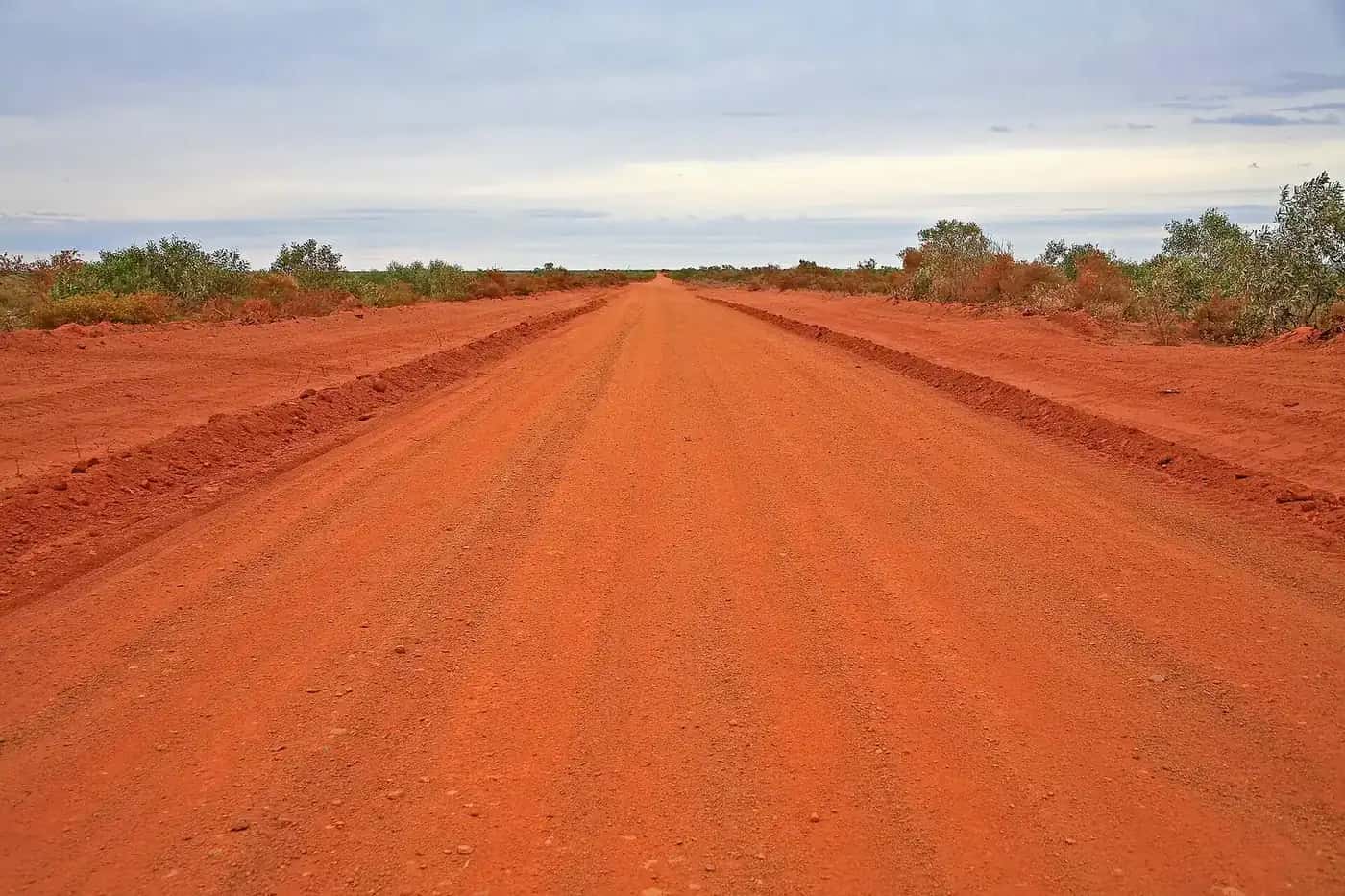
Ask ten Australians where the outback starts and you'll get ten answers. For some, it's past the last wheat paddock west of the Great Dividing Range. For others, it's where the bitumen ends. Travellers usually mean the red-earth interior and the remote north, where towns are hundreds of kilometres apart and services are limited.
The official measure: ABS remoteness
The Australian Bureau of Statistics divides the country into five Remoteness Areas: Major Cities, Inner Regional, Outer Regional, Remote and Very Remote. The classification is based on road distance to service centres. Remote and Very Remote Australia line up closely with what most people call the outback. The ABS doesn't use the word "outback" itself, but these two categories cover most of the land area, even though only a tiny share of the population lives there. At the 2021 Census, about 0.8% of Australians lived in Very Remote areas.
The outback by state
| State or territory | Outback areas |
|---|---|
| Northern Territory | Almost everything outside Darwin: the Red Centre, Barkly Tableland, Katherine and Arnhem Land |
| Western Australia | The Kimberley, Pilbara, Goldfields and Gascoyne interior, and the deserts |
| South Australia | North of the Flinders Ranges: Coober Pedy, the Oodnadatta, Birdsville and Strzelecki tracks, and Lake Eyre |
| Queensland | West of the ranges: Channel Country, Gulf Country, central west and north west |
| New South Wales | Far west: Broken Hill, Bourke, Cobar, Tibooburra and Corner Country |
| Victoria | Only the semi-arid north-west Mallee around Mildura is sometimes called outback |
State town guides: Northern Territory, Western Australia, South Australia, Queensland and New South Wales.
Climate: desert and tropical outback
Broadly, the outback has two climates. The arid and semi-arid interior has hot summers, cool to cold winter nights and low, unreliable rain. Alice Springs, Coober Pedy, Birdsville, Broken Hill and Tibooburra are examples. The tropical north has a hot wet season from about November to April and a dry season from about May to October. The Kimberley, Top End and Gulf Country fall into this zone. That split explains why the best time to visit differs so much between regions. See outback weather by month and the best time to visit.
The main outback regions
- Red Centre: Uluru, Kata Tjuta, Kings Canyon, the MacDonnell Ranges and Alice Springs.
- Kimberley: the Gibb River Road, Bungle Bungles, Broome and Kununurra.
- Pilbara: Karijini, Millstream, Tom Price and Newman.
- Channel Country: Birdsville, Windorah and the braided Diamantina and Cooper channels.
- Gulf Country: Normanton, Karumba and Burketown.
- Corner Country: Tibooburra, Milparinka and Cameron Corner.
The outback regions hub compares them.
Nearest outback to each capital
- Adelaide: the Flinders Ranges begin a few hours' drive north, and Port Augusta is a common gateway. See Flinders Ranges.
- Sydney: far-western NSW, with Broken Hill and Bourke.
- Melbourne: north-west Victoria around Mildura, and then into far-western NSW.
- Brisbane: western Queensland via Charleville and the Matilda Way.
- Perth: the Goldfields around Kalgoorlie, or north to the Pilbara.
- Darwin: Katherine and the Stuart Highway south.
What makes a place "outback"
The common threads are distance, low population, pastoral or mining land use, and a landscape shaped by heat and dryness or by tropical monsoon. Aboriginal Country covers the whole outback, and many communities have lived there for tens of thousands of years. Some Aboriginal lands need permits to enter. See fuel, permits and road conditions and Aboriginal culture and Country.
How big is the outback?
Because Remote and Very Remote Australia cover most of the continent, outback distances are huge. Driving between neighbouring outback regions often takes several days, and towns can be hundreds of kilometres apart. Plan routes around fuel, water and rest stops rather than the map alone. Our two-week itineraries give a realistic sense of what you can cover.
Is the outback the same as the bush?
Not quite. "The bush" is a broad term Australians use for anywhere outside the cities, including farming districts close to the coast. "The outback" usually means the drier, more remote interior and the far north beyond the farming belt. In practice, the two overlap, and locals in remote towns may simply call it the bush.
The outback's deserts
Much of the interior is desert country, including the Simpson, Great Victoria, Great Sandy, Tanami and Gibson deserts. The landscape varies a lot: dune fields, gibber plains, salt lakes, spinifex sandplains and rocky ranges. Many of these areas have no towns at all. Crossing them is serious remote travel that needs preparation, permits for some areas, and a well-equipped 4WD. See Simpson Desert and remote area travel safety.
How do you get around the outback?
The main options are driving, flying and the train. Sealed highways connect most outback hubs, and a reliable 2WD can reach many highlights. Regular flights link capitals with outback hubs such as Alice Springs, Ayers Rock, Broome, Kununurra, Longreach and Broken Hill. Long-distance trains, including The Ghan, the Indian Pacific and Queensland Rail's outback trains, offer another way to cover the distances. See the outback by train and scenic flights and air tours.
Can you live in the outback?
Yes. Hundreds of thousands of Australians live in remote and very remote areas, in Aboriginal communities, mining towns, pastoral stations and regional centres such as Alice Springs, Broken Hill, Mount Isa and Kalgoorlie-Boulder. Services such as the Royal Flying Doctor Service and distance education make remote life possible. See working in the outback and Royal Flying Doctor Service.
Outback or "the Never Never"?
Australians have many names for remote country, including "the Never Never", "beyond the black stump" and "back o' Bourke". They're informal, but they all point to the same idea: far from the cities and services, where self-reliance matters.
Getting there
Most visitors fly to Alice Springs, Ayers Rock (Yulara), Broome, Kununurra, Longreach, Broken Hill or Karratha, then hire a car, or they drive the sealed highways from a capital city. Read best vehicle for the outback and outback safety before setting off.
Even Victoria has outback-style country in its far north-west, around Mildura.
Frequently asked questions
Where exactly is the Australian outback?
There's no legal boundary. The term usually means the arid and semi-arid interior and the remote tropical north: most of WA, SA and the NT, western Queensland and far-western NSW. Statistically, the Australian Bureau of Statistics' Remote and Very Remote Australia categories cover most of this area.
What percentage of Australians live in the outback?
According to the ABS, about 0.8% of Australians lived in Very Remote Australia at the 2021 Census. Remote Australia holds a further small share. Even so, these categories cover most of the continent's land area.
What is the closest outback to Sydney?
Far-western NSW is the nearest classic outback to Sydney. Broken Hill is roughly a full day's drive west, and Bourke, Cobar and White Cliffs are also in the region. You can also fly from Sydney to Broken Hill.
Is Alice Springs in the outback?
Yes. Alice Springs is in the Red Centre, near the geographic centre of Australia, and is the main town of central Australia.
Sources and further reading
Facts on this page were checked against these primary and official sources. Conditions change — confirm before you travel or buy.
- Remoteness Areas (Australian Statistical Geography Standard, Edition 3) — Australian Bureau of Statistics
- Regional population — Australian Bureau of Statistics


