Uluṟu-Kata Tjuṯa National Park is owned by Anangu and jointly managed with Parks Australia. Visitors stay at Yulara (Ayers Rock Resort), just outside the park. Everything in this itinerary can be done in a 2WD on sealed roads. Times and closures change, so check the Parks Australia website before you go.
Before you start
- Park pass: everyone needs a park pass. Parks Australia lists the 2026 adult pass at $38 for three days, with under-18s free. Check the pass page for current prices and options.
- Heat closures: Parks Australia closes parts of the Uluru base walk and the Valley of the Winds from 11 am when the temperature is forecast or reaches 36°C or above. Start walks early.
- Water: carry plenty on every walk. There are water stations at some trailheads.
- Photography: follow the signs at culturally sensitive sites. Our photography section below explains the rules. Drones are prohibited in the park.
The key walks
| Walk | Length and time (Parks Australia) | Notes |
|---|---|---|
| Uluru base walk | 10.6 km loop, about 3.5 hours | Flat, Grade 3; the north-east section closes from 11 am in extreme heat |
| Valley of the Winds | 7.4 km, about 3 to 4 hours | Grade 4, rocky; closes beyond Karu Lookout from 11 am in extreme heat |
| Mala walk | Short, flat walk at the base of Uluru | Free ranger-guided walks have been offered; check current times |
| Kuniya walk to Mutitjulu Waterhole | Short, flat walk | Rock art and a waterhole on the south side of Uluru |
| Walpa Gorge | Short return walk at Kata Tjuta | Between two of the domes |
For more detail, see our Uluru-Kata Tjuta National Park guide.
Two-day Uluru itinerary
Day 1
- Morning: watch sunrise at Talinguru Nyakunytjaku, the main sunrise viewing area, then walk the Uluru base walk while it's cool, or the shorter Mala and Kuniya walks.
- Midday: visit the Uluṟu-Kata Tjuṯa Cultural Centre to learn about Anangu Tjukurpa (law and culture). Allow at least an hour or two.
- Evening: see sunset from the Uluru sunset viewing area.
Day 2
- Morning: drive to Kata Tjuta and walk the Valley of the Winds early.
- Afternoon: rest at Yulara in the heat of the day, then walk Walpa Gorge.
- Evening: see sunset from the Kata Tjuta dune viewing area or Uluru.
Three-day Uluru itinerary
Follow the two-day plan, then add:
Day 3
- Morning: bike or walk the base at sunrise (bike hire has been available at the Cultural Centre), or join a guided cultural tour.
- Afternoon: take a scenic flight, a camel ride or a dot painting workshop, or visit the art galleries at Yulara.
- Evening: try one of the commercial evening experiences, such as Field of Light or Wintjiri Wiru. See our Yulara guide.
Four days or more: add Kings Canyon
With four days or more, add Watarrka National Park (Kings Canyon), which is a long drive from Yulara. Walk the Kings Canyon Rim Walk early in the morning, and stay overnight at Kings Canyon. With a week, you can continue to Alice Springs and the West MacDonnell Ranges. See our Red Centre guide and one-week itineraries.
Photography rules
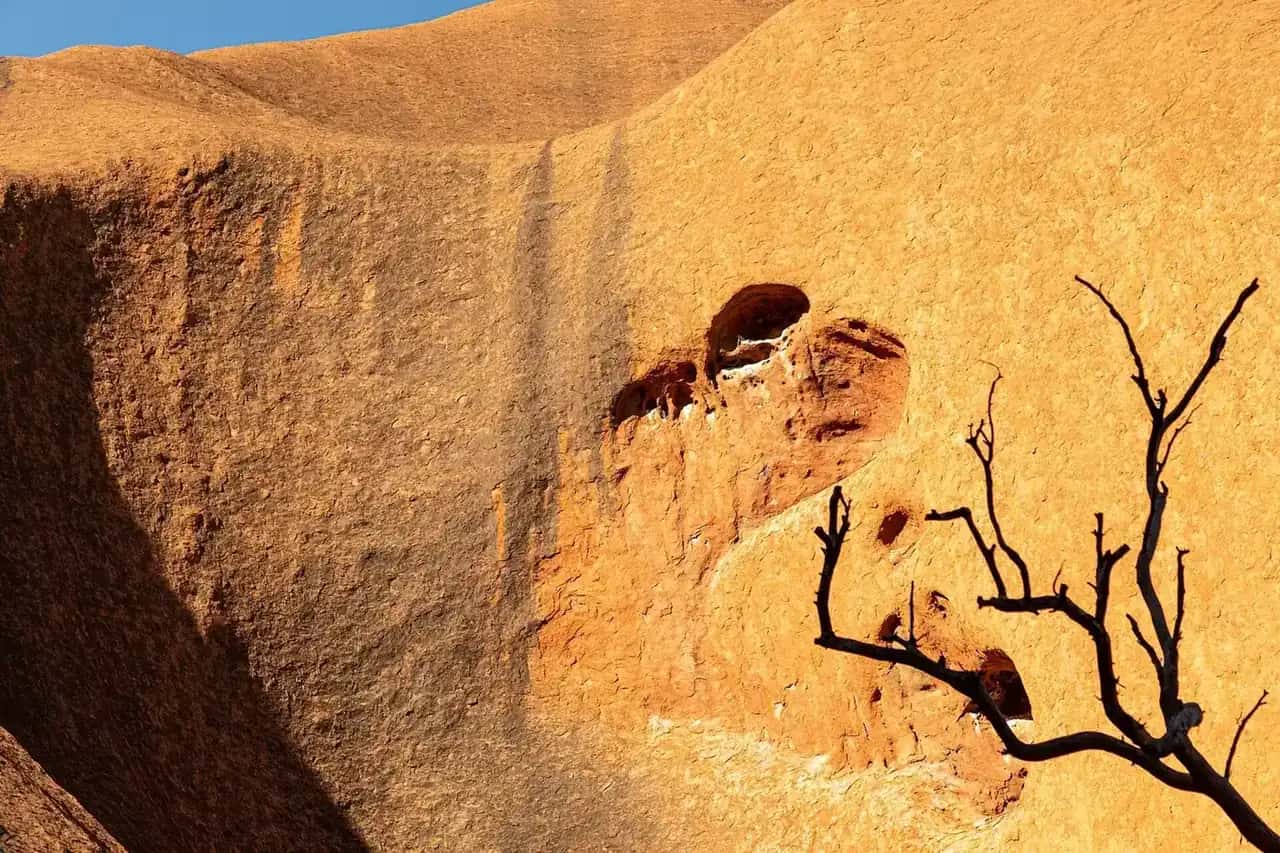
Parks Australia explains that some rock features are equivalent to sacred scripture for Anangu, so photographing culturally sensitive sites is prohibited. Signs and maps mark them. The north-east face of Uluru is one of the most sensitive areas, and it's the side most often seen from the resort and on flights in. Parks Australia asks photographers to take only wide shots of it from a distance. It suggests shooting about one to two hours before sunset, when shadows hide the sacred details. Always ask before photographing Anangu. Any photos or videos for commercial or public use, including by influencers and content creators, need a media permit. Night-sky shots have to be taken from outside the park, because visitors must leave by closing time.
When to go
The cooler months are best for walking, but even winter days can be warm in the sun, and nights can be close to freezing. The park has five Anangu seasons. Parks Australia notes that wildflowers bloom in spring, but only after winter rain. In summer, walk only at dawn, carry far more water than you think you need, and expect closures in extreme heat. See outback weather by month.
How many days do you need at Uluru?
Most visitors find that two to three days in Uluru-Kata Tjuta National Park is enough to see the main sights without rushing. That gives you time for a sunrise and a sunset at Uluru, the Uluru base walk, the Valley of the Winds or Walpa Gorge at Kata Tjuta, and the Cultural Centre. The park pass is valid for three days (adults $38 in 2026, with under-18s free), which suits that length of stay. With four or five days, you can add Kings Canyon on the way to or from Alice Springs. A week lets you combine Uluru with the West MacDonnell Ranges. See the Red Centre guide.
Time at the Cultural Centre
Allow at least an hour or two at the Uluru-Kata Tjuta Cultural Centre, near the base of Uluru, to see the displays about Anangu culture and Tjukurpa and to browse the Aboriginal-owned art outlets. It's also a good, shaded place to spend the hottest part of the day. Ranger-guided activities run at some times of year, so check the Parks Australia website for current programs.
Heat and walking safety
Parks Australia closes some walks from 11 am when the forecast is 36°C or higher. Start walks early, carry plenty of water, and wear a hat and sun protection. The flies can be intense in warmer months, so a fly net helps. See outback safety.
Getting there
Fly into Ayers Rock Airport (Connellan) near Yulara, or drive from Alice Springs via the Stuart and Lasseter highways. Many visitors fly in to Yulara and out of Alice Springs, or the reverse, and drive the Red Centre Way in between.
Related guides
Frequently asked questions
How many days do I need for Uluru?
Two full days is a practical minimum for Uluru and Kata Tjuta. Three days lets you do the main walks at a relaxed pace, catch more than one sunrise or sunset and add a tour. Parks Australia's standard adult park pass covers three days.
What month is best to visit Uluru?
For walking, the cooler months from about May to September are the most comfortable, though nights can be very cold. Summer is extremely hot. Parks Australia closes parts of key walks from 11 am when the temperature is forecast or reaches 36°C or more. Wildflowers can be spectacular in spring after good winter rain.
Why can't you take photos of parts of Uluru?
Some features of Uluru and Kata Tjuta are culturally sensitive sites for Anangu. Parks Australia explains that their details are equivalent to sacred scripture and should only be seen in place by specific people, so photographing these sites is prohibited. Signs and park maps show where they are.
Is it worth travelling to Uluru?
For most visitors, yes. Uluru and Kata Tjuta are World Heritage-listed for both their natural and cultural values. Seeing the rock change colour, walking its base and learning about Anangu culture at the Cultural Centre are experiences you can't get anywhere else. Plan for the heat, flies and the cost of a remote location.
Can you fly a drone at Uluru?
No. Parks Australia says drones and other remote-controlled devices are prohibited in Uluṟu-Kata Tjuṯa National Park under the EPBC Act, and penalties apply.
Sources and further reading
Facts on this page were checked against these primary and official sources. Conditions change — confirm before you travel or buy.
- Buy your pass — Parks Australia
- Photography — Parks Australia
- Uluṟu base walk — Parks Australia
- Valley of the Winds walks — Parks Australia
- Staying safe — Parks Australia