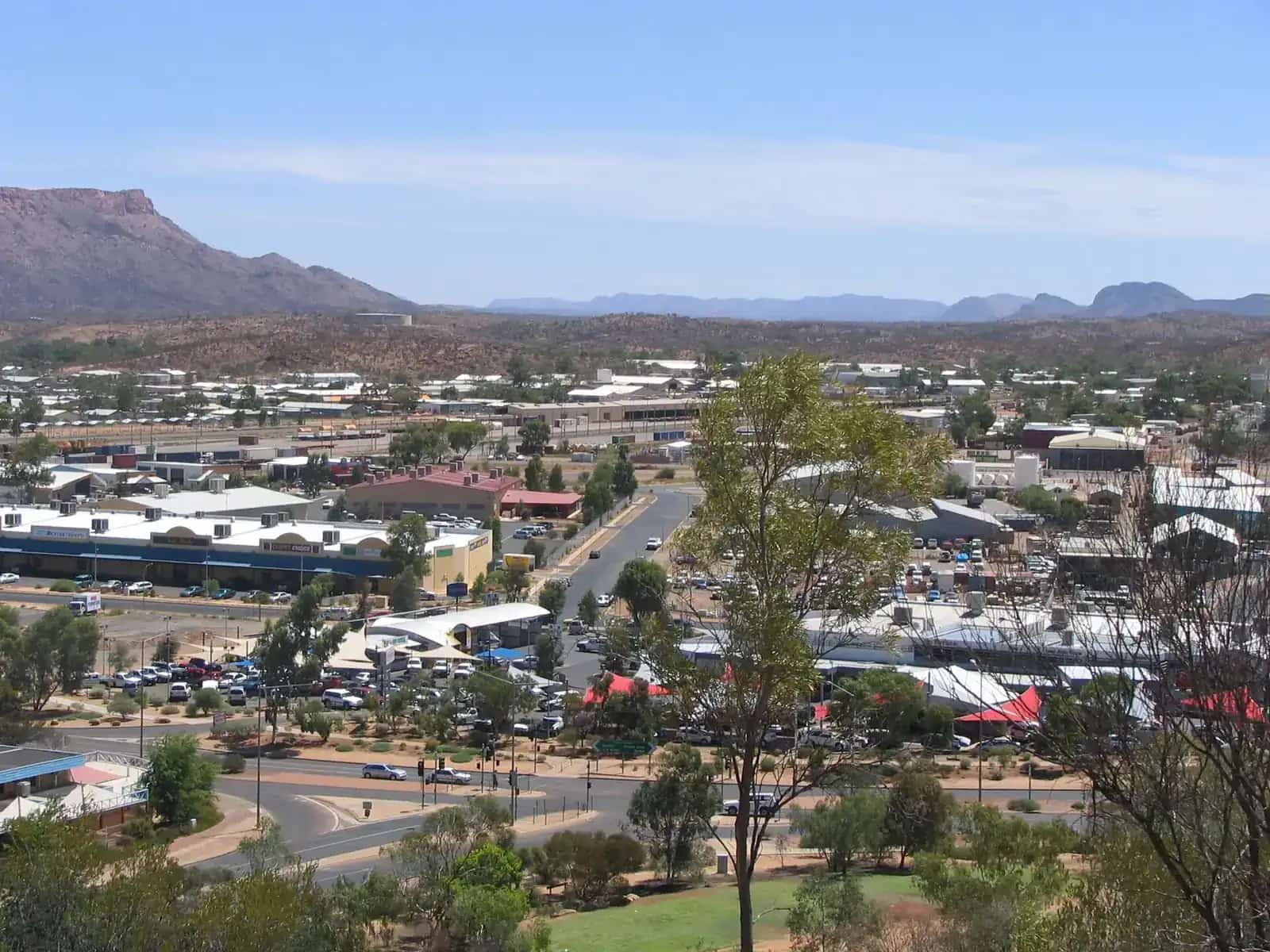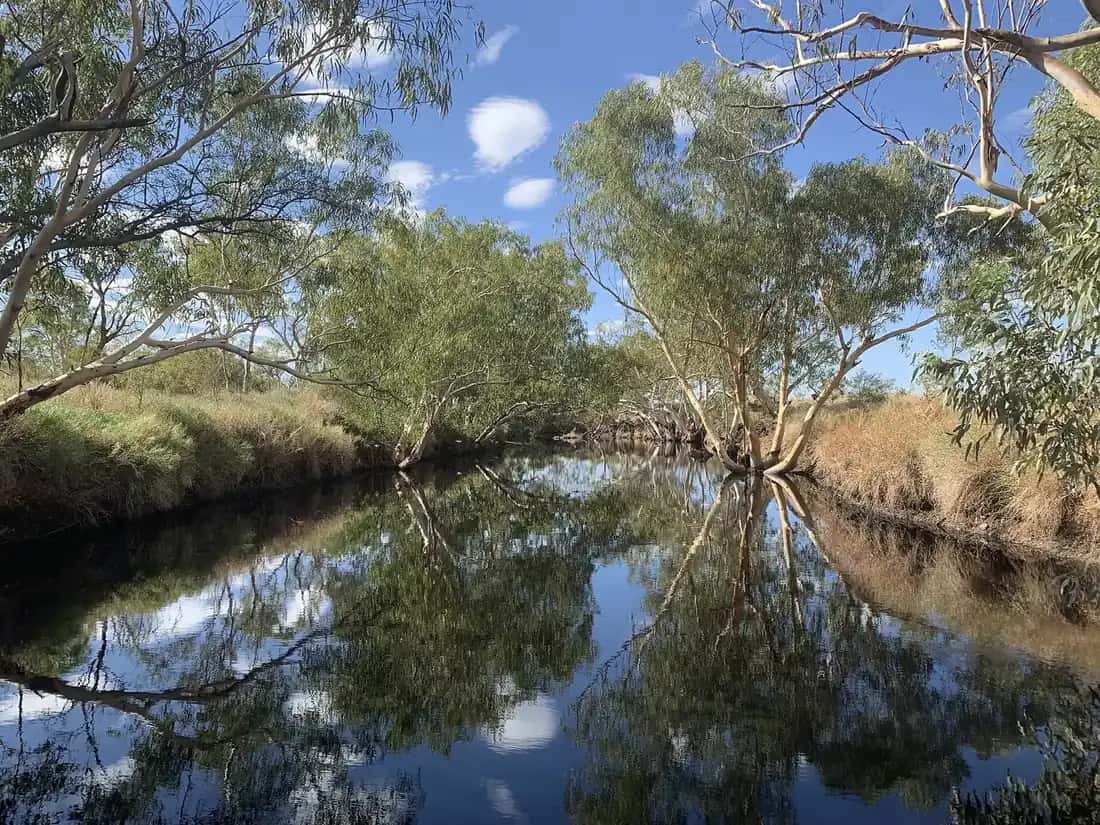
Tennant Creek lies on the Country of the Warumungu people, whose name for the area is Jurnkkurakurr. It sits on the Stuart Highway in the Barkly Region, about 500 km north of Alice Springs and around 1,000 km south of Darwin. The town grew after gold was discovered in the 1930s, in one of Australia's last major gold rushes. Today it is a regional service centre with a strong Aboriginal community and good facilities for travellers.
Things to do in Tennant Creek
- Nyinkka Nyunyu Art and Culture Centre. Built near a sacred site, the centre shares Warumungu culture through exhibitions, stories, art and a gallery. It is the best place to start a visit.
- Battery Hill Mining Centre. Learn about the town's gold rush history at the restored stamp battery, with underground mine displays and a mineral museum.
- Tennant Creek Telegraph Station. About 12 km north of town, one of the stations of the 1872 Overland Telegraph Line, with restored stone buildings.
- Lake Mary Ann (Mary Ann Dam). A recreation lake north of town for picnics, swimming, kayaking and birdwatching.
- Kunjarra (The Pebbles). Smaller granite boulders north-west of town, a sacred site for Warumungu women. Respect signage.
- Town walks. Explore the main street and historic buildings.
Karlu Karlu (Devils Marbles)
About 100 km south, Karlu Karlu / Devils Marbles Conservation Reserve protects giant, rounded granite boulders scattered across a shallow valley. They are a sacred site for the Warumungu, Kaytetye, Alyawarre and Warlpiri peoples. Sunrise and sunset light up the boulders in deep reds and oranges. There is a campground with basic facilities. Stay on paths and do not climb the boulders.
Getting there
Tennant Creek is on the sealed Stuart Highway, about 25 km south of Three Ways, where the Barkly Highway heads east to Camooweal and Mount Isa. The Ghan passes through Tennant Creek. Tennant Creek is a stop on the Adelaide to Darwin route.
Where to stay
The town has caravan parks, motels and hotels. Camping is also available at Karlu Karlu.
History in brief
The Overland Telegraph reached the area in 1872, and a telegraph station was built at a creek named by Stuart after John Tennant. Gold discoveries in the early 1930s brought prospectors during the Great Depression, and the town grew. Warumungu people's land rights were recognised in later decades, and Aboriginal culture remains central to the community.
Suggested day
Start at Nyinkka Nyunyu, then visit Battery Hill. Drive to the Telegraph Station after lunch, and finish at Lake Mary Ann. The next day, leave early for sunrise at Karlu Karlu on your way south.
When to visit
April to September offers warm days and cool nights. Summers are very hot, and the wet season brings storms.
Tips
- Check opening hours for cultural centres and museums.
- Respect alcohol restrictions that apply in parts of town and the region.
- Avoid night driving on the Stuart Highway.
Warumungu culture
The Warumungu people have lived in this region for many thousands of years, and Tennant Creek remains a centre of Warumungu culture and language. Land rights struggles in the 1970s and 1980s led to the return of significant areas of land. Visitors can learn more at Nyinkka Nyunyu and through local art. Always ask before taking photographs of people, and follow the guidance in our visiting Country respectfully guide.
The Barkly Region
Tennant Creek is the main town of the Barkly, a vast region of Mitchell grass plains and huge cattle stations. Some stations in the region are among the largest in Australia. Travelling east along the Barkly Highway, the Barkly Homestead roadhouse is the main stop before the Queensland border at Camooweal. North of Three Ways, the Stuart Highway leads to Renner Springs, Elliott and Daly Waters. All of these distances are long, so plan fuel and rest stops, and read our outback safety guide.
Iytwelepenty / Davenport Ranges National Park
East of Karlu Karlu, Iytwelepenty / Davenport Ranges National Park protects ancient ranges, permanent waterholes and remote camping areas. It is one of the Territory's least-visited parks, reached only by high-clearance 4WD on unsealed tracks, and it is important to its Traditional Owners. Check NT Parks for access, track conditions and camping information, carry plenty of water and fuel, and travel self-sufficiently — there are no services in the park.
Desert Harmony Festival
Tennant Creek's community arts festival, Desert Harmony, has been held in recent years and celebrates the art, music and culture of the Barkly region, with strong involvement from Warumungu and other Aboriginal artists and performers. Dates and programs change, so check with Barkly Regional Council or the visitor centre.
Stocking up
Tennant Creek is the only town with a full range of services for a long way in every direction: Alice Springs is about 500 km south, Katherine around 670 km north and Mount Isa well over 600 km east. Use the stop to refuel, restock groceries, check tyres and do any vehicle repairs before continuing. Fuel is available at Three Ways and the roadhouses along the highway, but services there are limited.
Heat and the build-up
From about October, temperatures climb and humidity increases as the wet season approaches further north. Storms can bring heavy rain, flooding on minor roads and dust storms. Travel early in the day, carry extra water and check the NT Road Report and BOM warnings.
Is it worth visiting Tennant Creek?
Yes, as a stop of a night or two. It's the main town between Alice Springs and Katherine. It has a gold-mining story, Warumungu culture at Nyinkka Nyunyu, and Karlu Karlu / Devils Marbles 100 km south.
The top things to do in detail
- Battery Hill Mining and Heritage Centre. On Peko Road, it's home to the visitor centre. Its hard-hat Underground Mine Tour goes through a recreated mine tunnel. Tourism NT lists adult tickets at $39, seniors $35 and children (7–16) $18. It isn't suitable for children under 7. The centre is open from 9 am to 5 pm on weekdays and from 9:30 am to 4 pm on weekends. Check current times.
- Nyinkka Nyunyu Art and Culture Centre. Warumungu culture, art and bush foods, with guided tours.
- Lake Mary Ann. About 5–7 km north, with picnic areas, kayaking, swimming and birdlife.
- Tennant Creek Telegraph Station. About 11–12 km north. Guided tours can be arranged through the visitor centre in the dry season. It's on the Overland Telegraph Line; see the Overland Telegraph Line.
- Kunjarra / The Pebbles. A women's Dreaming site near town. Visit respectfully.
How long to spend in Tennant Creek
One day covers Battery Hill, Nyinkka Nyunyu and Lake Mary Ann. Add a second day for the Telegraph Station and a sunset or sunrise visit to Karlu Karlu. Local itineraries suggest three to four days if you include the Davenport Ranges.
Why is Tennant Creek famous?
For Australia's last great gold rush, in the 1930s, and as the heart of the Barkly Region. It's also known for Warumungu culture and as the gateway to Karlu Karlu.
Is Tennant Creek safe?
Take the usual precautions for any town: lock your vehicle, keep valuables out of sight, and follow local advice. Alcohol restrictions apply in parts of the NT, including here. Respect signs and local rules.
Tennant Creek with kids
The underground mine tour (age 7 and over), Lake Mary Ann's playground and kayaks, and the boulders at Karlu Karlu make a good family stop.
Where to stay
Motels, caravan parks and a few hotels, plus the campground at Karlu Karlu. See Karlu Karlu / Devils Marbles.
Practical information
- Distance: about 500 km north of Alice Springs.
- Best time: April to September.
- Related: Alice Springs, Daly Waters, Camooweal, Adelaide to Darwin, Aboriginal culture.
Day trip: Karlu Karlu / Devils Marbles, about 100 km south. Heading east? See the Barkly Highway guide.
Frequently asked questions
How far is Tennant Creek from Alice Springs?
About 500 km north, roughly five hours' drive.
What is Nyinkka Nyunyu?
An art and culture centre in Tennant Creek that shares Warumungu culture, history and art, with exhibitions and a gallery.
How far is Tennant Creek from Karlu Karlu (Devils Marbles)?
About 100 km south on the Stuart Highway.
How far is Tennant Creek from Karlu Karlu?
About 100 km south on the Stuart Highway.
When was gold found at Tennant Creek?
In the early 1930s, sparking one of Australia's last gold rushes.
Is it worth visiting Tennant Creek?
Yes, for a night or two. Battery Hill's underground mine tour, Nyinkka Nyunyu's Warumungu culture centre, Lake Mary Ann and nearby Karlu Karlu make it a rewarding break on the Stuart Highway.
How long should you spend in Tennant Creek?
One to two days. Allow three to four if you add Karlu Karlu and the Davenport Ranges.
Sources and further reading
Facts on this page were checked against these primary and official sources. Conditions change — confirm before you travel or buy.
- Road report NT — Northern Territory Government
- Barkly Regional Council — Barkly Regional Council
- Nyinkka Nyunyu Art and Culture Centre — Nyinkka Nyunyu
- Karlu Karlu / Devils Marbles Conservation Reserve — NT Government
- Tennant Creek (Wikipedia) — Wikipedia
- Battery Hill Gold Mining and Heritage Centre — Tourism NT
- Tours and activities — Barkly Regional Tourism