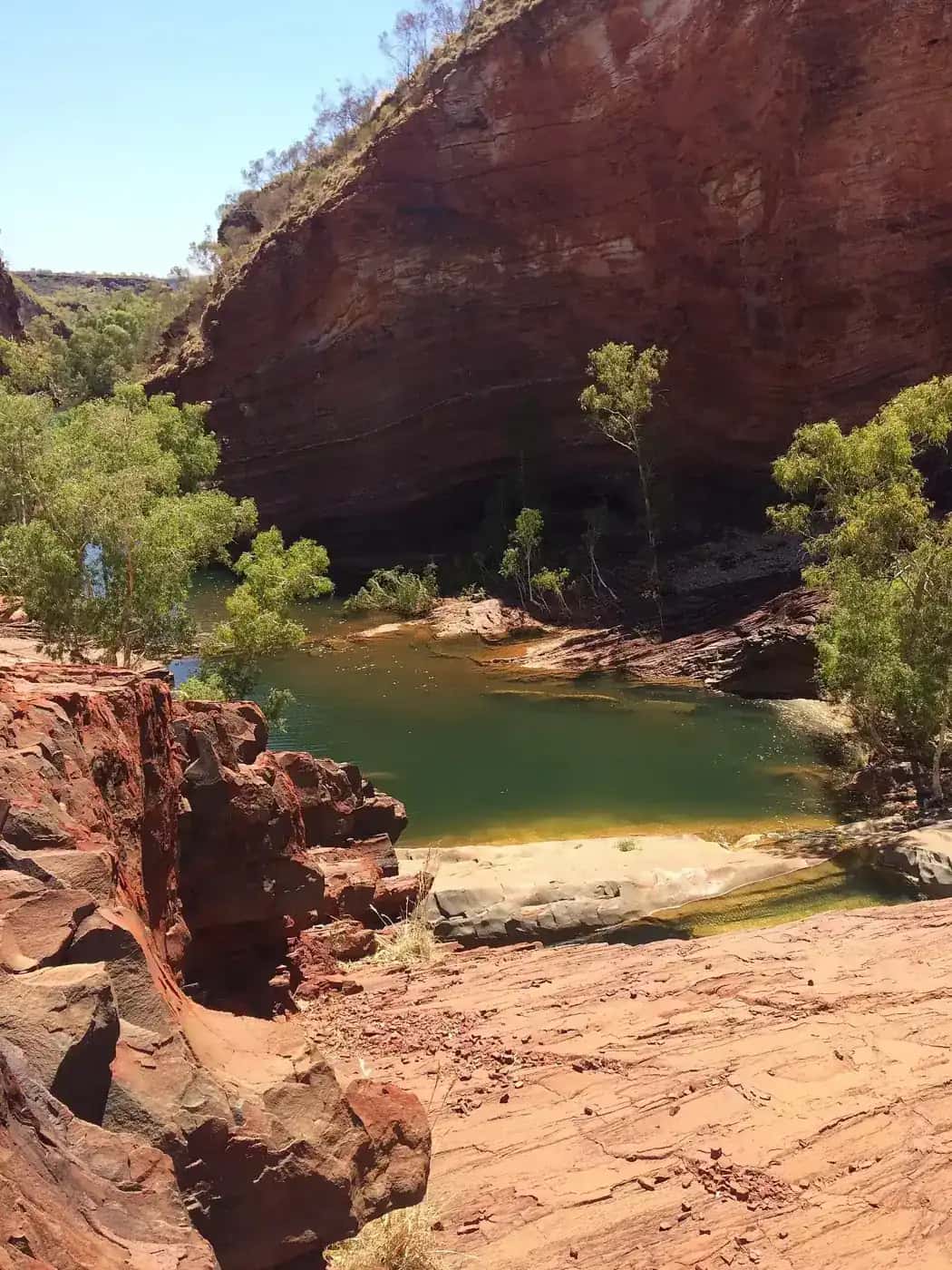
National parks are where the outback's geology, wildlife and Aboriginal heritage come together. Several are World Heritage listed. Most are jointly managed with traditional owners, and many have strict rules on camping, fires, drones and photography of sacred sites. Always check the official park page for closures, fees and fire danger before you go.
Uluru-Kata Tjuta National Park (NT)
Uluru and the domes of Kata Tjuta rise from the sand plains about 450 km by road south-west of Alice Springs. The park is jointly managed by Anangu traditional owners and Parks Australia and is World Heritage listed for both natural and cultural values. Walk the base of Uluru, take the Valley of the Winds walk at Kata Tjuta (closed in high heat), visit the Cultural Centre and watch sunset from the viewing areas. A park pass is required. Accommodation is at Ayers Rock Resort in Yulara.
Watarrka (Kings Canyon) and the West MacDonnell Ranges (NT)
Kings Canyon's rim walk is one of the Territory's great day walks, with an early start essential in warm weather. Closer to Alice Springs, Tjoritja/West MacDonnell National Park strings together gorges and waterholes such as Simpsons Gap, Standley Chasm (privately run), Ellery Creek Big Hole, Ormiston Gorge and Glen Helen along a sealed road.
Nitmiluk National Park (NT)
Just outside Katherine, Nitmiluk protects a series of sandstone gorges carved by the Katherine River, jointly managed by the Jawoyn people. Cruise or canoe the gorge in the dry season, walk to lookouts or tackle the multi-day Jatbula Trail to Leliyn (Edith Falls). Flooding can close parts of the park in the wet.
Ikara-Flinders Ranges National Park (SA)
Wilpena Pound (Ikara), a vast natural amphitheatre, is the centrepiece of SA's best-known outback park, about five hours' drive north of Adelaide. The Adnyamathanha people are its traditional owners. Highlights include the Wilpena Pound walks, Brachina and Bunyeroo gorges with their geological trail, and abundant yellow-footed rock-wallabies. The Flinders Ranges were added to the World Heritage list in 2024 for their record of early animal life.
Karijini National Park (WA)
In the Pilbara near Tom Price, Karijini's red gorges, waterfalls and swimming holes — Fortescue Falls, Fern Pool, Hancock and Weano gorges — are among Australia's most photographed landscapes. Some gorge walks are difficult and involve climbing and wading; heed the warning-level signage and never enter gorges during rain.
Purnululu National Park (WA)
The beehive-striped sandstone domes of the Bungle Bungle Range, in the east Kimberley, are World Heritage listed. Access is via a rough 4WD track off the Great Northern Highway, open only in the dry season; scenic flights from Kununurra and Halls Creek are a popular alternative.
Mutawintji National Park (NSW)
North-east of Broken Hill, Mutawintji protects rugged ranges, rock pools and one of the richest collections of Aboriginal rock art in NSW. It was the first national park in NSW handed back to its Aboriginal owners. The historic site with the most significant art is accessible on guided tours; check with NPWS. Roads are unsealed and close after rain.
Gundabooka National Park (NSW)
South of Bourke, Gundabooka's range rises above the Darling plains and holds important Ngiyampaa and Barkindji rock art at Mulgowan (Yappa) Aboriginal Art Site. It makes an easy day trip from Bourke on mostly unsealed roads.
Kinchega National Park (NSW)
Near Menindee, Kinchega sits on the Darling River (Baaka) and the Menindee Lakes, with river red gums, birdlife and the historic Kinchega woolshed. It pairs well with Broken Hill.
Queensland's outback parks
Queensland's outback parks are less famous but rewarding: Carnarvon Gorge in the central highlands for sandstone cliffs and rock art; Idalia near Blackall for yellow-footed rock-wallabies; Currawinya near Hungerford for its lakes and birdlife; Boodjamulla (Lawn Hill) in the Gulf for its emerald gorge; and Diamantina and Munga-Thirri (Simpson Desert) for true remoteness. Check QPWS for camping bookings and road access.
Park etiquette
- Book campsites online in advance where required.
- Observe fire bans and use fuel stoves where fires are prohibited.
- Do not touch rock art or enter restricted sacred areas.
- Drones are restricted in many parks; check the rules first.
- Take your rubbish out with you, and leave gates as you find them.
Park passes and fees
Each state and territory runs its own system for park entry and camping:
- NSW — vehicle entry fees apply in some parks, with annual passes available from NSW National Parks and Wildlife Service. Camping fees are separate.
- Queensland — most national parks don't charge entry fees, but camping permits must be booked and paid for in advance through Queensland Parks and Wildlife Service.
- South Australia — the Desert Parks Pass covers several remote desert parks and reserves, and other parks have entry or camping fees. Passes are available online from National Parks and Wildlife Service SA.
- Northern Territory — interstate and international visitors need an NT Parks Pass for many Territory-managed parks. Uluru-Kata Tjuta and Kakadu are managed by Parks Australia and need their own park passes.
- Western Australia — entry fees apply in many parks, with holiday and annual passes available from Parks and Wildlife Service WA. Camping fees are separate.
Check fees and pass requirements on the relevant agency's website before travelling; we don't list prices as they change.
More outback parks to consider
- Sturt National Park (NSW) — gibber plains, red sand dunes and the Dog Fence in the Corner Country near Tibooburra.
- Mungo National Park (NSW) — part of the Willandra Lakes Region World Heritage Area, with the Walls of China lunettes and ancient human history.
- Kati Thanda–Lake Eyre (SA) — Australia's largest salt lake, which occasionally fills with water.
- Munga-Thirri–Simpson Desert (SA) — the iconic desert crossing.
- Boodjamulla (Qld) — gorges and the Riversleigh fossil site in the Gulf Country.
- West MacDonnell (NT) — gorges, waterholes and the Larapinta Trail.
Walking safely in outback parks
Many park walks are short and easy, but the conditions can be harsh. Start early, carry more water than you think you need (Parks Australia advises Uluru visitors to drink at least a litre of water per hour in hot weather), wear a hat and sturdy shoes, and tell someone your plans. Some parks close walks on hot days — for example, some walks at Uluru-Kata Tjuta and Kings Canyon close when temperatures are forecast to reach set thresholds. Obey closures; rescues in the heat are dangerous for everyone.
Swimming in park waterholes
Gorges and waterholes in outback parks are popular for swimming, but water can be cold and deep, and submerged rocks and logs are hazards. Never dive or jump in. In the tropical north, only swim where parks agencies have designated swimming areas, as crocodiles may be present. See crocodile safety.
Joint management
Many outback parks are jointly managed by Traditional Owners and government agencies, and visitor rules reflect cultural as well as environmental values. Read the park's visitor guide, respect closures and cultural requests, and consider an Aboriginal-led tour to learn more. See Aboriginal-led tours and experiences.
Planning resources
Each parks agency publishes park alerts with current closures, fire bans and track conditions. Check them on the day you travel, as conditions can change quickly after rain or during fire season.
More park guides: Kings Canyon (Watarrka), Kakadu, Litchfield, Karlu Karlu / Devils Marbles, Millstream Chichester and Gawler Ranges.
Frequently asked questions
Do I need a pass for outback national parks?
Many parks charge entry or camping fees, paid online to the state or federal parks agency. Uluru-Kata Tjuta requires a park pass bought from Parks Australia. Some NT parks require a Parks Pass for interstate and overseas visitors. Check the official park page before you go.
Can you still climb Uluru?
No. The climb was permanently closed in October 2019 at the request of the Anangu traditional owners. Visitors can walk around the base, join ranger-guided walks and visit the cultural centre.
Which outback park is best for a first-time visitor?
Uluru-Kata Tjuta and the Ikara-Flinders Ranges are excellent first parks: both are reachable on sealed roads, have a range of accommodation and offer easy to moderate walks.
Sources and further reading
Facts on this page were checked against these primary and official sources. Conditions change — confirm before you travel or buy.
- Uluru-Kata Tjuta National Park — Parks Australia
- Nitmiluk National Park — NT Government
- Ikara-Flinders Ranges National Park — National Parks and Wildlife Service SA
- Karijini National Park — Parks and Wildlife Service WA
- Purnululu National Park — UNESCO World Heritage Centre
- Mutawintji National Park — NSW National Parks and Wildlife Service


