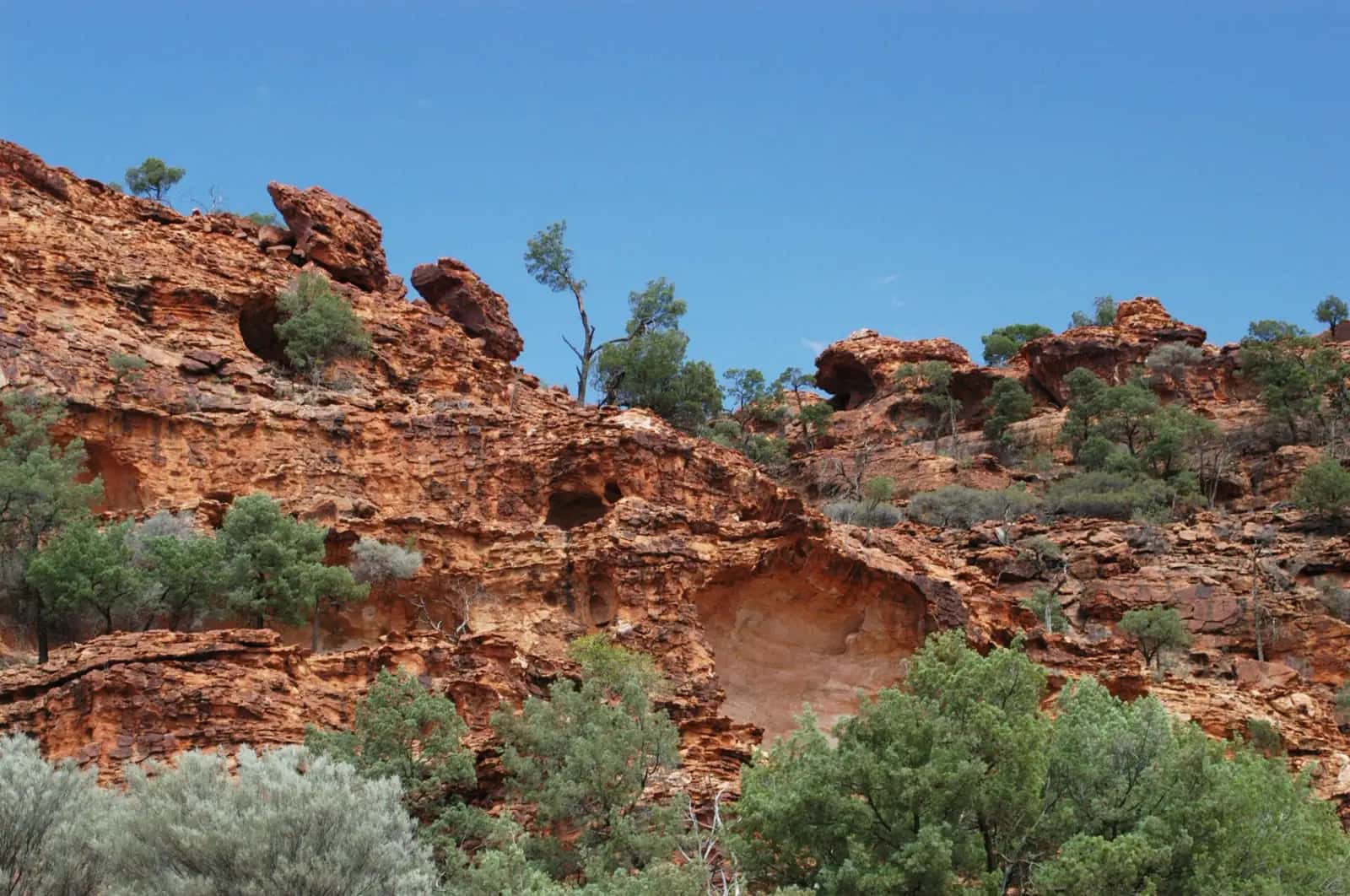
Mutawintji National Park protects the rugged Bynguano Range, about 130 km north-east of Broken Hill in far western NSW. Red gorges, river red gum creeks and rock pools contrast with the surrounding plains. The park is of great importance to the Malyankapa, Pandjikali and Wilyakali peoples and other Aboriginal groups, and contains one of the richest collections of Aboriginal rock art in NSW.
A landmark hand-back
In 1983, Aboriginal people blockaded the Mutawintji Historic Site to protest against damage to sacred sites and to demand recognition of their rights. In 1998, after years of advocacy, Mutawintji became the first national park in NSW to be handed back to its Aboriginal owners. It was leased back to the state and is now jointly managed by its Aboriginal owners and NSW National Parks and Wildlife Service. A board with an Aboriginal majority oversees management.
Highlights
- Mutawintji Historic Site. The site holds rock engravings, hand stencils and paintings, some thousands of years old. Access is only on guided tours run by local Aboriginal operators, usually on set days in the cooler months. Tours share stories and explain the significance of the art. Book ahead.
- Homestead Gorge walk. A walk into a red sandstone gorge with rock pools, engravings and the chance to see yellow-footed rock-wallabies.
- Mutawintji Gorge. A walk along a creek to a deep waterhole surrounded by cliffs. It is one of the park's most scenic spots.
- Bynguano Range walk. A longer walk with views across the ranges and plains.
- Rockholes Loop and the Old Coach Road. Short drives and walks to rock pools and historic sites.
Wildlife
Mutawintji supports a surprising range of wildlife for an arid park. Look for yellow-footed rock-wallabies on rocky ledges, red kangaroos and euros, emus, wedge-tailed eagles and many smaller birds around the waterholes. Reptiles are common in warmer months. See our outback wildlife guide.
Camping and accommodation
Homestead Creek campground has sites among river red gums, with toilets, showers and barbecues. Book through NSW National Parks. There is no fuel or food in the park; stock up in Broken Hill.
Getting there
Mutawintji is reached from Broken Hill via unsealed roads, usually in about two hours. The roads become impassable after rain and may be closed. Check NSW National Parks alerts and Live Traffic NSW before setting out. Tours from Broken Hill also visit the park.
Seasons
April to October is the best time to visit, with mild days and cool nights. Summer is extremely hot, and walking in the heat of the day is dangerous. Some tours operate only in the cooler months.
Visiting respectfully
Mutawintji is a living cultural landscape. Stay on marked tracks, never touch rock art, and do not enter areas closed for cultural reasons. Read our guides to visiting Country respectfully and rock art sites.
Suggested two days
Day one. Drive from Broken Hill, set up camp at Homestead Creek and walk Homestead Gorge in the late afternoon.
Day two. Join a guided tour of the Historic Site in the morning, then walk Mutawintji Gorge in the afternoon before returning to Broken Hill.
Tips
- Carry plenty of water on all walks.
- Book tours early; they run on limited days.
- Check road conditions before leaving Broken Hill.
- Bring a fly net in warmer months.
Geology and landscape
The Bynguano Range is made of ancient sandstone, folded and eroded over hundreds of millions of years. Creeks have cut narrow gorges through the range, where permanent and semi-permanent rock pools hold water long after the plains have dried. These waterholes made Mutawintji a vital place for people and animals, and explain why so much art and so many campsites are found here. River red gums line the creeks, while mulga, saltbush and spinifex cover the slopes and plains.
History after colonisation
Pastoralists took up land around the range in the 19th century, and the Burke and Wills expedition passed through the region in 1860. The area was later protected as a reserve before becoming a national park. Aboriginal people continued to visit and care for their sites throughout this period, and the 1983 blockade was a turning point for Aboriginal involvement in park management across NSW.
What to bring
Bring all food, water and fuel for your stay, a first aid kit, sun protection, a fly net and warm clothes for cold winter nights. Mobile phone coverage is very limited, so carry a satellite device or PLB and leave a trip plan with someone in Broken Hill.
Day trip or overnight?
Mutawintji is close enough to Broken Hill for a long day trip, but staying a night or two lets you walk in the cooler morning and evening light and join a guided tour of the historic site. The campground is close to the gorges and is a quiet, dark place for stargazing.
Photography
The red rock walls and rock pools glow at sunrise and sunset. Photography of rock art may be restricted on the guided tour; follow your guide's instructions. Drone use in NSW national parks requires consent from NSW National Parks and Wildlife Service.
Supplies
There are no shops or fuel in the park. Stock up on fuel, water, food and firewood (if fires are permitted) in Broken Hill before you go.
Related guides
Nearby park guides: Kinchega National Park and Paroo-Darling National Park.
Frequently asked questions
Can you camp in Mutawintji National Park?
Yes. Homestead Creek campground has sites for tents, camper trailers and caravans, with toilets and showers. Bookings are made through NSW National Parks.
What are the best walks in Mutawintji National Park?
Popular walks include the Homestead Gorge walk, the Mutawintji Gorge walk to a cliff-lined waterhole, and the Bynguano Range walk with views over the ranges. Check NSW National Parks for current track status and distances.
Was Mutawintji handed back to Aboriginal people?
Yes. In 1998 Mutawintji became the first national park in NSW returned to its Aboriginal owners; it is leased back and jointly managed.
How do you get to Mutawintji?
About 130 km north-east of Broken Hill via unsealed roads that close after rain. Check Live Traffic NSW and park alerts.
Sources and further reading
Facts on this page were checked against these primary and official sources. Conditions change — confirm before you travel or buy.
- Mutawintji National Park — NSW National Parks and Wildlife Service


