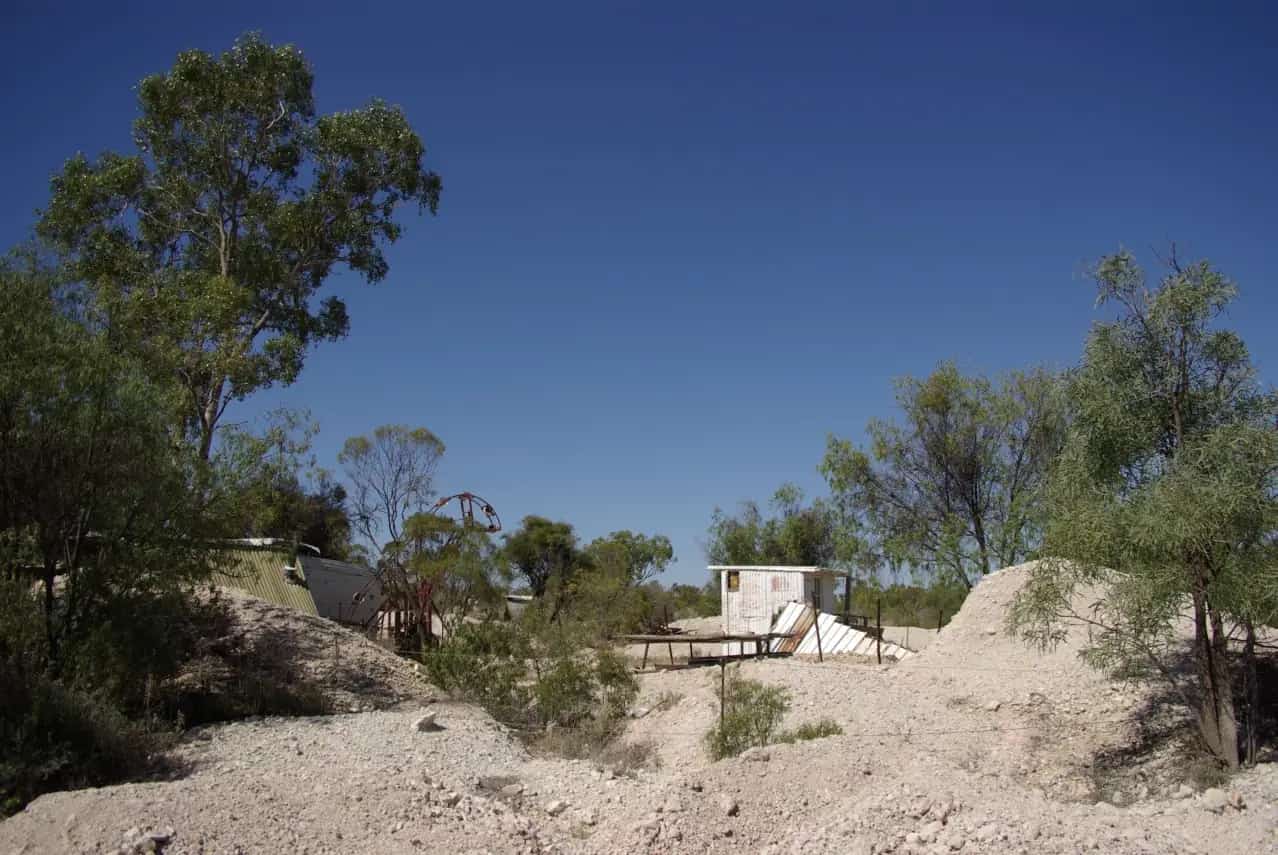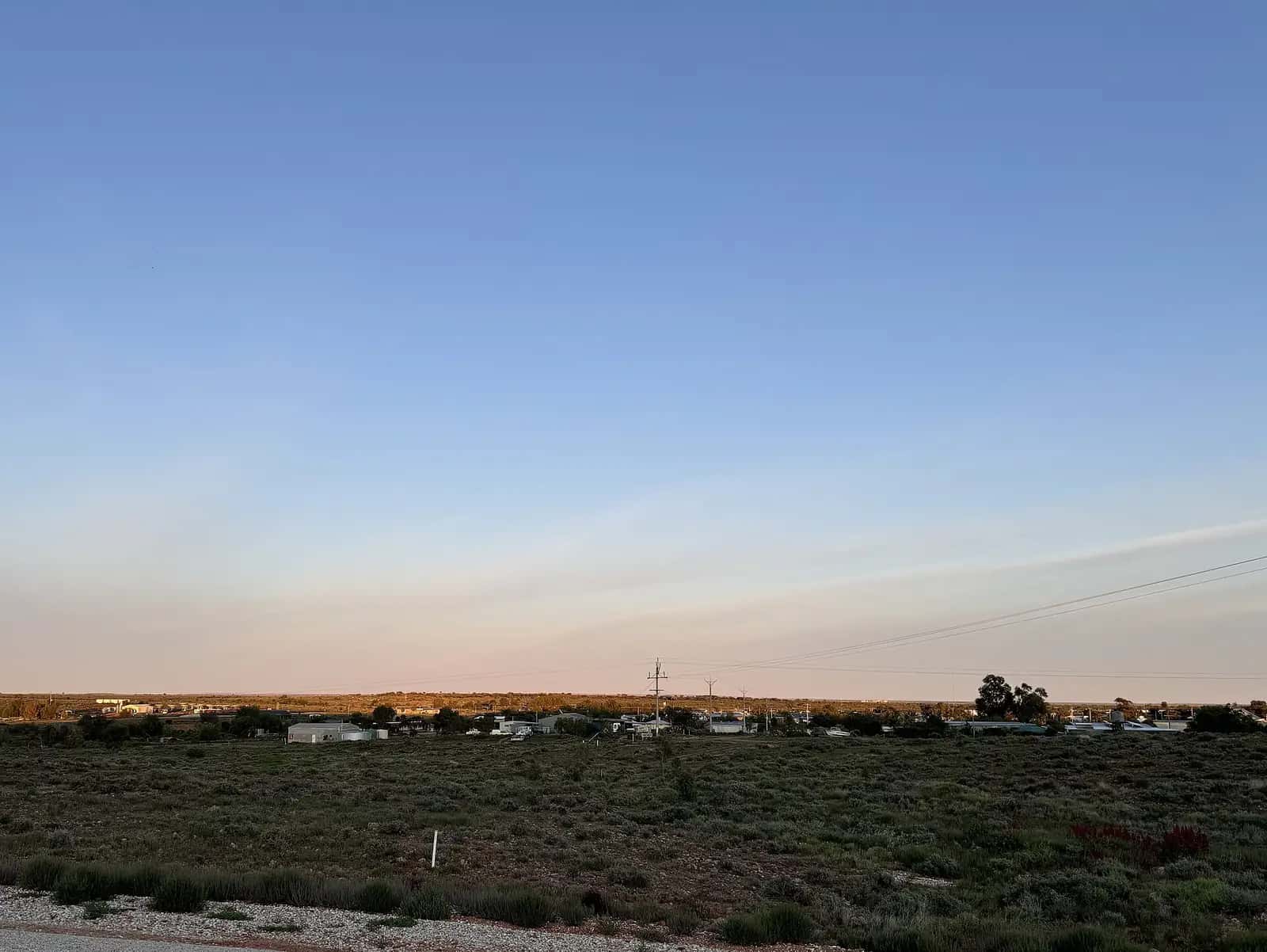
White Cliffs, on Barkindji Country north of Wilcannia, was Australia's first commercial opal field, opened in the 1890s. At its peak thousands of miners worked the field. Today it is a small community with a big personality, where the landscape is pocked with old diggings and homes are carved into the hills.
Things to do
Stay underground. Spending a night in a dugout is the White Cliffs experience. The rooms are cool, quiet and completely dark — perfect after a hot day on the fields.
Opal galleries and fossicking. Several residents run opal showrooms in their dugouts, some with tours of their homes. Fossicking on the old mullock heaps is popular — wear sturdy shoes and watch for open shafts.
Turleys Hill and the lookouts. Climb the hills above town at sunset to see the field of white mullock heaps spreading across the plain.
Solar power heritage. In the early 1980s White Cliffs was the site of an experimental solar power station, one of the first in Australia. The remains are a reminder of the town's role in renewable energy research.
Stargazing. With no city lights for hundreds of kilometres, the night sky is spectacular.
Nearby
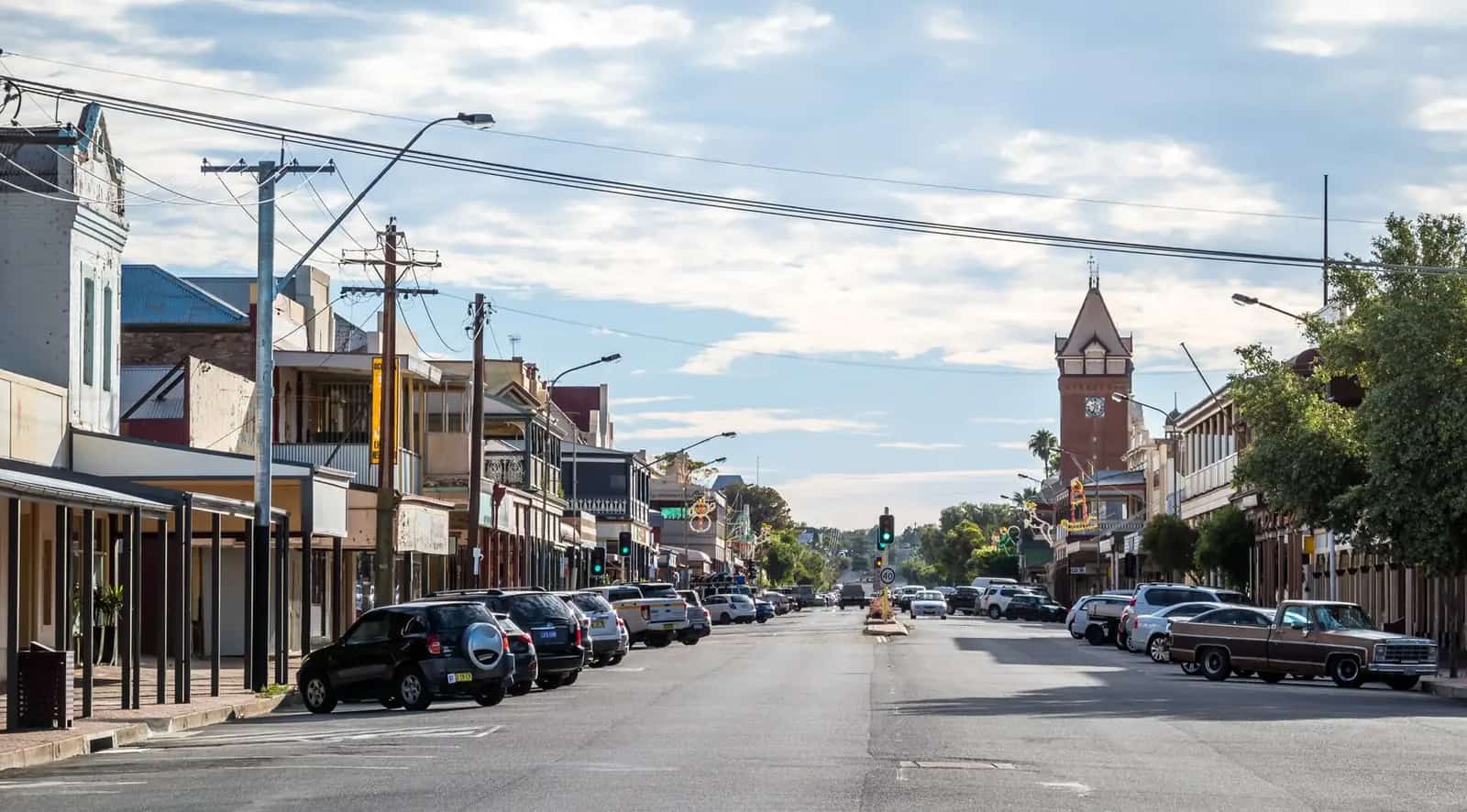
Wilcannia, on the Darling, has fine 19th-century sandstone buildings from its days as a river port. Mutawintji National Park lies to the west. The Paroo-Darling National Park protects lakes and wetlands to the east and north.
Getting there
White Cliffs is about 95 km north of Wilcannia on a sealed road and roughly 290 km from Broken Hill via Wilcannia. Fuel up in Wilcannia or Broken Hill.
History and Country
White Cliffs is on the Country of the Barkindji people. Opal was found here in the late 1880s, reportedly by kangaroo shooters, and commercial mining began in the early 1890s. The field quickly became the first major commercial source of Australian opal, and buyers took White Cliffs opal to European markets, where it helped establish Australian opal's reputation. At its peak around the turn of the twentieth century the field supported a large population, with hotels, stores and a hospital. As richer fields opened elsewhere, including Lightning Ridge and later Coober Pedy, the population fell, but mining and fossicking never stopped.
Living underground
White Cliffs' dugouts are carved into the low hills to escape summer heat. Many residents live underground, and several dugouts have been converted into accommodation, galleries or museums. Underground rooms keep a steady, comfortable temperature year-round.
The opal fields
The fields spread across the hills around town, with thousands of shafts and white mullock heaps. Fossicking on old heaps is popular, but there are many open shafts — stay on tracks, never walk the fields after dark, and keep children close. Do not enter active claims. The Barrier and Wilcannia districts also include gemstone shops where you can buy local opal; ask for written details about any stone you buy.
The solar power station
In 1981 the Australian National University established an experimental solar thermal power station at White Cliffs, using parabolic dishes to concentrate sunlight. It supplied power to the town for some years and is regarded as one of Australia's pioneering solar projects. The site is now a reminder of that history.
A two-day itinerary
Day 1: Arrive in the afternoon, check into an underground room, and climb a lookout for sunset over the fields.
Day 2: Visit opal showrooms and a dugout home tour, fossick on a public heap, and spend the evening stargazing.
Seasons
April to October is the best time to visit. Summer temperatures are extreme, and many businesses reduce hours.
Where to stay
Underground motels and B&Bs, a hotel and a caravan park.
Safety
Services are limited, and mobile coverage is patchy. Carry water, fuel and supplies.
Who it suits
White Cliffs suits travellers wanting an unusual stay underground, opal enthusiasts, stargazers and those exploring the far west of NSW. It is best as an overnight stop rather than a day trip.
Fuel, phones and medical help
The White Cliffs Outback Store sells diesel and petrol and has an ATM and EFTPOS. White Cliffs Health Service, run by Far West Local Health District, is open on weekdays and has an on-call emergency service after hours. Wilcannia, about 95 km south on a sealed road, has a larger multipurpose service.
Where to next
- Wilcannia — about 95 km south, on the Darling River.
- Broken Hill — about 290 km south-west.
- Paroo-Darling National Park — north-east, with Peery Lake (unsealed roads).
- Tibooburra — north-west via unsealed roads.
Packing tips
Bring sturdy boots, a torch and a hat. Water is scarce; carry enough for your stay.
Night skies
White Cliffs is one of the best stargazing spots in NSW. With minimal light pollution, the Milky Way is spectacular on clear, moonless nights. Some accommodation offers telescopes or stargazing sessions.
Paroo-Darling Visitor Centre and Peery Lake
NSW National Parks runs the Paroo-Darling Visitor Centre at 2 Johnston Street, White Cliffs. It is unstaffed but stocked with maps and park information, and has sheltered picnic areas. NPWS lists it as open Monday to Friday, 8:30 am to 4:30 pm, and some weekends.
White Cliffs is the closest town to Peery Lake, in the northern (Peery) section of Paroo-Darling National Park. NPWS says the Peery Lake picnic area is about 55 km north-east of White Cliffs. The route follows the unsealed Mandalay Road east of town, which is for dry weather only.
When Peery Lake is full it becomes an inland playground for waterbirds, and you can paddle a canoe. NPWS says pink cockatoos, mulga parrots and red-backed kingfishers live here, and that the rare grey falcon is sometimes seen. May to November is the best time to visit, and spring rains can bring wildflowers.
The lake is a significant place to the Barkindji (Barkandji) Traditional Owners, and Aboriginal sites lie around its edge and the surrounding cliffs. Leave everything as you find it. Take enough food, water and fuel for at least a full day, and tell someone your plans.
See our Paroo-Darling National Park guide for more.
Practical information
Services are limited: there is a general store, fuel, a hotel, accommodation and a small health service. Carry water and supplies, and check road conditions if using unsealed routes.
Explore nearby
Frequently asked questions
Why do people live underground in White Cliffs?
Dugouts carved into the hillsides stay at a fairly constant, comfortable temperature year round, while outside it can be extremely hot in summer and cold on winter nights. Many were originally opal mines.
Is the road to White Cliffs sealed?
The road from Wilcannia on the Barrier Highway to White Cliffs, about 95 km, is sealed. Other approaches, including from Broken Hill via the back roads, are unsealed and may close after rain.
Can you stay underground in White Cliffs?
Yes. The town has underground accommodation, including a well-known underground motel and dugout B&Bs.
What is White Cliffs famous for?
White Cliffs is famous for opals and for living underground. NSW National Parks notes that opals were found in the area as early as 1884, and the first store and hotel opened in 1892. Many residents live in dugout homes cut into the hills to escape the heat.
How far is Broken Hill from White Cliffs?
White Cliffs is about 290 km north-east of Broken Hill by road, via Wilcannia. The road from Wilcannia to White Cliffs is sealed. Check Live Traffic NSW for conditions.
Sources and further reading
Facts on this page were checked against these primary and official sources. Conditions change — confirm before you travel or buy.
- White Cliffs — Destination NSW
- Central Darling Shire — Central Darling Shire Council
- Live Traffic NSW — Transport for NSW
- Paroo-Darling Visitor Centre, White Cliffs — NSW National Parks and Wildlife Service
- Peery Lake picnic area — NSW National Parks and Wildlife Service