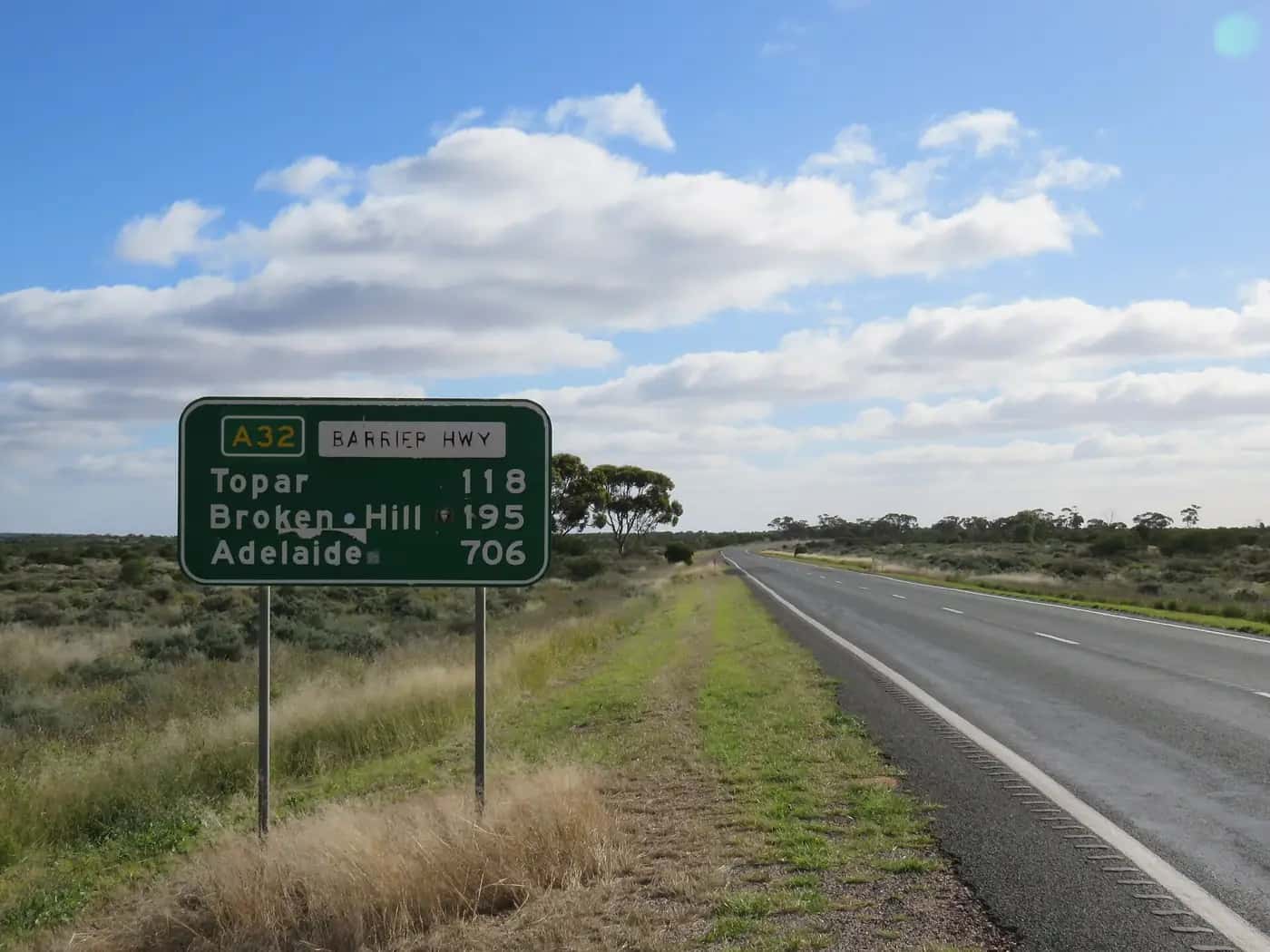
Wilcannia sits on the Darling River (Baaka) where the Barrier Highway crosses it, about 195 km east of Broken Hill. It is on the Country of the Barkindji (Paakantyi) people, and today most residents are Aboriginal.
History
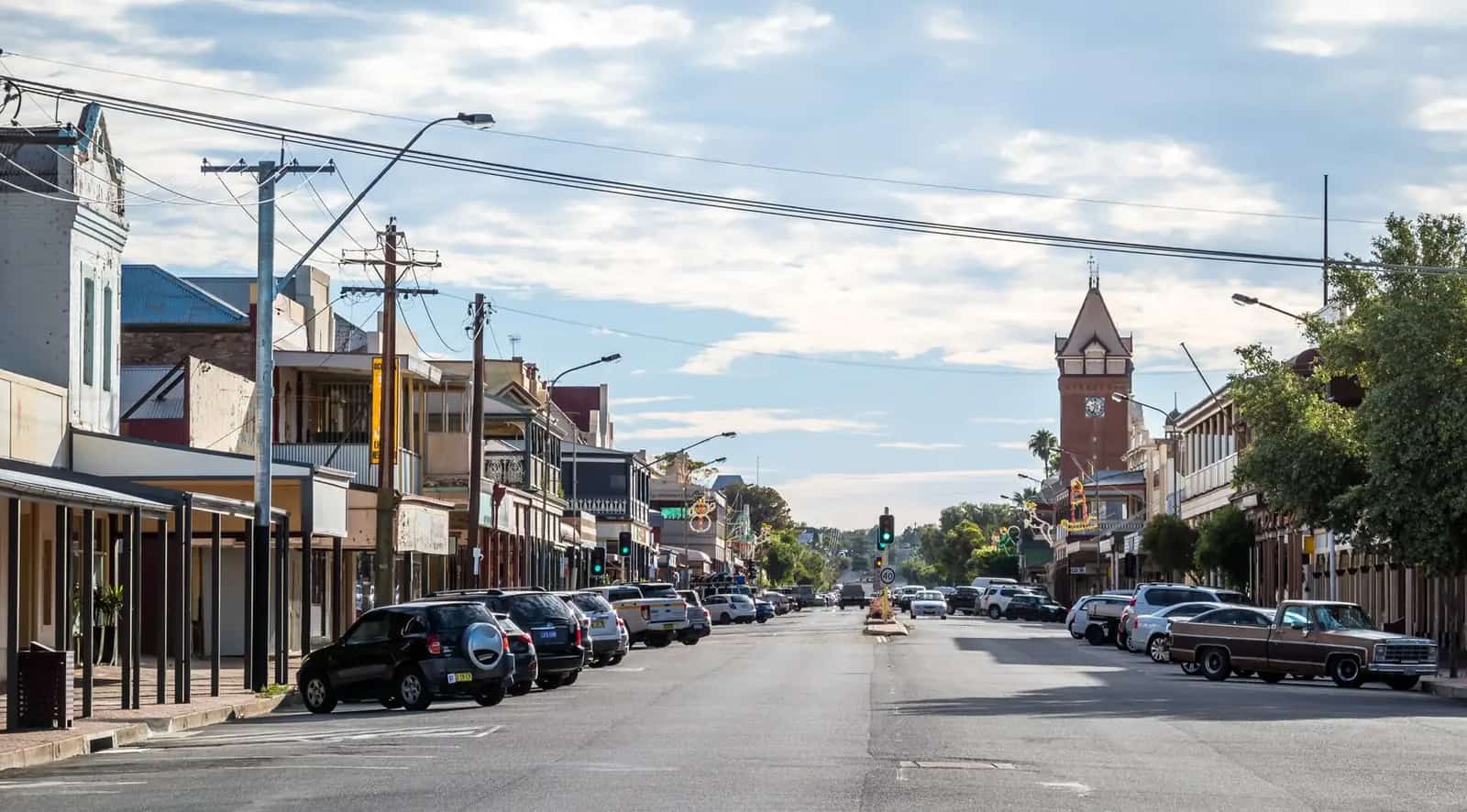
In the paddle-steamer era from the 1860s, Wilcannia became a major river port, shipping wool downstream to South Australia. It was proclaimed a town in 1866 and was sometimes called the "Queen City of the West". Grand sandstone buildings were built during the boom, including the courthouse, police station, post office and churches. The lift-span bridge over the Darling, opened in 1896, allowed steamers to pass. When railways took over the trade, the port declined.
Things to do
- Heritage walk — sandstone buildings along Reid and Myers streets.
- The old lift-span bridge — a reminder of the river trade.
- Darling River — a peaceful spot for birdwatching when the river flows.
- Mutawintji National Park — accessible via unsealed roads to the north-west. See Mutawintji.
Getting there and services
Wilcannia is on the Barrier Highway between Broken Hill and Cobar. Services include fuel, a store, a hotel and a health service. Continue north to White Cliffs, about 95 km.
Respect
Wilcannia is a close-knit Aboriginal community. Be courteous, ask before photographing people, and support local businesses.
The Baaka (Darling River)
For the Barkindji, whose name means "people of the river", the Baaka is at the centre of life, culture and identity. The river's health has been a major concern in recent decades, with periods of low flows, drought and fish deaths in the lower Darling. When the river flows, it is a beautiful place to walk, picnic and watch birds such as pelicans, egrets and kites. Be careful on riverbanks, which can be slippery or unstable.
Heritage buildings
Wilcannia's wealth in the river-port years shows in its sandstone buildings. Walk past the courthouse, police station, post office, former bank buildings and churches, many built from locally quarried stone. A self-guided heritage walk brochure is usually available locally. Some buildings are private, so view them from the street.
Culture and community
Wilcannia is home to a strong Barkindji community. The town gained national attention in the early 2000s through Wilcannia Mob, a group of local boys whose song "Down River" became a hit. Today, community organisations work on health, culture and language programs. Visitors are welcome: be courteous, ask before photographing people, and spend money locally.
The Long Paddock
Wilcannia is the northern end of the Long Paddock touring route, which follows the Cobb Highway south through Ivanhoe to Hay and the Murray River along an old stock route.
Getting there
Wilcannia is on the sealed Barrier Highway between Broken Hill and Cobar. Unsealed roads lead north to White Cliffs and Mutawintji National Park and south towards Menindee. These roads close after rain; check Live Traffic NSW and NSW National Parks alerts.
Where to stay
Accommodation options in Wilcannia are limited, so many travellers stay in Broken Hill, White Cliffs or Cobar. Check current options before you travel.
Suggested day
Stop for a heritage walk and a look at the lift-span bridge on the drive between Broken Hill and Cobar, or use Wilcannia as a stepping stone to White Cliffs' underground motel and opal fields.
Tips
- Fill up when you can; distances are long.
- Avoid night driving because of kangaroos, emus and goats.
- Check road conditions before heading onto unsealed roads.
History in more detail
Before the river boats, the Barkindji had lived along the Baaka for many thousands of years, using its resources and travelling along it for trade and ceremony. From the 1860s, paddle steamers brought wool and supplies, and Wilcannia boomed as one of the busiest inland ports in Australia. Customs officers, banks and merchants set up in town. The railways and the decline of river transport in the early 20th century ended the boom, and the town's population fell. Many of the grand buildings remain.
When to visit
April to October is the most comfortable season. Summers are very hot.
Fuel, phones and medical help
Wilcannia Multipurpose Service on Ross Street, run by Far West Local Health District, has an emergency department and holds regular Royal Flying Doctor Service GP clinics (phone 08 8083 8700). The nearest major hospital is in Broken Hill.
Fuel is sold at service stations in town, on Martin Street (where diesel is listed as available 24 hours) and on the Barrier Highway; the next reliable fuel west is Broken Hill (about 195 km), and east is Cobar (about 261 km).
Travelling with kids
For children, the riverbank and heritage walk around town are a good way to stretch legs, and the drive to Mutawintji makes a memorable day out for older kids who enjoy walking.
Paroo-Darling National Park
Wilcannia is the main gateway to Paroo-Darling National Park, which NSW National Parks says protects the Paroo Overflow, the only unregulated river in the Murray-Darling Basin. The park has two sections.
The Wilga section sits on the Darling (Baaka) River. From Wilcannia, drive 5 km east along the Barrier Highway to the Tilpa Road turn-off, then about 35 km north-east on the unsealed East Tilpa Road. Coach and Horses campground has 12 sites beside a bend in the river, with toilets, barbecues and picnic tables. River water must be boiled before drinking. NPWS suggests kayaking, fishing, walking and swimming there.
The Peery section, to the north, is centred on Peery Lake. NPWS says Peery Lake is about 110 km from Wilcannia. You can reach it via the sealed road to White Cliffs and then the unsealed Mandalay Road, or directly up the unsealed Wanaaring Road. When the lake is full it becomes a haven for waterbirds, and NPWS notes that 60,000 birds were recorded in one survey.
Park roads are unsealed, suitable for 2WD in dry weather only, and can become impassable after rain. See our Paroo-Darling National Park guide for camping, safety and the best time to visit.
Practical information
- Nearest towns: Broken Hill (west), Cobar (east), White Cliffs (north).
- Best time: April to October.
Wilcannia is on the Darling River Run.
Frequently asked questions
Is Wilcannia worth visiting?
Yes, for its heritage sandstone buildings, the Darling River (Baaka) and its Barkindji culture. Be respectful, support local businesses and check opening hours.
How far is Wilcannia from Broken Hill?
About 195 km east of Broken Hill on the Barrier Highway, roughly two hours' drive.
Is there fuel in Wilcannia?
Yes, fuel and basic supplies are available. Check opening hours.
Why is Wilcannia famous?
Wilcannia was once one of the busiest inland river ports in Australia, when paddle steamers carried wool along the Darling (Baaka) River. Its sandstone heritage buildings date from that era. Today it is known as a Barkindji community and as the gateway to Paroo-Darling and Mutawintji national parks.
Sources and further reading
Facts on this page were checked against these primary and official sources. Conditions change — confirm before you travel or buy.
- Mutawintji National Park — NSW National Parks and Wildlife Service
- Central Darling Shire Council — Central Darling Shire Council
- Wilcannia (Wikipedia) — Wikipedia
- Live Traffic NSW — Transport for NSW
- Paroo-Darling National Park — NSW National Parks and Wildlife Service
- Paroo-Darling National Park visitor info — NSW National Parks and Wildlife Service