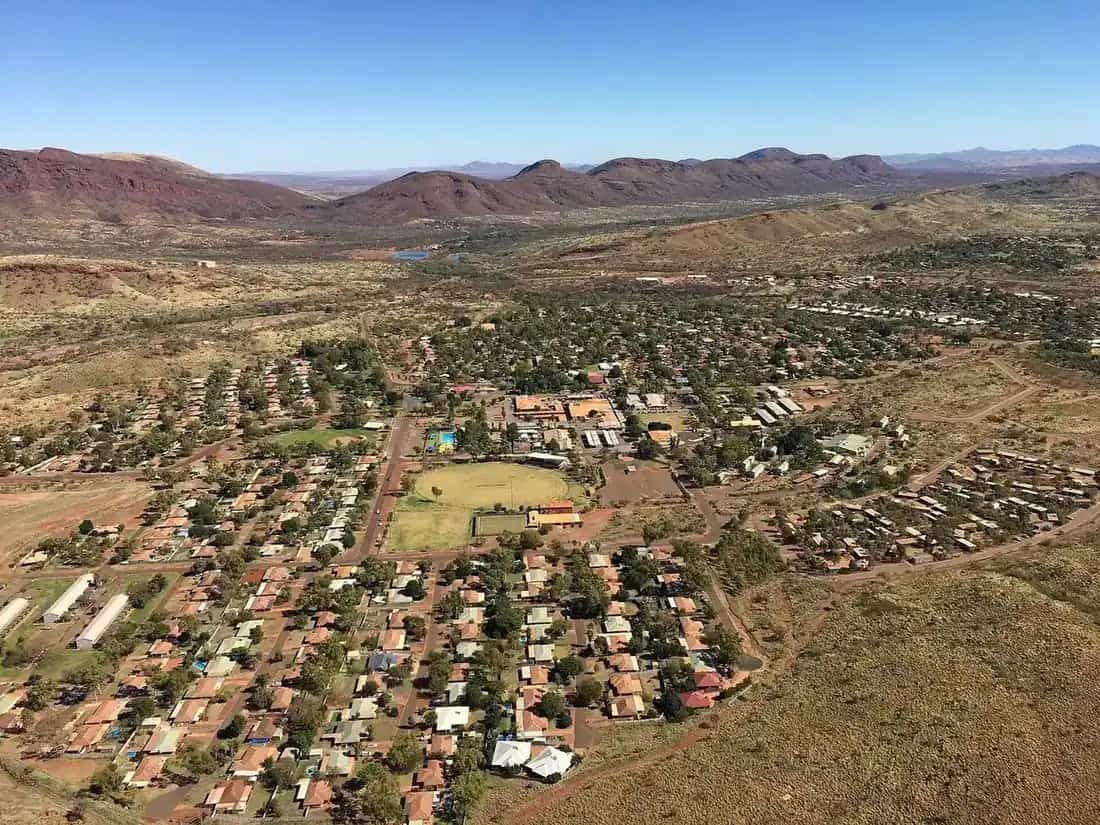
Derby lies on the shores of King Sound in Western Australia's West Kimberley, about 220 km north-east of Broome. The town is on the Country of the Nyikina people, and the region is home to many Aboriginal language groups. Derby is a service centre for the West Kimberley, the western start of the Gibb River Road and a base for some of the Kimberley's most dramatic landscapes.
Tides and mudflats
King Sound has some of the largest tidal ranges in Australia. At low tide, vast mudflats stretch from the jetty; at high tide the water returns quickly. The Derby Jetty is the best place to see the change and to watch sunset over the sound.
Things to do in Derby
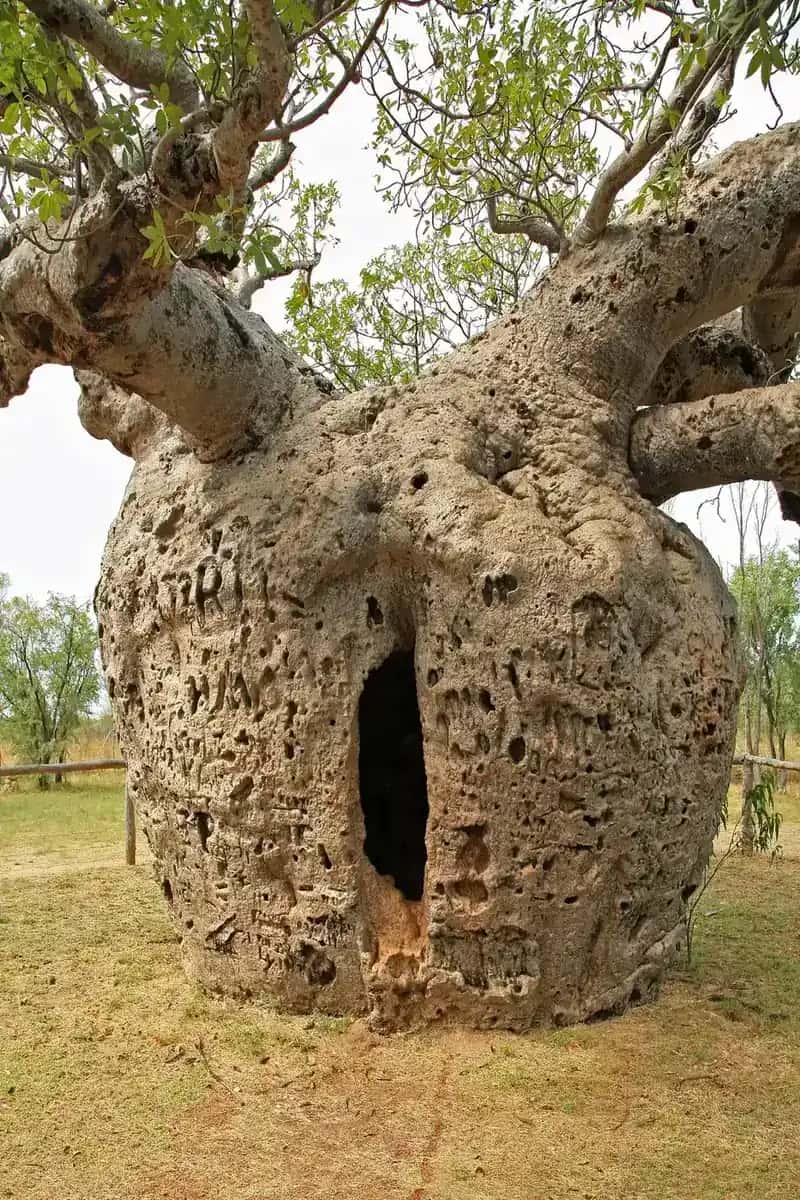
- Boab Prison Tree. About 7 km south of town, this huge hollow boab is linked to the history of Aboriginal prisoners being marched to Derby in chains. It is a site of sorrow and significance; view it from the boardwalk and respect signs.
- Myall's Bore and cattle trough. Next to the Prison Tree, a very long trough built for watering cattle on the droving routes.
- Mowanjum Aboriginal Art and Culture Centre. Just outside town, Mowanjum represents Worrorra, Ngarinyin and Wunambal artists, known for Wandjina imagery. See our guide to buying Aboriginal art ethically.
- Derby Jetty. Fishing, birdwatching and sunsets.
- Old Derby Gaol. A historic stone gaol telling part of the town's colonial history.
- Joonjoo Botanical Trail. A walking trail with signs on traditional uses of local plants.
- Horizontal Falls. Scenic flights and seaplane tours run to Talbot Bay, where huge tides force water through narrow gaps in the cliffs.
Gateway to the Gibb River Road and Windjana Gorge
The Gibb River Road begins near Derby and runs about 660 km across the Kimberley towards Kununurra and Wyndham. The first section is sealed. Within a few hours you can reach Windjana Gorge and Tunnel Creek, both in Bunuba Country. These places are linked to the story of Jandamarra, a Bunuba resistance leader in the 1890s. Bunuba-led tours are a respectful way to learn this history; see Aboriginal-led experiences.
Before heading out, check Main Roads WA for road conditions and closures, and read our Gibb River Road guide.
Where to stay
Derby has caravan parks, motels and hotel rooms. The dry season is busy, so book ahead.
Events
The Boab Festival, usually held in July, includes community events, music and the Mud Football. Check the shire's website for dates.
When to visit
May to September is the dry season, with warm days and cool nights. The wet season (November to April) brings heat, humidity, storms, cyclone risk and road closures across the Kimberley.
Tips
- Crocodiles live in King Sound and Kimberley rivers. Never swim in the sea, rivers or creeks unless signs say it is safe. See our crocodile safety guide.
- Stock up. Derby has supermarkets and fuel; the Gibb River Road has very limited services.
- Watch the tides. Never walk out on the mudflats; tides come in fast.
History in brief
Derby was established in the 1880s as a port for the wool and cattle of the West Kimberley, and its long jetty once handled livestock and supplies. The town was also an administrative centre during a period of harsh colonial conflict with Aboriginal peoples, a history reflected at sites such as the Boab Prison Tree and the Old Derby Gaol. During the Second World War, Derby was attacked by Japanese aircraft. Today, the town is a regional hub for health, education and government services, as well as tourism.
Kimberley culture
The West Kimberley is one of the most culturally rich regions in Australia. Many communities maintain strong connections to Country, language and law. Wandjina and Gwion Gwion rock art are among the region's most important cultural heritage. When visiting, follow the guidance in our visiting Country respectfully guide: some areas require permits, photography may be restricted, and cultural sites must be respected.
Suggested two days
Day one. Visit the Boab Prison Tree and Myall's Bore, then Mowanjum Art and Culture Centre. Finish at the jetty for sunset.
Day two. Take a scenic flight to Horizontal Falls and the Buccaneer Archipelago, or drive out to Windjana Gorge for the day.
Fuel, phones and medical help
Derby Hospital on Clarendon Street, run by WA Country Health Service, has an emergency department and visiting specialists (phone 08 9193 3333). healthdirect lists the emergency department as open 24 hours. The specialist services WA Country Health Service lists include cardiology, ENT, ophthalmology, orthopaedics, paediatrics and renal care. The hospital's contact details and services are on WA Country Health Service's Kimberley hospitals page.
Travelling with kids
Children often enjoy the Boab Prison Tree and the long jetty, where they can watch the huge tides.
Windjana Gorge and Tunnel Creek from Derby
Derby is the closest town to two of the Kimberley's best-known parks. The Department of Biodiversity, Conservation and Attractions (DBCA) says Bandilngan (Windjana Gorge) National Park is 155 km from Derby, on the Fairfield Leopold Road. Dimalurru (Tunnel Creek) National Park is 36 km further south-east. Both are in Bunuba Country.
- Windjana Gorge. A 3.5 km gorge cut through the Napier Range, which was once an ancient reef. The 1.9 km return Gorge Trail passes fossils in the limestone and freshwater crocodiles in the pools. Don't swim. Windjana has the only campgrounds, one for campers with generators and one without, and both have showers and toilets.
- Tunnel Creek. Water has carved a 750 m tunnel through the range. Bring a torch and expect to wade. DBCA says the Bunuba leader Jandamarra used it as a hideout and was killed outside its entrance in 1897. There is no camping.
Access is by unsealed road and needs a 4WD. DBCA says roads are often closed from October to April, and the parks open after the wet season once conditions allow. Day-use areas open from 6 am to 6 pm. Entry fees apply: at the time of writing, $17 per standard vehicle.
The Derby Visitor Centre, on (08) 9191 1423, can confirm road status. Day tours also run from Derby. See our Windjana Gorge and Tunnel Creek guide.
Practical information
- Distance: about 220 km from Broome.
- Best time: May to September.
- Related: Broome, Gibb River Road, Halls Creek, Rock art sites, Outback WA.
Frequently asked questions
Can you see Horizontal Falls from Derby?
Yes. Scenic flights and seaplane tours to Horizontal Falls in Talbot Bay operate from Derby and Broome. Rules on tours may change, so check with operators.
What is the Boab Prison Tree?
A large hollow boab about 7 km south of Derby, associated with the history of Aboriginal prisoners being moved in chains. It is a culturally sensitive site; view it from the boardwalk and do not enter the fenced area.
How far is Derby from Broome?
About 220 km, roughly two and a half hours' drive via the Great Northern Highway and Derby Highway.
What are the Horizontal Falls?
A natural phenomenon in Talbot Bay where huge tides rush through narrow gorges. Visit by scenic flight or boat tour.
Is Derby, Western Australia worth visiting?
Yes. Derby has the Kimberley's huge tides, the Boab Prison Tree, Mowanjum Arts and the start of the Gibb River Road. It is also the closest town to Windjana Gorge, 155 km away, and Tunnel Creek.
Sources and further reading
Facts on this page were checked against these primary and official sources. Conditions change — confirm before you travel or buy.
- Main Roads WA road conditions — Main Roads Western Australia
- Windjana Gorge National Park — Parks and Wildlife Service WA
- Mowanjum Aboriginal Art and Culture Centre — Mowanjum Aboriginal Art and Culture Centre
- Shire of Derby/West Kimberley — Shire of Derby/West Kimberley
- Derby, Western Australia (Wikipedia) — Wikipedia
- Bandilngan Windjana Gorge and Dimalurru Tunnel Creek national parks visitor guide (PDF) — Department of Biodiversity, Conservation and Attractions (WA)
- Dimalurru (Tunnel Creek) National Park — Department of Biodiversity, Conservation and Attractions (WA)