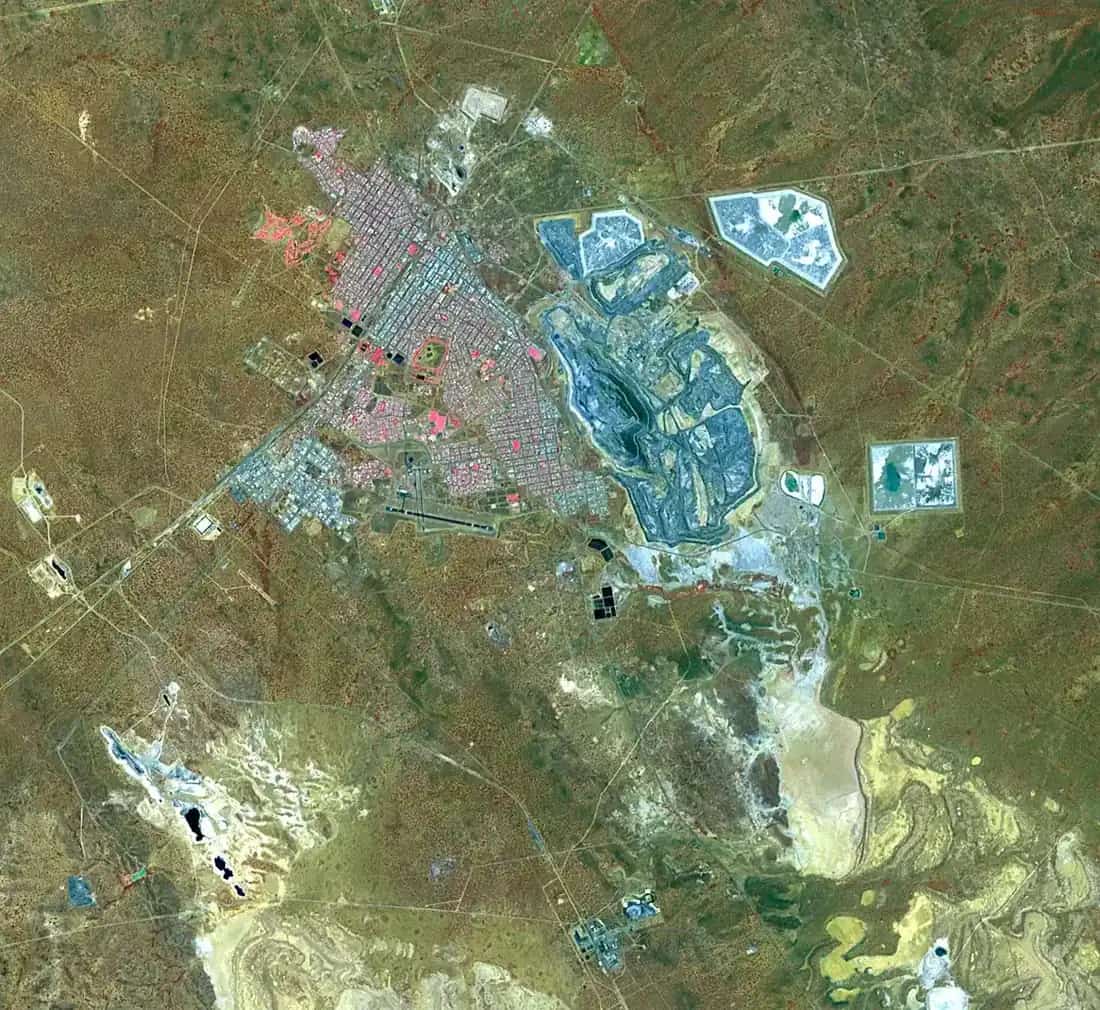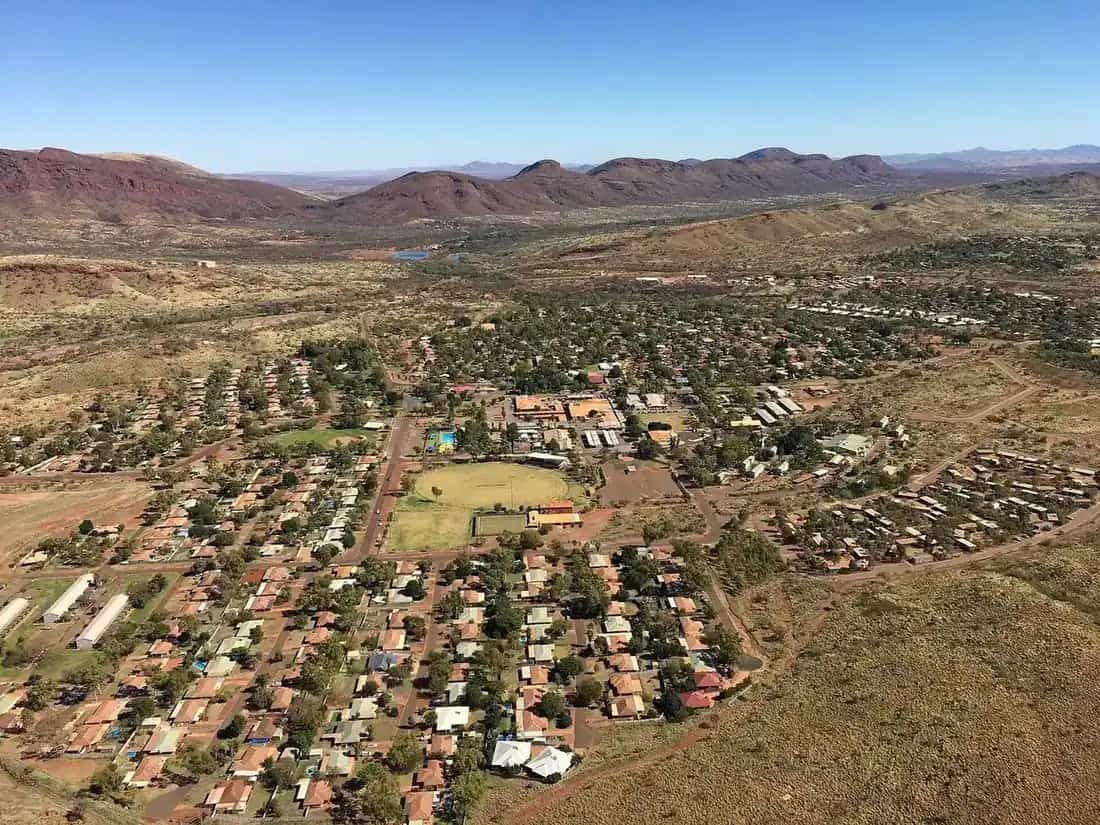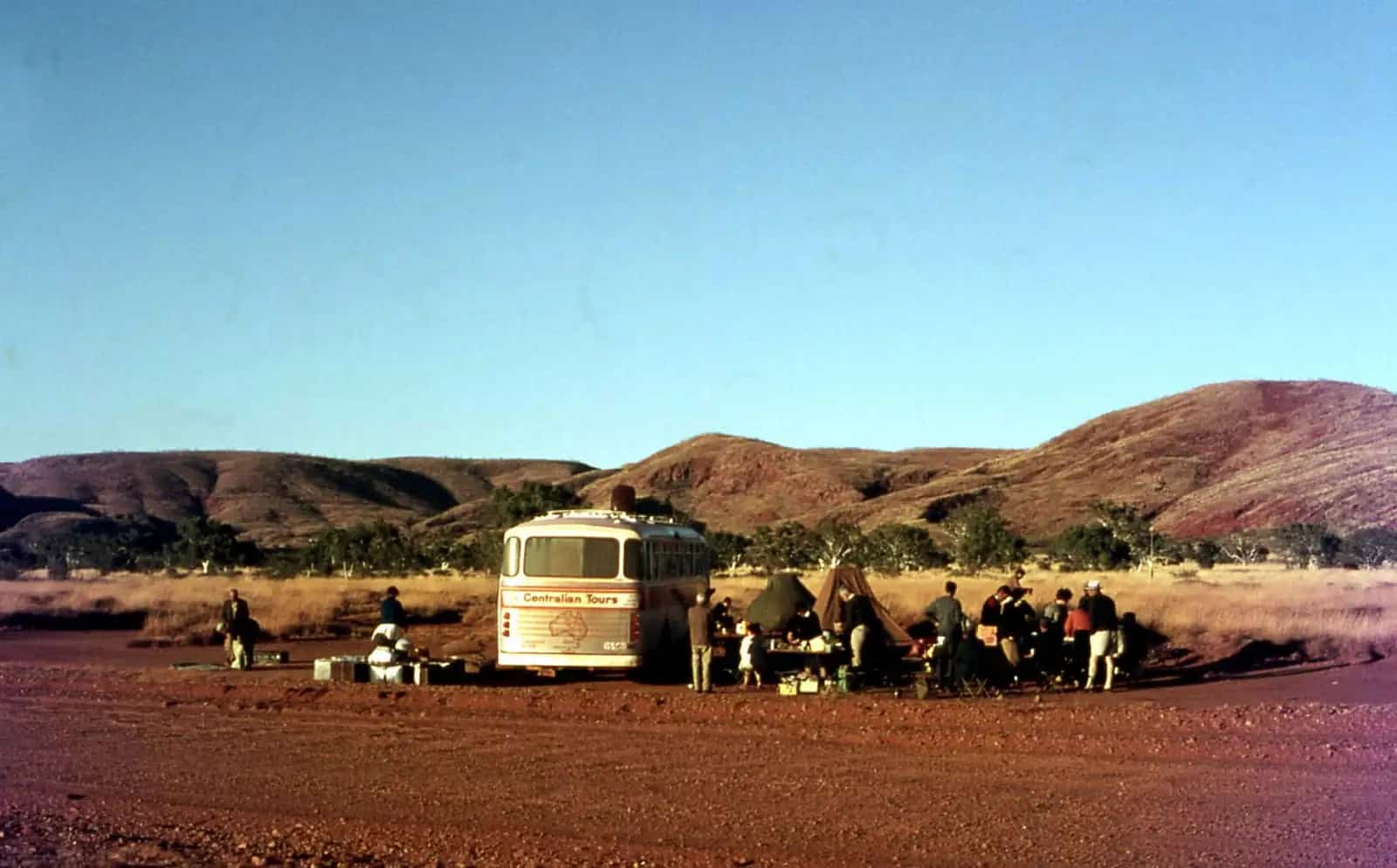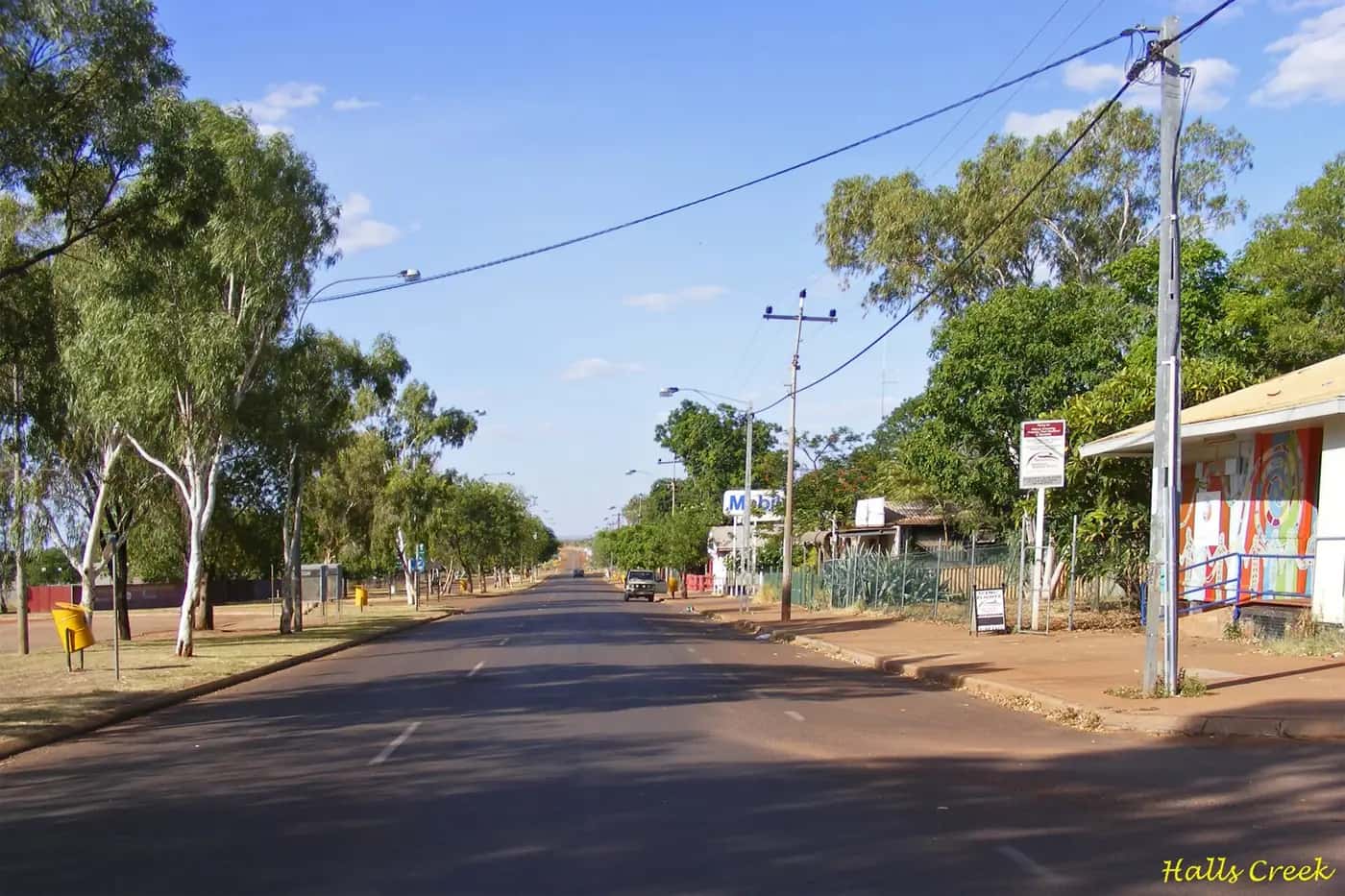
Halls Creek lies on the Country of the Jaru and Kija peoples, on the Great Northern Highway in the eastern Kimberley. Gold was found here in 1885 by prospectors Charles Hall and Jack Slattery, starting Western Australia's first gold rush. The original town site, Old Halls Creek, is about 16 km from the present town, which moved to a site with a better water supply in the mid-20th century. Today Halls Creek is a service centre for surrounding communities and stations, and a stop for travellers between Broome and Kununurra.
Things to do in and around Halls Creek
- China Wall. About 6 km east of town, a natural white quartz vein rises from the ground like a wall. A short walk leads to a pool below.
- Old Halls Creek. The ruins of the original gold rush town, including the remains of the post office, and the old cemetery. Fossickers still search the area for gold; licences are required.
- Caroline Pool. A waterhole near Old Halls Creek, good for a picnic.
- Palm Springs and Sawpit Gorge. Further along the Duncan Road, permanent pools surrounded by rock walls and palms.
- Yarliyil Art Centre. Represents Aboriginal artists of the Halls Creek region. Buying from an art centre ensures artists are paid fairly; see buying Aboriginal art ethically.
- Visitor centre. Information on local history and road conditions.
Wolfe Creek Crater
Wolfe Creek Crater, known as Kandimalal to the Jaru people, is one of the world's best-preserved meteorite craters. It lies about 150 km south of Halls Creek via the Tanami Road. A short walk climbs to the rim for views across the crater floor. The road is unsealed and corrugated and closes after rain. Check conditions with Main Roads WA and carry water and fuel.
Purnululu and the Bungle Bungles
The turnoff to Purnululu National Park is on the Great Northern Highway north of Halls Creek. The Spring Creek Track into the park is rough and suitable only for high-clearance 4WD vehicles (no trailers). Scenic flights to the Bungle Bungles also leave from Halls Creek and Kununurra.
The Tanami Road
Halls Creek is the north-western end of the Tanami Road, which runs about 1,000 km to Alice Springs through the Tanami Desert. It passes Aboriginal communities and is remote; travel requires careful preparation. Read our remote-area travel safety guide.
Getting there
Halls Creek is on the sealed Great Northern Highway, about 290 km east of Fitzroy Crossing and about 360 km south-west of Kununurra. It is a key stop on the Perth to Darwin drive.
Where to stay
Halls Creek has a caravan park, motel and hotel accommodation. Book ahead in the dry season.
When to visit
May to September is the dry season, with warm days and cool nights. The wet season brings heat, storms and road closures.
Tips
- Fill up before heading to Wolfe Creek or along the Tanami.
- Respect communities. Some areas require permits or have alcohol restrictions; see visiting Country respectfully.
- Avoid night driving because of cattle and wildlife.
Gold rush history
The 1885 gold strike drew thousands of prospectors to the east Kimberley, many travelling overland or by ship to Wyndham and Derby and walking inland. The rush was short-lived, as the easily won alluvial gold ran out within a few years, but it opened the region to wider European settlement. Pastoral stations followed, with Aboriginal people working as stockmen and domestic workers, often in harsh conditions. The ruins at Old Halls Creek and the displays in town help tell this complex story.
Suggested two days
Day one. Visit the China Wall in the morning, then explore Old Halls Creek, Caroline Pool and Palm Springs. Finish at Yarliyil Art Centre if it is open.
Day two. Leave early for Wolfe Creek Crater on the Tanami Road, walk the rim, and return in the afternoon. Alternatively, take a scenic flight over the Bungle Bungles.
Nearby
Fitzroy Crossing, to the west, is the base for Danggu Geikie Gorge and the Gibb River Road region. Kununurra, to the north-east, leads to Lake Argyle and Wyndham.
Fuel, phones and medical help
Halls Creek Hospital on Roberta Avenue is a WA Country Health Service small hospital with 24-hour wards (phone 08 9168 9222).
Fuel is sold in town at the Shell on the Great Northern Highway and the BP on Duncan Street, and the shire lists a 24-hour self-service diesel outlet; the next fuel is at Warmun Roadhouse (about 160 km north-east, towards Kununurra, according to a WA Government planning report) or Fitzroy Crossing (about 290 km west), and Kununurra is about 359 km away. Halls Creek Tourism publishes road condition updates for the region; check them before heading out on unsealed roads.
Travelling with kids
Children often enjoy the walk around the rim of Wolfe Creek Crater and a swim at Caroline Pool when conditions allow. The long drives make good snacks and entertainment essential.
What Halls Creek is famous for
Western Australia's first gold rush. Halls Creek Tourism says Charles Hall and Jack Slattery found gold at Halls Creek in 1885. Hall returned to Derby with 200 ounces and reported the find, which was the first in Western Australia. Between 1885 and 1887, about 10,000 men landed in the Kimberley hoping to find gold. Conditions were extremely rough, and few found much. Dysentery, scurvy, sunstroke and thirst took a heavy toll.
The rush lasted only a few years before many miners moved on to new fields. In 1955, the town site moved about 15 km west to its present location, for easier access and room to grow. Old Halls Creek still has the remains of the original settlement and its pioneer cemetery.
The Flying Doctor story. In 1917, stockman Jim Darcy was badly injured at Ruby Plains Station, south of town. Postmaster Fred Tuckett operated on him at Halls Creek, following instructions sent by telegraph from a doctor in Perth. Darcy later died. Halls Creek Tourism says the case caught the attention of John Flynn, whose vision led to the aerial medical service founded at Cloncurry in 1928. That service became the Royal Flying Doctor Service. There's an RFDS memorial at the Old Halls Creek pioneer cemetery.
Statues. Look for the statue of Russian Jack, a prospector remembered for wheeling a sick mate to help in a wheelbarrow. There's also a statue of the respected Djaru elder Jack Jugarie, unveiled in the town park in 2001.
Halls Creek is also the northern end of the Canning Stock Route.
Practical information
- Best time: May to September.
- Related: Kununurra, Purnululu, Derby, Perth to Darwin, Gibb River Road, Tanami Road.
Nearby: Wolfe Creek Crater, about 145 km from town via the Tanami Road.
Nearby park guide: Danggu (Geikie Gorge) National Park.
Frequently asked questions
How far is Halls Creek from the Bungle Bungles?
The turnoff to Purnululu National Park is on the Great Northern Highway between Halls Creek and Kununurra. The 4WD access track from the highway takes several hours.
What is the China Wall?
A natural white quartz vein standing out of the ground like a wall, about 6 km east of Halls Creek.
How far is Halls Creek from Wolfe Creek Crater?
The crater is about 150 km south via the unsealed Tanami Road and a short access road. Check road conditions before you go.
What is Halls Creek famous for?
Halls Creek is famous as the site of Western Australia's first gold discovery, in 1885, and the short Kimberley gold rush that followed. It's also known for the 1917 Jim Darcy story linked to the founding of the Flying Doctor service, and as a gateway to Wolfe Creek Crater, Purnululu and the Canning Stock Route.
Sources and further reading
Facts on this page were checked against these primary and official sources. Conditions change — confirm before you travel or buy.
- Main Roads WA — Main Roads Western Australia
- Yarliyil Art Centre — Yarliyil Art Centre
- Wolfe Creek Meteorite Crater National Park — Parks and Wildlife Service WA
- Shire of Halls Creek — Shire of Halls Creek
- Wolfe Creek Meteorite Crater National Park — Explore Parks WA
- Halls Creek history — Halls Creek Tourism