Oodnadatta lies on the Oodnadatta Track, on the Country of the Arabana people. It is one of the most remote towns in South Australia.
History
The Central Australia Railway reached Oodnadatta in 1891, and the town was the railhead for central Australia until the line was extended to Alice Springs in 1929. Cameleers based here carried goods north. The railway closed in 1980.
Things to do
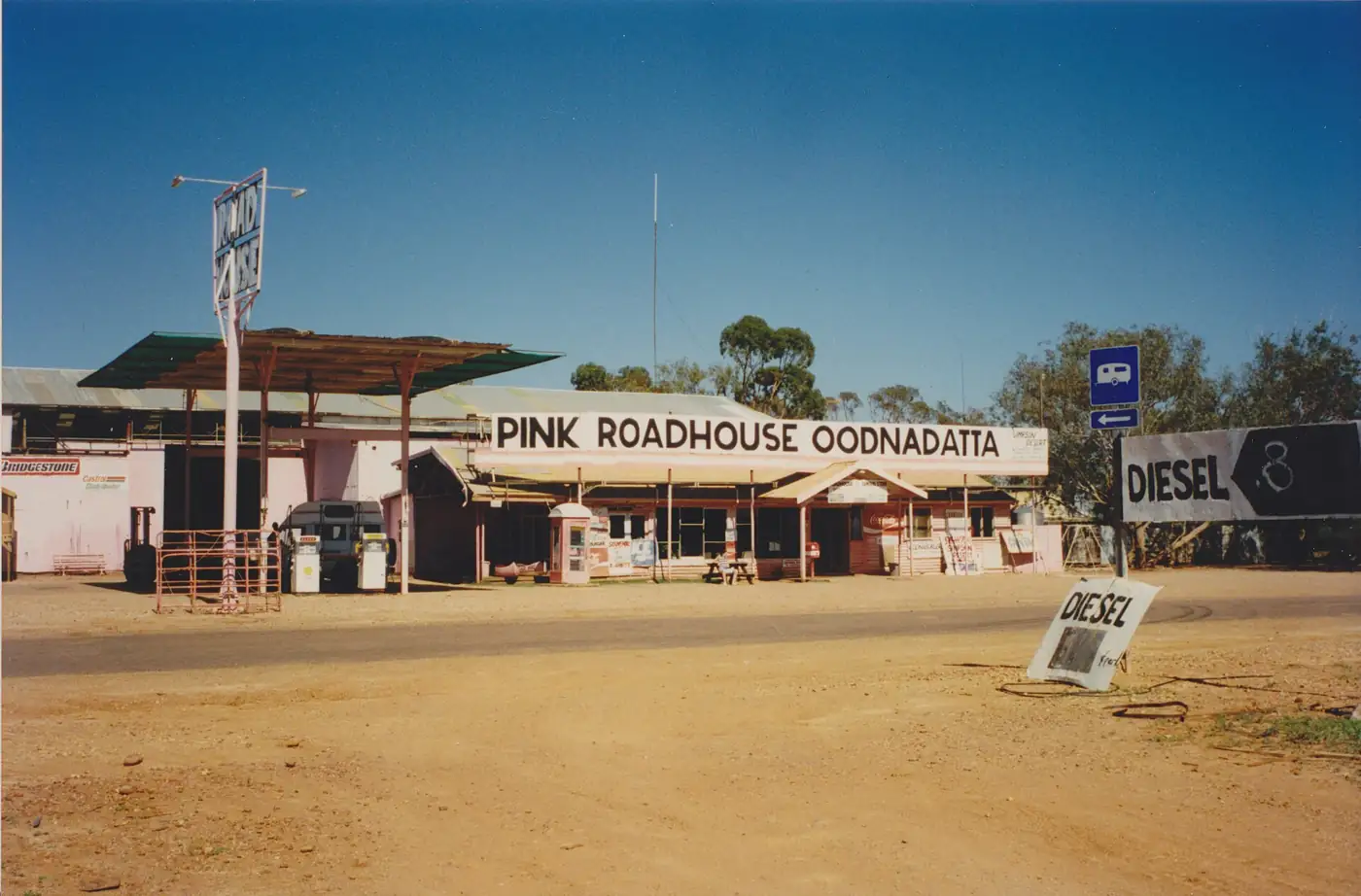
- Pink Roadhouse — a famous stop for meals, fuel and track advice.
- Railway station museum — in the old stone station building.
- Witjira National Park and Dalhousie Springs — artesian springs to the north (Desert Parks Pass required).
- Painted Desert — to the south-west via Arckaringa Station.
Services
Fuel, meals, a store, a caravan park and a health clinic.
Witjira National Park and Dalhousie Springs
North of Oodnadatta, Witjira National Park protects the Dalhousie Springs, a group of artesian springs fed by the Great Artesian Basin. The main spring forms a large, warm pool surrounded by date palms and reeds, and is a popular swimming spot for travellers crossing the Simpson Desert. The springs are culturally significant to the Lower Southern Arrernte and Wangkangurru peoples. A Desert Parks Pass or park entry permit is required. The road north from Oodnadatta is unsealed, sandy in places and remote; check conditions and carry plenty of fuel and water.
Algebuckina Bridge
South-east of Oodnadatta, beside the track, the Algebuckina Bridge crosses the Neales River. Built for the old Ghan railway in the 1890s, it was the longest bridge in South Australia when it was built. Its iron spans stand over a waterhole that attracts birds and campers. It is a striking photo stop, but do not climb on the structure.
The Painted Desert
South-west of Oodnadatta, the Painted Desert near Arckaringa Station is a landscape of eroded hills in white, yellow, orange and red, especially beautiful in early morning and late afternoon light. Access is by unsealed roads, and the station offers accommodation and camping. Ask at the Pink Roadhouse for current conditions.
Heat records
Oodnadatta holds a share of Australia's highest official temperature: 50.7°C, recorded on 2 January 1960. Summer travel here is genuinely dangerous. Plan to visit between April and September, carry far more water than you think you need, and read our outback safety guide.
Getting there
Oodnadatta is on the Oodnadatta Track, about 200 km north-west of William Creek and about 210 km east of Marla on the Stuart Highway. Another road connects south-west to Coober Pedy. All of these roads are unsealed and can close after rain. Check South Australia's outback roads page before leaving, and tell someone your plans. See our remote-area travel safety guide.
Where to stay
The Pink Roadhouse runs a caravan park with cabins and camping. Accommodation and camping are also available at Arckaringa and in Witjira National Park.
Arabana Country
Oodnadatta is on the Country of the Arabana people. Many Arabana people live in the town and region today, and the community maintains a strong connection to Country. Follow the guidance in our visiting Country respectfully guide.
Suggested plan
Spend a night in Oodnadatta on the Oodnadatta Track, visiting the railway museum and stocking up at the Pink Roadhouse. Continue to the Painted Desert, or detour north to Dalhousie Springs for a soak before heading back to the Stuart Highway at Marla.
Tips
- Fuel and water. Fill up every time; distances between fuel stops are long.
- Tyres. Carry two spare tyres; the track's gibber can be hard on tyres.
- Dust and corrugations. Slow down and lower tyre pressures appropriately on unsealed sections.
The old Ghan
Oodnadatta's history is tied to the Central Australia Railway, later known as the Ghan, which followed the line of mound springs north from Marree. Trains were often delayed by floods, washouts and sand drifts, and passengers could be stranded for days. Afghan and other cameleers carried goods from the railhead to the Northern Territory. When a new standard-gauge line was built further west in 1980, the old line closed, and many sidings became ruins. Today the Oodnadatta Track follows the old route, passing bridges, sidings and water towers.
Fuel, phones and medical help
The Pink Roadhouse sells diesel and petrol, food and supplies, offers vehicle repairs and recovery, and is the main source of local information on the track. The next fuel is at Marla (about 210 km west) or William Creek (about 201 km south-east). Oodnadatta Health Service on Ikaturka Terrace is open on weekdays, with emergency nurse support around the clock.
Travelling with kids
Children usually enjoy the Pink Roadhouse and the chance to see the Old Ghan railway relics around town.
Travelling with pets
Dogs are not allowed in Witjira National Park or other national parks in the region, and baits for feral predators may be laid on surrounding pastoral land, so keep pets on a lead and supervised. Carry plenty of extra water for animals, and check whether your accommodation accepts pets before you arrive.
Witjira National Park: current access and fees
Oodnadatta is the usual jumping-off point for Witjira National Park and Dalhousie Springs. Before you go, check these points with National Parks and Wildlife Service South Australia:
- Closures. At the time of writing, NPWS SA had closed Witjira until further notice after rain closed the access roads and tracks inside the park. Check the park page and the Desert Parks Bulletin before you set out.
- Fees. NPWS SA lists vehicle entry at $14.40 per vehicle, with camping from $23.10 per night. Book online before arrival, because self-registration stations are no longer available.
- Camping. Book Dalhousie Springs and 3 O'Clock Creek campgrounds ahead. Purni Bore, and any travel east of Dalhousie, needs a Desert Parks Pass.
- Facilities. Dalhousie Springs campground has toilets. Purni Bore has hot showers, toilets and a shade shelter. The bore at 3 O'Clock Creek is the last drinking water before the desert crossing.
- Fuel and repairs. The privately run Mount Dare Hotel has fuel, water, meals, accommodation and mechanical help.
Most roads in the park are 4WD only, and there is no mobile phone coverage. NPWS SA recommends visiting between April and September. See our Witjira and Dalhousie Springs guide for more.
Practical information
- Nearest towns: William Creek (south-east), Marla (west), Coober Pedy.
- Best time: April to September.
- Related: Oodnadatta Track.
South-west of town: the Painted Desert.
Frequently asked questions
How far is Oodnadatta from Coober Pedy?
About 200 km by unsealed road north-east of Coober Pedy. Check road conditions first, as these roads close after rain.
What is the hottest temperature recorded in Oodnadatta?
Oodnadatta Airport recorded 50.7°C on 2 January 1960, which is Australia's equal-highest official temperature, matched at Onslow in Western Australia in 2022.
What is Australia's highest recorded temperature?
50.7°C, recorded at Oodnadatta on 2 January 1960 and equalled at Onslow (WA) in January 2022, according to the Bureau of Meteorology.
How do you get to Dalhousie Springs?
Via unsealed roads north from Oodnadatta through Witjira National Park. A Desert Parks Pass is required.
Is Oodnadatta worth visiting?
Yes, if you are travelling the Oodnadatta Track or heading to Witjira National Park. The town has the Pink Roadhouse, the old railway station and Arabana history. It is also a key fuel and supply stop before Dalhousie Springs and the Simpson Desert.
Sources and further reading
Facts on this page were checked against these primary and official sources. Conditions change — confirm before you travel or buy.
- Outback road conditions (SA) — Government of South Australia
- Witjira National Park — National Parks and Wildlife Service SA
- Bureau of Meteorology — Australian climate extremes — Bureau of Meteorology
- Oodnadatta (Wikipedia) — Wikipedia
- Witjira National Park — National Parks and Wildlife Service South Australia