Use this page with the Cooktown hub. Named places come from Explore Cooktown, the National Trust and Queensland Parks. It does not reconstruct HMB Endeavour camp life beyond what those agencies publish.
Nature’s Powerhouse and the Botanic Gardens
Nature’s Powerhouse sits in the heritage-listed Cooktown Botanic Gardens on Walker Street. Explore Cooktown describes the visitor information centre, the Vera Scarth-Johnson Gallery (the only collection of original botanical illustrations of flora from the region — many plants grow in the gardens next door), an exhibition space, shop and café. Hours on that page: Tuesday–Sunday 8.30am–4.00pm, Monday closed. Phone (07) 4069 6004.
This is the practical first hour in town: road conditions, park alerts, which tours are running, and a shaded walk in the gardens. The building also hosts community events; ask staff what is on that week.
Cooktown Museum
The National Trust museum occupies the Sisters of Mercy convent of 1888, corner Helen and Furneaux Streets. Displays cover Guugu Yimithirr culture, early encounters with Lieutenant James Cook, gold rush and Chinese migration, and convent-school life through the 1940s. The Trust highlights artefacts from HMB Endeavour, a ship model from the early 1900s, and the Endeavour Gallery created in 2001 with a cannon jettisoned from the ship and an anchor recovered from the Great Barrier Reef. Verandah views look over the Endeavour River.
The Trust’s wording is the right frame for 1770: see the landing from the Aboriginal perspective, including what it calls one of Australia’s first recorded acts of reconciliation. QPWS adds the dated facts this guide will repeat and will not embroider: Cook named the river on 11 June 1770 after the ship struck a reef; Banks and Solander collected plants; the kangaroo name Gangurru is recorded from Guugu Yimithirr.
Check current hours and tickets on the National Trust site. Seasonal opening (including a summer closure in the Trust’s published calendar) changes. Accessible entry is via a Furneaux Street path, then the Helen Street door, with a lift to the first level.
Milbi Wall and Aboriginal-led tours
The Milbi Wall at the wharf tells Guugu Yimithirr history in hand-painted tiles, described by Explore Cooktown as a Rainbow Serpent of that history. It is a public artwork, not a climbing frame, and the wharf is still river edge in crocodile habitat.
Explore Cooktown names further ways to learn on Country:
- Cooktown Museum stories from Cape Bedford Mission to recent times, with tools, artefacts and art.
- Local art outlets, including Kuku Bulkaway Indigenous Art Gallery, and Saturday markets where artists may be working.
- Culture Connect Australia rock-art tours on Balnggarrawarra homelands at Normanby Station (half day or full day; the tourism page lists 1300 794 175).
- Rossville Retreat, about 20 minutes south, Indigenous tours with Kuku Nyungkul elder and Traditional Owner Harold Tayley (Mooks); phone listed as 4069 6106.
Book those operators yourself. We do not invent extra tour names or quote prices. Confirm pick-ups at Nature’s Powerhouse.
Kalkajaka (Black Mountain)
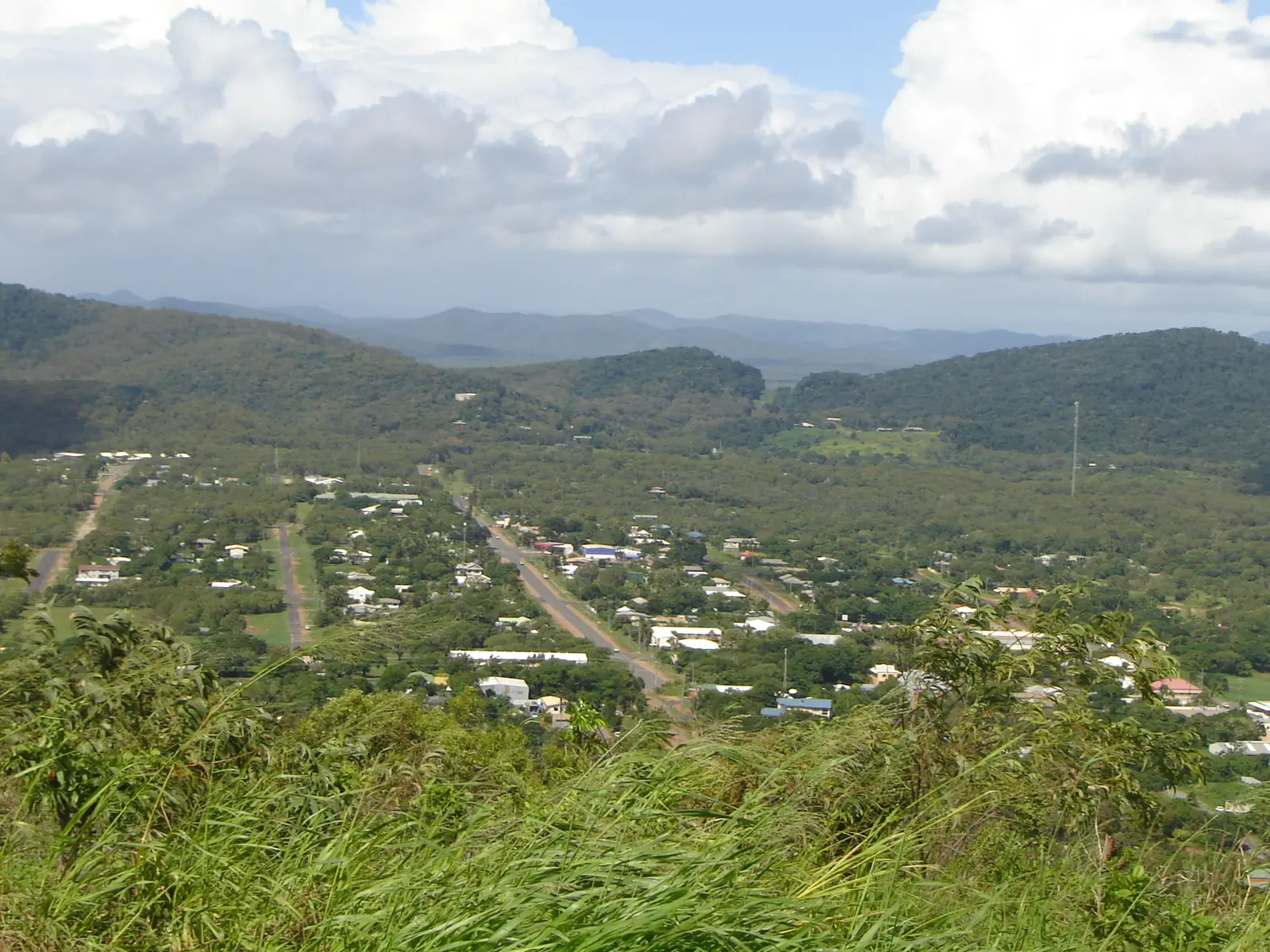
Kalkajaka National Park (CYPAL) is 25 km south of Cooktown. Traditional Owners are the Eastern Kuku Yalanji. Queensland Parks describes an imposing range of granite boulders, unique wildlife and a lookout. Facilities listed: lookout; no campfires. Stay at the lookout. Do not walk into the boulder field. People have been injured or died in the rocks. That is a parks warning, not a dare.
The range is a roadside stop on the Mulligan Highway, not a day walk. Combine it with the drive in or out of town.
Mount Cook and Endeavour River national parks
Mount Cook National Park rises above town. QPWS culture notes granites about 260 million years old, orange soils from much older sea-floor rocks, and King’s 1819 naming of the mountain. Check the current parks.qld.gov.au page for walking tracks, closures and heat advice before you climb anything. July’s mean maximum at Cooktown Airport is still 26.4 °C; December is 32.4 °C.
Endeavour River National Park (about 6 km north; gazetted November 2006) protects the lower river: mangroves, dunes, freshwater wetlands, heath and woodland, about 2,200 hectares. QPWS:
- No camping, no campfires, no domestic animals.
- Best explored by boat from two Cooktown waterfront ramps; watch snags, sand and rock bars.
- Southern section reachable via Starcke Street or Endeavour Valley Road, 3 km west of town.
- Estuarine crocodiles often seen on the bank.
- Surrounding waters sit in the Great Barrier Reef World Heritage Area; check marine-park zoning before fishing.
There is no wheelchair-accessible infrastructure in this park. Fuel and supplies are in Cooktown.
For a much larger Cape park with its own wet-season closure, see Rinyirru (Lakefield) — not a Cooktown day trip in a 2WD, and not caravan country.
Crocodiles, heat and a sensible day
The Endeavour, Annan and coastal waters are croc habitat. QPWS visiting-safely for Endeavour River also flags heat over 35 °C in summer and wet-season downpours from December to April. Do not swim to cool off. Read crocodile safety.
A full day that stays inside official places: gardens and Nature’s Powerhouse in the morning, museum in the middle of the day (air-conditioning and the lift), Milbi Wall in the afternoon, Kalkajaka lookout on a later morning if you have a car. That is a proper Cooktown visit. Adding an Aboriginal-led tour replaces, rather than stacks on top of, an improvised walk into Country you have not been invited onto.
Accommodation and caravan parks are separate pages. Weather sits at Cooktown weather.
Plan this trip
Tell us the dates, who you are travelling with and where you need help. We reply with planning notes for Cooktown — we are not a booking agent.
Frequently asked questions
What are the main things to do in Cooktown?
Nature’s Powerhouse and the botanic gardens, Cooktown Museum, the Milbi Wall at the wharf, Kalkajaka (Black Mountain) lookout only, Mount Cook National Park, and Endeavour River National Park by boat. Aboriginal-led tours are named on Explore Cooktown; book them directly.
Where is Nature’s Powerhouse?
Walker Street, in the heritage-listed Cooktown Botanic Gardens. Tuesday–Sunday 8.30am–4.00pm, Monday closed, on the Explore Cooktown page. (07) 4069 6004.
Is Kalkajaka open to walkers?
The lookout on the Mulligan Highway is the visitor facility Queensland Parks lists. Do not enter the boulder field.
Sources and further reading
Facts on this page were checked against these primary and official sources. Conditions change — confirm before you travel or buy.
- Nature’s Powerhouse — Explore Cooktown and Cape York
- Aboriginal culture, Cooktown — Explore Cooktown and Cape York
- Cooktown Museum — National Trust of Australia (Queensland)
- Kalkajaka National Park (CYPAL) — Queensland Parks and Wildlife Service
- Mount Cook National Park — culture — Queensland Parks and Wildlife Service
- Endeavour River National Park — Queensland Parks and Wildlife Service